




The daily brief · August 27, 2026

Indigo light stops nearsightedness, and a 190-year pangolin secret

Today's best news comes from paying attention to what everyone else overlooked: a wavelength of light missing from ordinary indoor lamps, and a cancer that spent decades being written off as untouchable.

  • 8 Discoveries
  • 272 Articles read
  • 46 Sources
  • 11 Min read

Today’s discoveries

Everything this morning found, in the order we would read it.

8 stories
  1. 01 Life Sciences The color missing from your ceiling light Sunlight contains a short wavelength called indigo light. Source: ScienceDaily 1 min read
  2. 02 Life Sciences The cancer everyone called undruggable On August 26, the FDA approved daraxonrasib, sold as Rasonque, for advanced pancreatic cancer. Source: STAT 1 min read
  3. 03 Natural Sci. A pangolin hiding in a 190-year-old drawer Pangolins are the most trafficked mammals on Earth, and for years scientists lumped the Himalayan population in with China's Chinese pangolin. Source: ScienceDaily 1 min read
  4. 04 Natural Sci. Proteins built from a bigger alphabet Every living thing builds proteins from the same 20 amino acids, and rewriting that code inside a living cell has taken geneticist George Church's Harvard lab the better part of two… Source: Phys.org 1 min read
  5. 05 Psychology What actually helps a stranger feel at home About 13 million American adults move each year, and a new study from the US Chamber of Connection found 40% of them struggle with social connection afterward, facing 35% more barriers… Source: Greater Good 1 min read
  6. 06 Good News India's lions, back from the edge Asiatic lions now number 891 in India's Greater Gir Landscape, up from 523 just a decade ago, a 70% jump according to the 16th official population count, released around World Lion Day. Source: Good News Network 1 min read
  7. 07 Plant-Based The best protein in the world is a block of tofu Cambridge behavioral scientist Chris Macdonald built a new rating system, the Better Protein Institute Score, that combines a Planet Score (emissions, water pollution, land use) with a… Source: VegNews 1 min read
  8. 08 Technology The city where getting old works differently Rugao, a city of 1.3 million a few hundred miles from Shanghai, had 672 residents over age 100 as of February 2026, a rate roughly five times the global average. Source: New Atlas 1 min read

The feel-good story of the day

a high school principal embracing a teenage student libraryofcongress (via rawpixel)
Pictured a high school principal embracing a teenage student

The principal who chose a kid over his own job

Rob Burnside had spent 31 years in education, the last several as principal of Lakota East High School near Cincinnati, when he learned that a student named Landerius Hayes, who went by DeDe, had nowhere safe to sleep. His mother's home wasn't safe, his father's had cold nights spent in a car with the heat running, and when Hayes's family address changed, a letter arrived saying he could no longer attend the school at all.

Burnside asked his wife, Angel, what they should do. "Well, he can come stay with us, if he needs to," she said. They'd already adopted two children. They took Hayes in, kept praying it was the right call, and got their answer five minutes later in a text from Hayes himself: "Hey, Mr. Burnside." Burnside let him keep attending Lakota East anyway, in defiance of the district's rules, and when the district found out, they gave him a choice: resign, or be fired. He resigned. When Hayes offered to move back out to save his job, Burnside told him no. "DeDe, you're part of this family. We're not gonna turn our back on you." A year later, the Burnsides made it official and adopted him.

Today’s complete edition

The discoveries, in full

Read the evidence, what it changes, and the reporting behind each of today’s 8 discoveries.

01/08 Life Sciences

The color missing from your ceiling light

Sunlight contains a short wavelength called indigo light. Standard white LED bulbs, the kind in most homes, schools, and offices, barely contain it at all.

a child reading by a sunlit window
Pictured a child reading by a sunlit window · PattayaPatrol (Wikimedia Commons)

Researchers at Cincinnati Children's and the University of Alabama at Birmingham raised tree shrews, animals whose eyes closely mirror human ones, under indigo light and found it completely prevented the animals from developing myopia, even under conditions designed to force it 9. Myopia happens when the eyeball grows too long front to back, so incoming light lands in front of the retina instead of on it. It is already the most common eye condition on the planet, and some researchers estimate it could affect half of humanity, nearly 5 billion people, by 2050. The tree shrews wore tiny custom spectacles to induce the effect in one eye while the other served as a comparison, and the indigo light shut the process down entirely.

02/08 Life Sciences Social Sci.

The cancer everyone called undruggable

On August 26, the FDA approved daraxonrasib, sold as Rasonque, for advanced pancreatic cancer. In the trial that won approval, patients on the drug lived a median of 13.2 months, compared to 6.7 months on standard chemotherapy 106.

The cancer everyone called undruggable
Candace McDaniel (via stocksnap)

More than 90% of pancreatic tumors are driven by a mutated gene called KRAS, a switch stuck permanently in the "grow" position. For decades, its surface was considered too smooth for any drug to grip. Daraxonrasib gets around that by binding a different molecule, cyclophilin A, which then locks onto the active KRAS protein and shuts it down 158.

What each field noticed (2)
03/08 Natural Sci.

A pangolin hiding in a 190-year-old drawer

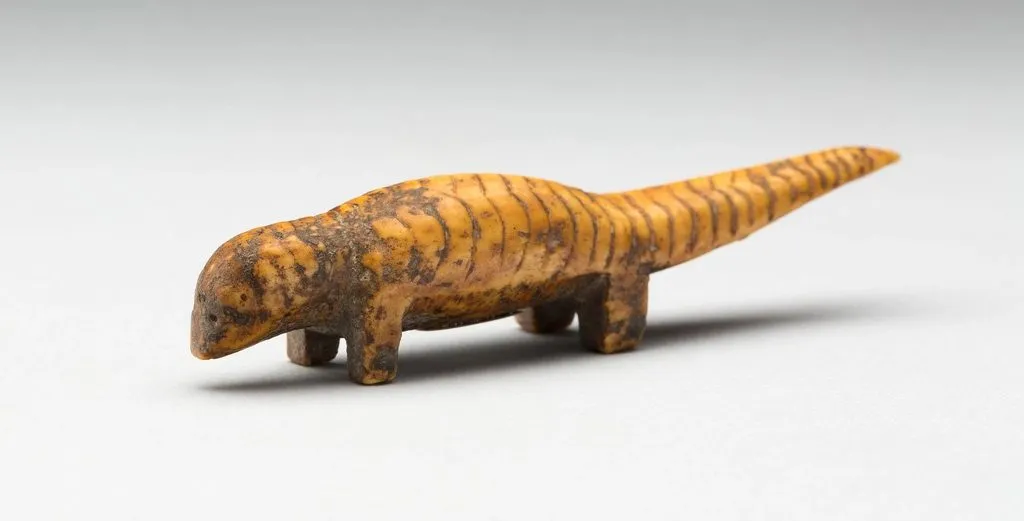
Pangolins are the most trafficked mammals on Earth, and for years scientists lumped the Himalayan population in with China's Chinese pangolin. DNA pulled from a museum specimen nearly 190 years old told a different story: those animals, spread across Nepal and northern India, are their own species, Manis aurita, distinct enough to have quietly evaded classification for two centuries 4.

a pangolin
Pictured a pangolin · artinstitutechicago (via rawpixel)

Field Museum curator Anderson Feijó and Nepal Engineering College researcher Narayan Koju led the work, published in Communications Biology, capping more than five years of fieldwork that started when Koju first noticed the Himalayan animals didn't quite fit.

04/08 Natural Sci.

Proteins built from a bigger alphabet

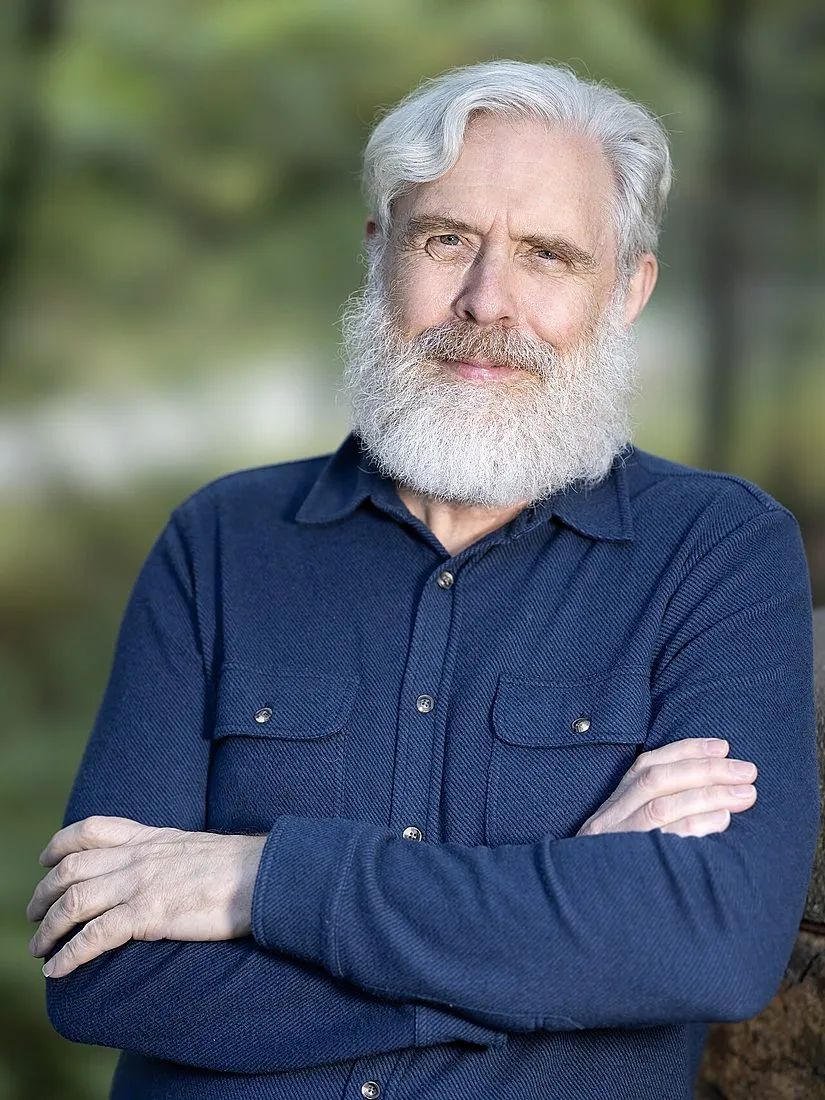
Every living thing builds proteins from the same 20 amino acids, and rewriting that code inside a living cell has taken geneticist George Church's Harvard lab the better part of two decades, one stubborn codon at a time.

George Church
Pictured George Church · Christopher Michel (Wikimedia Commons)

His team's new tool, AGENTEX, skips the cell entirely. Researchers custom-build the tRNAs and ribosomes needed for new amino acids and drop them into a cell-free lab mixture that manufactures proteins using up to 34 building blocks instead of 20, with no genome to edit and no organism required 73. Along the way, first author Felix Radford's team turned up new basics about how DNA becomes protein that nobody had mapped before.

05/08 Psychology

What actually helps a stranger feel at home

About 13 million American adults move each year, and a new study from the US Chamber of Connection found 40% of them struggle with social connection afterward, facing 35% more barriers to it than people who stayed put 117.

Today Got Better

The piece opens with Liz Cahill, who left generations of Philadelphia roots for a Bay Area internship and knew literally no one, until two strangers, her new roommates Lauren and Deirdre, simply took her in. Darilys Matos Acevedo had the opposite experience moving from Puerto Rico, where a stranger smiles at you on the street, to Boston, where she got glares instead, until she found other transplants who felt exactly the same isolation.

06/08 Good News

India's lions, back from the edge

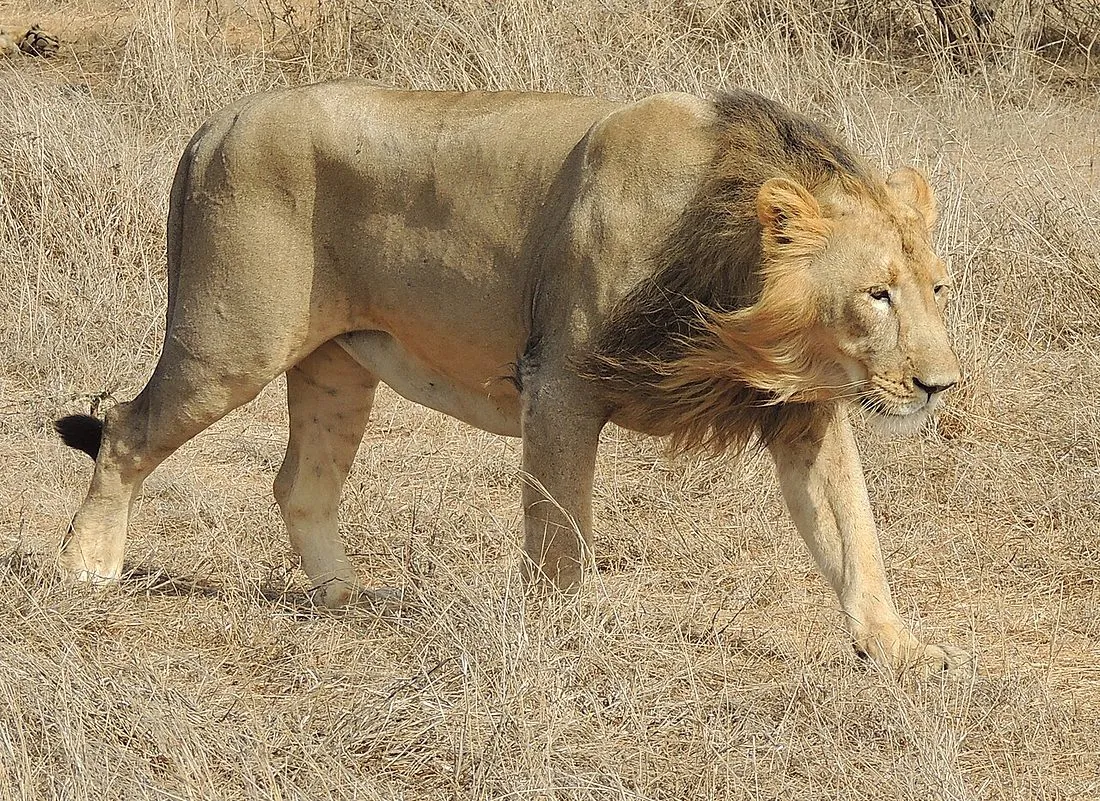
Asiatic lions now number 891 in India's Greater Gir Landscape, up from 523 just a decade ago, a 70% jump according to the 16th official population count, released around World Lion Day 237.

an Asiatic lion
Pictured an Asiatic lion · Wikimedia Commons / Asiatic lion

Their range has grown from roughly 30,000 to nearly 35,000 square kilometers across 11 districts. In Barda Wildlife Sanctuary, where lions vanished in the 19th century, 17 have recolonized the area on their own since 2023. Much of the credit goes to a patient, unglamorous effort: rebuilding populations of the deer and wild pigs the lions actually eat.

07/08 Plant-Based

The best protein in the world is a block of tofu

Cambridge behavioral scientist Chris Macdonald built a new rating system, the Better Protein Institute Score, that combines a Planet Score (emissions, water pollution, land use) with a People Score (sodium, saturated fat, protein completeness, affordability) across 20 common proteins 225.

a bowl of cubed tofu
Pictured a bowl of cubed tofu · Alex Munsell (via stocksnap)

Tofu came out on top of all twenty. The next three spots went to chia seeds, beans, and quinoa, all plant-based. The bottom four, in order from bad to worst, were mozzarella, lamb, beef, and cheddar cheese, which finished dead last.

08/08 Technology

The city where getting old works differently

Rugao, a city of 1.3 million a few hundred miles from Shanghai, had 672 residents over age 100 as of February 2026, a rate roughly five times the global average 210.

an elderly woman walking in a garden in China
Pictured an elderly woman walking in a garden in China · Jules Verne Times Two (Wikimedia Commons)

Scientists from the Chinese Academy of Sciences have floated the region's mineral-rich soil as one factor. But the residents themselves describe something plainer: 105-year-old Gao Tingkuan is up before 5am for a walk, then does his own grocery shopping, buying whatever he feels like eating that day. Researchers studying similar longevity hotspots elsewhere have found the common threads are curiosity, low reported stress, and staying socially and physically engaged.

Quick notes

Shorter discoveries from this morning, worth knowing but not a full story.

Newer shingles vaccine linked to lower heart disease risk Oxford researchers compared 72,000 vaccinated people split just before and after the newer Shingrix shot replaced the older one in 2017, and found a 9% lower cardiovascular burden in the Shingrix group seven years out, with coronary heart disease down 10% and heart failure down 12% 111. STAT
UK Government Announces £22 Million Investment In Animal Testing Alternatives Britain is putting £20 million toward a hub that grows miniature human organs from donated NHS tissue, plus £2 million for projects like lab-grown ear models and "beating heart cells in a dish," all aimed at testing new treatments without animals 222. Plant Based News
Resurrecting Plant Inspires 'Fridge Free' Vaccines Borrowing a trick from plants that survive months of drought, UK researchers stabilized a vaccine into a powder using the same sugar the plants produce, and it stayed viable for a year at room temperature, even after being cycled between -4°F and 104°F 235. Good News Network
Scientists and Volunteers Take Big Step Towards Saving Rare 'Cryptic' Australian Orchid The rosella spider orchid needs one specific fungus to germinate and one specific native bee to pollinate it, so Royal Botanic Gardens Victoria hand-paired seeds with fungal spores in petri dishes for three years, and just planted 500 orchids back into the wild, more than existed in nature when they started 234. Good News Network
Want to See a Tiger? Let These Women Be Your Guides When Shahnaz Suleman Baig became one of India's Tadoba reserve's first female forest guides in 2015, male colleagues doubted the idea would work; ten years later, the reserve alone employs 52 women guides, and a training program built for them has placed 270 alumni across India's wildlife sector 239. Reasons to be Cheerful
This IAS Officer Raised Rs 40 Lakh on Facebook to Build a 100-km Road for Manipur Villages After the government shelved a Manipur road for thirty years, 28-year-old officer Armstrong Pame put in his own savings, opened a Facebook page, and got strangers from New York to New Delhi to fund it; 250 villagers then built it by hand with spades and machetes in seven months 243. The Better India
She Lost Her Job During COVID. Today, Odisha's 'Drone Didi' Helps 1000 Farmers Cut Costs & Earn More Kumudini Swain lost her dairy-industry job in the pandemic and turned two acres of family farmland into a cooperative of 960 farmers; women in her village now fly drones that spray an acre of crops in six minutes, work that used to mean hours carrying a chemical tank on foot 246. The Better India
This 'Hospital on Wheels' Reached 4000+ People A retired railway coach in Maharashtra was refitted with an ECG machine, a pathology lab, and consultation rooms, then sent rolling across a 1,200-kilometer rail division so employees no longer have to burn half a workday just to see a doctor 249. The Better India
Fewer Than 1,000 Left: Meet the Elusive Nilgiri Marten A single photograph of this chocolate-and-orange weasel relative, found only in India's Western Ghats shola forests, went viral this year and introduced most viewers to an animal they'd never heard of, one with a global population under 1,000 252. The Better India
Changes to Facebook and Instagram are key part of Meta's $17B settlement with the states over harm to teens Facing a lawsuit from 47 states that accused Meta of engineering infinite scroll and autoplay to hook kids, the company agreed to pay up to $17 billion over ten years and change how the apps work for young users 157. The Conversation
Daddy's Girl Danish researchers tracking workplaces found that when a male manager has his first daughter, the women at his company see earnings rise 4.4% and employment rise 2.9% in the years after, with no dip in how the firm performs 150. Marginal Revolution
Tiny house villages are increasingly responding to the homeless crisis As Charlotte, North Carolina's homeless population rose from 444 to over 2,000 in a single year, resident-led tiny house villages have sprung up as a faster, community-run answer than the housing market has managed on its own 161. The Conversation
Wildlife Photographer of the Year Whittles More than 65,000 Entries to the Top 100 Judges narrowed over 65,000 submissions from 121 countries down to 100, including a shot of an oxpecker cleaning a rhino's snout so tenderly it looks like an embrace 268. Colossal
What Could Go Right? College Is Getting . . . Cheaper? Against every assumption, inflation-adjusted public college tuition has actually dropped 10% at two-year and 7% at four-year public schools over the past decade, with states now contributing record amounts of aid 253. The Progress Network
Uncle mistakenly dropped his 3-year-old nephew off at elementary school A Chicago uncle accidentally enrolled his 3-year-old nephew in a full day of first grade instead of daycare, the boy came home with an art project and a huge grin, and the video's comment section filled up with teachers explaining they'd have done exactly the same thing 260. Upworthy

Our process. Your trust.

Every discovery above traces back to an article we read in full. This is the whole corpus behind this morning, and what it was made of.

  • 46 Sources scanned
  • 272 Articles read
  • 8 Fields covered
  • 8 Discoveries

The sources that carried this morning

  1. 1 Nature 20 articles
  2. 2 PLOS One 20 articles
  3. 3 Psychology Today: The Latest 19 articles
  4. 4 Phys.org 15 articles
  5. 5 Ars Technica - All content 14 articles
  6. 6 STAT 13 articles
  7. 7 The Better India : Latest Posts 12 articles
  8. 8 Interesting Engineering 10 articles
How an edition is made

Everything we read today

Natural Sciences 98 articles
PLOS One
Life Sciences & Medicine 18 articles
Psychology & Behavioral Science 29 articles
Social Sciences 21 articles
Works in Progress RSS Feed
Technology & Innovation 48 articles
Plant-Based & Vegan 18 articles
Solutions & Good News 31 articles
Positive News
Human Stories & Ideas 9 articles
The long view · not today’s news, the story behind it

Today’s discoveries didn’t come from nowhere. Here’s the older, ongoing story they belong to, a moment from this day in history, and a question to test what stuck.

The story so far

On this day in science

1783 The first hydrogen balloon flies In Paris, Jacques Charles and the Robert brothers launched the world's first hydrogen-filled balloon, which rose over the Champ de Mars and drifted for miles. It showed that a lighter gas could carry flight higher and farther than hot air alone. More from the Almanac →

Before you go: today’s quiz

The daily quiz

Why do scientists want a finding replicated by other teams?

Reveal the answer

Because one study is a data point, not a settled conclusion

A finding earns trust when independent scientists can repeat it. Until then a single study is one data point, not a conclusion.

Read the explainer →

Previous editions

Every morning we have published, newest first. Nothing expires.

View the full archive

Get this every morning.

Liked today’s? Wake up to tomorrow’s, in one short letter.

  • One email each morning, never more
  • The day’s real discoveries across 8 fields
  • One calm read with your coffee

The full letter, every morning, free for good.

Same free letter, plus the reason it stays that way: no ads, no investors, no agenda but the good news itself.

A single gift of any amount. No account, never a recurring charge.