The Field Guide · No. 38
Overdiagnosis: finding disease that would never have caused harm
Overdiagnosis is finding a real disease, often through screening, that would never have caused symptoms or death, so the diagnosis itself becomes the only harm the person experiences.
Updated
Overdiagnosis is finding a disease that was never going to hurt the person who has it. It is a different failure from lead-time bias, which is about starting the survival clock earlier without changing when someone dies. Overdiagnosis is about finding something genuinely real, a tumor or lesion that is truly there, which would have sat quietly for the rest of a person's life if no one had gone looking for it. The person is diagnosed, and often treated, for a disease that was never going to make them sick.
South Korea shows what happens when a population is screened aggressively for a disease with a large hidden reservoir. After the health system began widely offering low-cost thyroid ultrasound, thyroid-cancer diagnoses rose 15-fold between 1993 and 2011, making it the country's most commonly diagnosed cancer. Thyroid-cancer deaths barely moved, staying between 300 and 400 a year the entire time, even as diagnoses topped 40,000 in 2011 alone, a pattern researchers called pathognomonic for overdiagnosis.
Two traps follow. First, it is tempting to assume that catching more cases early must be saving more lives, but rising diagnoses paired with a flat death rate over many years is close to the opposite signal. Second, the pattern is not unique to thyroid cancer. Infant screening programs for neuroblastoma, tried in Japan, Germany, and Quebec, all found sharply more early-stage cases without lowering deaths from the disease, which reviewers of the evidence concluded meant real overdiagnosis, estimated at as many as seven extra diagnoses for every 100,000 infants screened.
So when a screening program is credited with catching a cancer early, ask what happened to the death rate, not just the diagnosis rate. Rising cases alongside a flat or falling death rate over years is the signature of overdiagnosis, not success. That is a different question from lead-time bias, which asks whether an earlier diagnosis merely started the survival clock sooner. The guideline bodies that decide whether to recommend a screening test have to weigh this tradeoff directly, which is why some of those decisions have taken decades to settle.
What to remember
- Overdiagnosis is finding a real disease that would never have caused symptoms or death, a different failure from lead-time bias.
- Rising diagnoses alongside a flat death rate over many years, as in South Korea's 15-fold rise in thyroid cancer, is a signature of overdiagnosis.
- The pattern recurs wherever screening exposes a large hidden reservoir of disease, as multi-country neuroblastoma screening trials also found.
From the record
Screening infants for neuroblastoma results in overdiagnosis (diagnosis of some neuroblastomas detectable by mass screening that would not have been clinically diagnosed later).
Asked often
How is overdiagnosis different from a false positive?
A false positive means the test was wrong and there was no disease at all. Overdiagnosis means the test was right: a real tumor or lesion was found, but it was the kind that would have sat quietly for the rest of a person's life without ever causing symptoms or death. The harm comes from the diagnosis and its treatment, not from the disease itself.
What is the clearest sign that overdiagnosis is happening?
When diagnoses of a condition rise sharply after a population starts being screened for it, but deaths from that condition stay flat for years afterward. That is what happened in South Korea, where thyroid-cancer diagnoses rose 15-fold between 1993 and 2011 while thyroid-cancer deaths stayed between 300 and 400 a year the entire time.
Further reading
Go deeper
Paid link. If you buy a book through this link, Bookshop.org pays us a small commission and sends a share of the sale to independent bookstores.
-
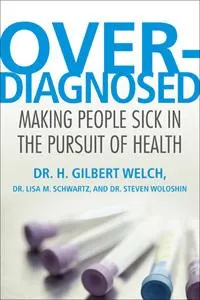
Overdiagnosed (opens Bookshop.org)
H. Gilbert Welch, Lisa Schwartz and Steven Woloshin · 2011
Three Dartmouth physicians document how screening finds cancers and other conditions that would never have caused harm, with chapters on thyroid, breast and prostate cancer.
Read the news better, every morning.
We send you the day's real progress in science, medicine and beyond, told plainly and sourced. Free, forever.
Free forever, no spam. One click to unsubscribe, and we never sell your email.