






The daily edition · August 6, 2026

The first animals moved 10 million years early, and a pill calmed a peanut allergy

Your morning brief

a 12-minute read

The feel-good story of the day

a bartender at a restaurant counter cottonbro studio (via Pexels)
Pictured a bartender at a restaurant counter

A peppermint, a ten-year-old, and a bartender who didn't hesitate

On July 18, six-year-old Oliver Webb was at the Mall of Monroe in Michigan when a peppermint lodged in his throat and he stopped being able to breathe. His ten-year-old brother Hudson noticed first. "I looked back and I see his face turning red, and I'm like, 'Oh, my God. He's choking,'" Hudson said. He tried back blows from a video he'd once watched, but couldn't dislodge it.

That's when Devon Forrest, a 27-year-old bartender and manager at a restaurant called Dirty Birdie, saw what was happening and moved. He held Oliver over a garbage can until the peppermint came loose and the boy could breathe again. Forrest had gotten CPR certified just a month earlier, paid for by his employer, and it turned out to matter within weeks.

Nearly two weeks later, Oliver's mother Mandy brought her family back to Dirty Birdie, not because she had to, but because she needed to say it in person. "You deserve everything," she told him, crying. "Thank you doesn't cut it." It's a small, ordinary kind of heroism: a boss who paid for a certification, an employee who used it without a second thought, and a family with their son back because of both.

The common thread · How today's discoveries connect Open editor's note
Fresh today · August 6, 2026

The discoveries, in full

a paleontologist excavating ancient fossils in a remote Arctic tundra landscape
Pictured a paleontologist excavating ancient fossils in a remote Arctic tundra landscape · Brett Sayles (via Pexels)
01/08 Natural Sci.

The oldest known animals just got 10 million years older

In a remote stretch of Canada's Northwest Territories, researchers from the American Museum of Natural History and Dartmouth have uncovered an exceptionally rich bed of Ediacaran fossils, soft-bodied creatures that lived on ancient seafloors more than 500 million years ago 4.
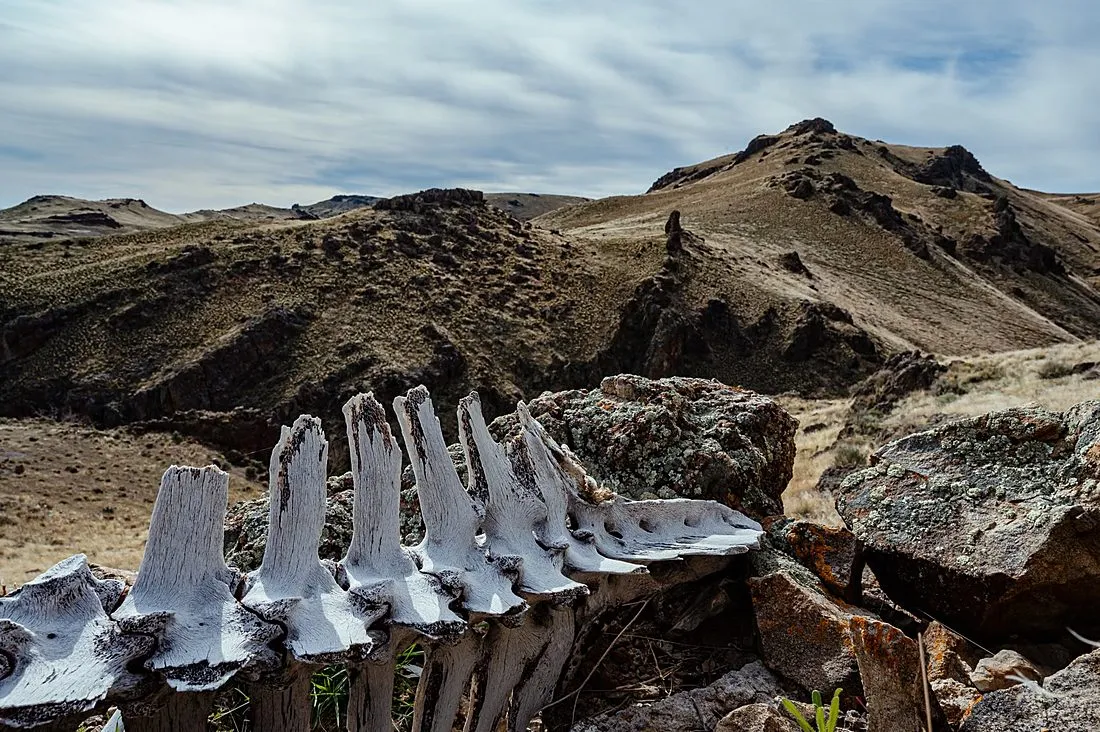
Some of the specimens date to roughly 567 million years old, which pushes back the earliest evidence of animals moving under their own power and reproducing sexually by 5 to 10 million years. "For 3 billion years, life on Earth was dominated by microbes," said lead author Scott Evans. "Then, all the sudden, we get these strange-looking marine animals big enough to see and capable of behaviors we would find familiar today" 4. Sites with more than 10 Ediacaran species are rare enough that scientists have had to reconstruct 40 million years of history from scraps; this one, published in Science Advances, is a rare exception.

a planarian flatworm
Pictured a planarian flatworm · Wijs (Wise) (via Pexels)
02/08 Natural Sci.

The immune cell that saves the body by blowing itself up

Studying planarian flatworms, the small aquatic animals famous for regenerating after being cut into pieces, Stanford researchers noticed something no one had described before: an immune cell that destroys threats by exploding, vanishing almost completely within minutes 11.

Postdoc Chew Chai found the cells while testing whether flatworms can tell their own tissue from another worm's; she sliced worms lengthwise and fused each half with part of a different worm, and the fused "Frankenstein" worms rejected the foreign tissue in a burst of inflammation. "We never expected that a cell could just explode like a bomb and kill the cells surrounding it," said senior author Bo Wang. The team named the cells ruptoblasts, and traced the trigger to a hormone called activin. Published in Cell, the work also solved a smaller mystery: injecting activin into an uninjured, unfused flatworm produced the same explosive response on its own 11.

a child safely eating peanut butter with a parent
Pictured a child safely eating peanut butter with a parent · Vanessa Loring (via Pexels)
03/08 Natural Sci. Life Sciences

A swallowed capsule that helped a peanut allergy fade

Fifteen adults with peanut allergies, average age 21, each swallowed 36 capsules over a single day containing stool from a healthy donor with no food allergies, an attempt to seed their guts with a different mix of microbes 42.

Four months later, six of them could eat far more peanut than before without reacting; most tolerated peanut flour equal to a whole peanut, and one participant handled the equivalent of four peanuts. "These responses represent a marked improvement," said lead researcher Rima Rachid of Boston Children's Hospital 42. The results, published in Science Translational Medicine, mark one of the first human trials to test whether a food allergy can be dialed back by changing gut bacteria rather than by the slow, daily dose-escalation of oral immunotherapy.

What each field noticed (2)
an older adult walking briskly outdoors
Pictured an older adult walking briskly outdoors · Muhammed Hanefi (via Pexels)
04/08 Psychology

The "super movers" whose fast walk hints at a resilient brain

Researchers led by Joe Verghese at Stony Brook combined three large aging studies, including one following nearly 4,000 adults over 80 across the US, England, Europe, China, and Mexico, and identified "super movers": the roughly 7 percent of older adults whose walking speed is at least 1.5 standard deviations above the average for their age and sex 128.

Tracked for an average of 3.4 to 5.4 years, these fast walkers had a 51 percent lower relative risk of developing new cognitive impairment than their slower-walking peers. Brain scans found something unexpected: super movers didn't necessarily have less of the plaque buildup associated with Alzheimer's. Instead, they seemed to have structural advantages that helped their brains cope with aging anyway. "We wanted to understand the opposite [of why people slow down]: why some adults over 80 maintain exceptional mobility and whether that reflects healthier brain aging," Verghese said 128.

a person preparing a fresh vegan meal in their kitchen
Pictured a person preparing a fresh vegan meal in their kitchen · Yaroslav Shuraev (via Pexels)
05/08 Plant-Based

A month of eating vegan changed how genes switch on

In a randomized trial from the University of California San Diego and the University of Freiburg, 48 healthy adults ate the same plant-based diet for a week, then split into a vegan group or a meat-rich group for four more weeks, with calories matched so the researchers were isolating the food itself rather than weight loss 235.

Scanning more than 800,000 DNA methylation sites, the team found the vegan group showed changes linked to lower inflammation, including fewer neutrophils and higher levels of the immune cells that help regulate inflammatory response. Two separate epigenetic clocks, tools that estimate biological age from these DNA marks, suggested biological aging had slowed in just those four weeks. "Our genes are not our destiny," said co-senior author Jerome Mertens. "The remarkable finding isn't simply that one diet outperformed another. It's that the epigenome responded measurably in just four weeks" 235.

an older adult undergoing an eye exam
Pictured an older adult undergoing an eye exam · SHVETS production (via Pexels)
06/08 Technology

A wireless chip that gives sight back to the blind spot

PRIMA, a wireless retinal implant built by Science Corp., has received the European CE marking that clears it for sale across 30 countries, moving it from experimental device to something doctors can actually offer patients 208.

It's designed for geographic atrophy, an advanced form of dry age-related macular degeneration that slowly destroys the light-sensing cells in the center of the retina, leaving a widening blind patch in a person's direct line of sight even as their peripheral vision survives. The implant itself is a 2-by-2-millimeter chip, thinner than a human hair, carrying 378 photovoltaic pixels; a camera built into a pair of glasses captures the scene and beams it to the chip as invisible infrared light, and each lit pixel fires an electrical pulse into the retina's surviving circuitry. Because the light itself both powers the chip and carries the image, there's no battery or wire running through the eye. The first commercial implantation is expected soon in Germany 208.

a child holding a small robot shaped like a woodland creature
Pictured a child holding a small robot shaped like a woodland creature · Vladimir Srajber (via Pexels)
07/08 Good News

The robots that keep Native languages alive, one word at a time

Danielle Boyer, a member of the Sault Ste. Marie Tribe of Chippewa Indians, grew up watching her grandmother speak Anishinaabemowin, a language with fewer than 10,000 fluent speakers left in the US, largely because generations of Native children were punished for speaking it in government boarding schools 256.

At 18 she started building SkoBots: small, shoulder-sized robots decorated in Native floral patterns that kids program to answer questions in their own language, so asking one what a bear is gets back "makwa." Now 25, Boyer has mentored hundreds of Native children, including 12-year-old Ojibwe student Holden Hoy, who named his SkoBot Sabe after the Anishinaabemowin word for Bigfoot and programmed it to introduce itself in his own recorded voice at a school science fair. Crucially, the robots run on pre-recorded audio triggered by keywords, not generative AI. "If we're not learning our language correctly, we shouldn't learn it at all," Boyer said, noting she's watched ChatGPT invent fake Anishinaabemowin words 256.

a nurse consulting with a patient at a community health clinic
Pictured a nurse consulting with a patient at a community health clinic · CDC (via Pexels)
08/08 Good News

New HIV infections just hit a 30-year low

A new UNAIDS report, released for the International AIDS Conference in Rio de Janeiro, shows new HIV infections and AIDS-related deaths at their lowest point in more than 30 years 238.

Seven countries, Benin, Eswatini, Kenya, Lesotho, Nepal, Rwanda, and Zimbabwe, have cut new infections by almost 80 percent since 2010, and 11 countries have hit the "95-95-95" benchmark: 95 percent of people with HIV know their status, 95 percent of those diagnosed are on treatment, and 95 percent of those on treatment have the virus suppressed to undetectable levels. Brazil has expanded access to prevention medicines by 41 percent in the past year alone. UNAIDS also pointed to a coming wave of longer-acting prevention drugs, twice-yearly and monthly injections offering close to vaccine-level protection, as a genuine turning point still working its way to market 238.

Fresh today · August 6, 2026

Good news you might have missed

Inspiring CEO Gives Company to Charity After Working 80-hour Weeks for 58 Years, Saving it from Bankruptcy Eddie Smith Jr. spent 58 years turning Grady-White Boats from near-bankrupt to a nine-figure business, then turned down half-a-billion-dollar buyout offers to hand it to a permanent trust that funnels its profits into community and conservation work forever 239. Good News Network
Single Fossil Shows a Pterosaur Eaten by an Ichthyosaur Eaten by a Pliosaur: 'A 3-Way Chompfest' Australian fossil hunters stumbled on a 21-foot ichthyosaur with a pterosaur in its stomach and bite marks from something even bigger, likely a pliosaur, freezing an entire prehistoric food chain in one dramatic snapshot 240. Good News Network
Used for Centuries as Poison, Larkspur, Wolfsbane May Become Medicine After Lab Breakthrough Scientists at Michigan State and the Czech Academy of Sciences finally mapped how two famously toxic plants make their pain- and cancer-fighting compounds, cracking a chemical puzzle that had resisted lab synthesis for nearly 200 years 237. Good News Network
Global Uptake Of Plant-Rich Diets Could Help Reduce Emissions By 76% A Cornell-led modeling study in Nature found that a full food-system overhaul toward the mostly plant-based Planetary Health Diet could cut agricultural emissions by 76 percent and free up farmland the size of India by 2050 225. Plant Based News
'Getting Back to Basics': Minimally Processed Food Improves Weight and Body Composition, Study Finds In a UCL trial, people eating home-cooked, minimally processed meals lost nearly twice as much weight as people eating calorie-matched ultra-processed food, without anyone being told to eat less 233. VegNews
Watch: Assam Man's Simple Solar Invention Warns You of Hidden Drains Under Floodwater Using old plastic bottles, Abhijit Dowarah built a solar-powered marker that reflects sunlight by day and glows by night to reveal the drains and potholes that flooded roads hide, a fix built from trash that could save lives every monsoon 246. The Better India
'Arthritis Put Me in a Wheelchair at 14. I Still Built a Career & Bought My Family's First Car' Himanshika Sharma, who has lived with juvenile rheumatoid arthritis since childhood, describes standing beside the car she bought with her own earnings while her father, who once had to carry her down the stairs, ran his hand over the hood in disbelief 249. The Better India
Why Are These School Students Protesting? Nearly 1,500 students in Fatehpur, India boycotted class for five hours demanding clean water and working toilets, and officials granted seven of their eight demands; in Rajasthan, girls protesting a two-teacher school got five new teachers assigned 248. The Better India
How Savitribai Phule & Fatima Sheikh Changed the Future of Girls' Education in India In 1848, two women, one Hindu and one Muslim, opened a school for girls in Pune despite being pelted with stones and mud on the walk there, and today millions of Indian girls sit in classrooms because of it 252. The Better India
The 'Transplant Games' Are About More Than Medals Six hundred organ and stem-cell transplant recipients competed in bowling, shotput, and more at the European Transplant Games in Arnhem, proof for newly transplanted patients that a full, active life is still very much on the table 242. Reasons to be Cheerful
4 Indian Startups Proving AI Can Help Solve the Water Crisis One startup's sensors have already helped save 6 billion liters of water across Indian homes and buildings just by catching leaks down to a single drop 245. The Better India
Why the UK Insurance Broker is Turning Away Businesses That Sell Animal Products British broker Really Honest now refuses to insure new clients that sell meat or dairy, lumping animal agriculture in with fossil fuels and weapons on its list of industries it won't underwrite 215. Green Queen
Ladakh's Latest Attraction Isn't a Lake or Monastery, It's an Art Biennale Across the Himalayas Nineteen artists have turned 230 kilometers of Himalayan road into the world's highest art biennale, with installations scattered through actual villages so wind and altitude become part of the work itself 254. The Better India
'Bodega Cats of New York' Advocates for the City's Beloved Feline Shopkeepers A new photo book documents 60 cats across New York's bodegas, and its founder has gotten two bills introduced that would legally protect the shopkeeping cats from health code violations 267. Colossal
How a year abroad shapes student personality Tracking 180 students, some studying in 32 countries, researchers found a year abroad reliably made people more curious and agreeable and less anxious, even though it didn't overhaul their whole personality 119. PsyPost

Everything we read today

Natural Sciences 98 articles
PLOS One
Proceedings of the National Academy of Sciences: Proceedings of the National Academy of Sciences: Table of Contents
Life Sciences & Medicine 18 articles
Psychology & Behavioral Science 33 articles
Psyche | Know Your Self
Social Sciences 18 articles
Technology & Innovation 44 articles
Plant-Based & Vegan 24 articles
Solutions & Good News 22 articles
Human Stories & Ideas 14 articles
The long view · not today's news, the story behind it

Today's discoveries didn't come from nowhere. Here's the older, ongoing story they belong to, a moment from this day in history, and a question to test what stuck.

The story so far

On this day in science

1991 The World Wide Web opens to the public Tim Berners-Lee published the first description of the World Wide Web and made it available to anyone on the internet. It grew into the shared library and meeting place of the modern world. More from the Almanac →

Before you go: today's quiz

The daily quiz

About what share of the world now uses safely managed drinking water?

Reveal the answer

Nearly three-quarters

About 73.7 percent of the world used safely managed drinking water in 2024, up from 61.3 percent in 2000, which still leaves roughly one in four people without it.

See the number →

Get this every morning.

Liked today's? Wake up to tomorrow's, in one short letter.

The full letter, every morning, free for good.

Same free letter, plus the reason it stays that way: no ads, no investors, no agenda but the good news itself.

A single gift of any amount. No account, never a recurring charge.