


The daily edition · July 31, 2026

Ghost ancestors surface in our DNA, and Betelgeuse's hidden companion

Your morning brief

a 10-minute read

The feel-good story of the day

an airport ramp worker on the tarmac Ariel Hernandez (via Pexels)
Pictured an airport ramp worker on the tarmac

A stranger on a plane couldn't stop thinking about the man on the tarmac

James Blair spent forty years working, ten in the Navy and the rest as a fuel mechanic at John Wayne Airport, the last two decades of it on knees that had given out. At 64 he still couldn't retire, because his paycheck was the only thing keeping his elderly mother in hospice care.

A woman named Thackery was sitting on a plane getting ready to leave Los Angeles when she watched him limping across the tarmac, working anyway. She didn't know his name. She filmed a short clip on her phone, posted it to TikTok, and asked if anyone recognized him. The video took off, someone in the comments identified him, and within days his boss had driven ninety minutes to Blair's house to help him set up a fundraiser, since Blair himself didn't own a smartphone.

More than 6,000 people gave. The total passed $174,000. Blair, who hadn't been sure he still believed in much of anything, told a reporter the whole thing had restored his faith: "I believed in God, but I didn't really believe in God. But now, with the angel sitting next to you, it's amazing." He hasn't retired yet. But for the first time in a long time, he doesn't have to keep working through the pain alone.

The common thread · How today's discoveries connect Open editor's note
Fresh today · July 31, 2026

The discoveries, in full

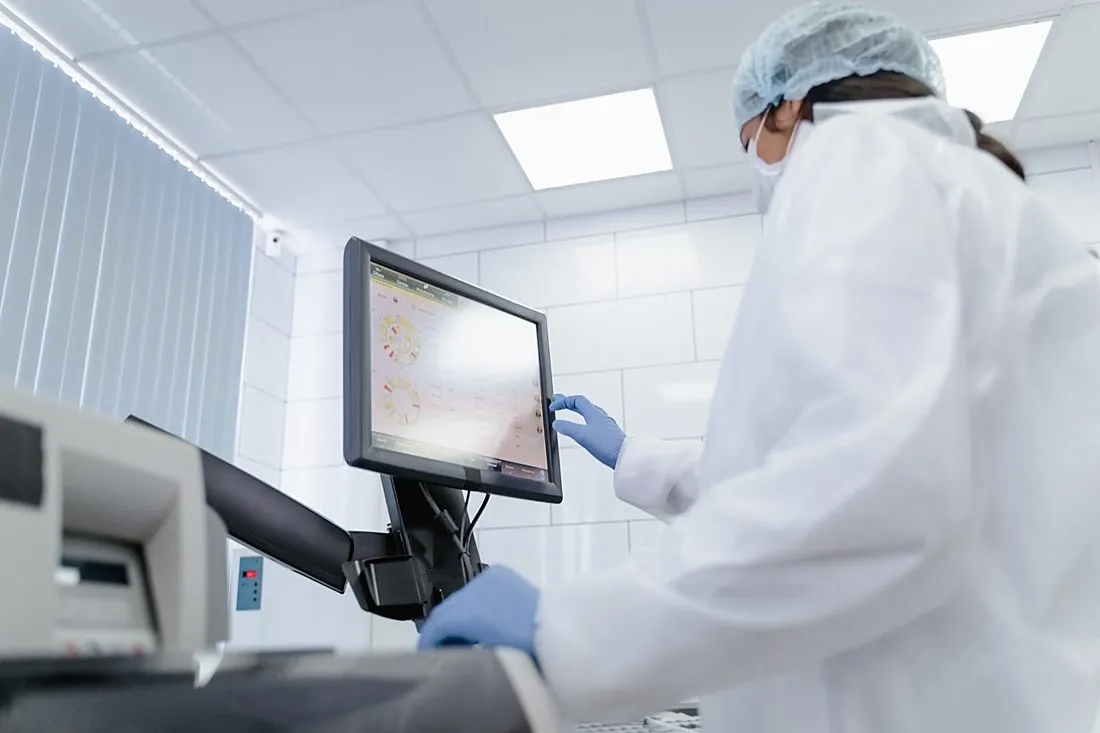
a scientist examining DNA sequencing data on a lab monitor
Pictured a scientist examining DNA sequencing data on a lab monitor · Tima Miroshnichenko (via Pexels)
01/07 Natural Sci.

Scientists found traces of extinct human ancestors hidden in our DNA

Everyone alive today is carrying around genetic postcards from ancestors nobody has ever found a single bone of. Geneticist Priya Moorjani and her team at UC Berkeley built a new method to scan and cross-reference more than 500 complete modern human genomes, reconstructing family trees for every stretch of DNA and flagging the spots where an ancestor split off from the rest of humanity a very long time ago 10.
Two distinct "ghost lineages" turned up: one that left its mark in every person alive today, and a "super-archaic" one whose branch may have broken away from the rest of us nearly 2 million years ago. We already knew modern humans mixed with Neanderthals and Denisovans; this is evidence of at least two more populations that vanished so completely no fossil or scrap of ancient DNA has ever surfaced, yet their genetic fingerprints survived hundreds of thousands of years inside us.

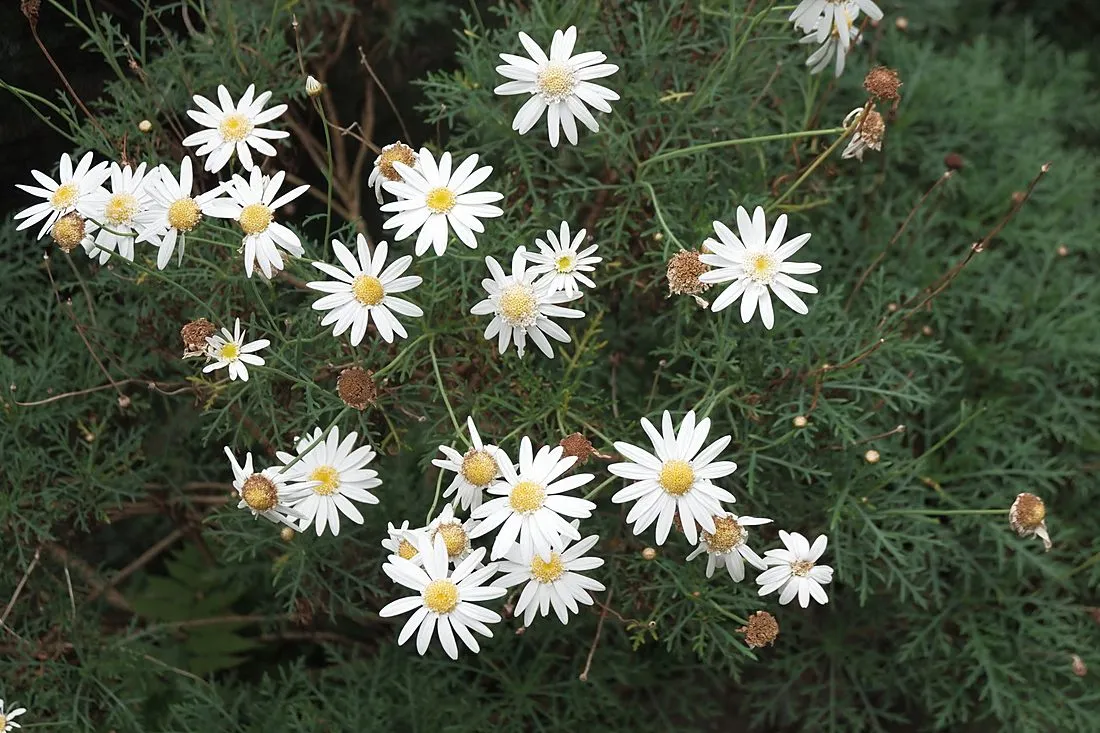
Scalesia giant daisy plants in the Galápagos Islands
Pictured Scalesia giant daisy plants in the Galápagos Islands · Nurul Sakinah Ridwan (via Pexels)
02/07 Natural Sci.

Darwin's islands are still producing new species, and scientists just caught it happening

More than 150 years after Darwin's finches made the Galápagos famous, the islands' giant daisies are teaching biologists a new lesson. Scalesia, the group of plants known as Galápagos giant daisies, arrived from South America and diversified almost entirely within the last million years, an eyeblink in evolutionary time 1.

An international team led by Vanessa Bieker at the Royal Botanic Gardens, Kew, found that separate daisy lineages independently evolved the same heat-tolerant leaf shape to survive the islands' hot, dry lowlands, each one using a completely different combination of genes to get there. The team also found major genetic differences among populations isolated on different islands, the kind of divergence that suggests brand-new species are forming right now, not in some deep evolutionary past.

Astronomers finally photographed the star hiding behind Betelgeuse
Evgeny Kochurov (via Pexels)
03/07 Natural Sci.

Astronomers finally photographed the star hiding behind Betelgeuse

Betelgeuse, the bright red supergiant marking Orion's shoulder, is so blindingly bright that astronomers have spent a hundred years arguing about whether something was hiding in its glare.

Using the Very Large Telescope in Chile, a team led by astronomer Miguel Montargès captured the clearest image yet of that hidden companion in December 2024, a star nicknamed Siwarha with roughly two to three times the mass of the sun, larger than anyone had predicted 79. "This is the conclusion of a century-long quest," Montargès said, adding that he'd assumed the telescope wouldn't be sensitive enough to catch it. "Because it is more massive than predicted, we see it."

a person in a calm therapy session
Pictured a person in a calm therapy session · SHVETS production (via Pexels)
04/07 Psychology

Psychedelics may work by quieting the brain's inner narrator, not exciting it

Scientists have argued for years about whether psychedelics turn up or turn down the brain's "bottom-up" signals, the sensory information flowing from perception toward higher-level thought.

A team at Stanford led by postdoctoral scholar Adam Pines and senior author Leanne Williams borrowed a technique from computer vision called optical flow, normally used to track moving objects across video frames, and applied it to brain scans instead, letting them watch signals physically travel across the cortex frame by frame 113. Combining data from four independent studies of LSD, psilocybin, and MDMA, they found a consistent pattern: all three drugs reliably reduce the flow of information rising into the default mode network, the collection of brain regions tied to self-reflection, daydreaming, and a rigid sense of self.

an aerial view of a remote northern Canadian community on a frozen bay
Pictured an aerial view of a remote northern Canadian community on a frozen bay · Putulik Jaaka (via Pexels)
05/07 Technology

A remote Cree community built its own fiber network, and it's already saved a life

In February 2024, a young man in Fort Albany First Nation, on the shore of James Bay in northern Ontario, collapsed from hypothermia after failing to make it home. His mother sent a Facebook message to then-chief Elizabeth Kataquapit, who used it to mobilize the community's search-and-rescue snowmobile squad, and before dawn they found him alive 173.

That message went out over the Western James Bay Telecom Network, a fiber-to-the-home internet system the Cree community built and owns itself, after telecom giants decided there was no profit in wiring the subarctic coast. Finance officer Brian Nakogee had to secure capital from funders unfamiliar with the realities of remote northern life, and today the nonprofit network outperforms Starlink while keeping every dollar of infrastructure and revenue inside the communities it serves.

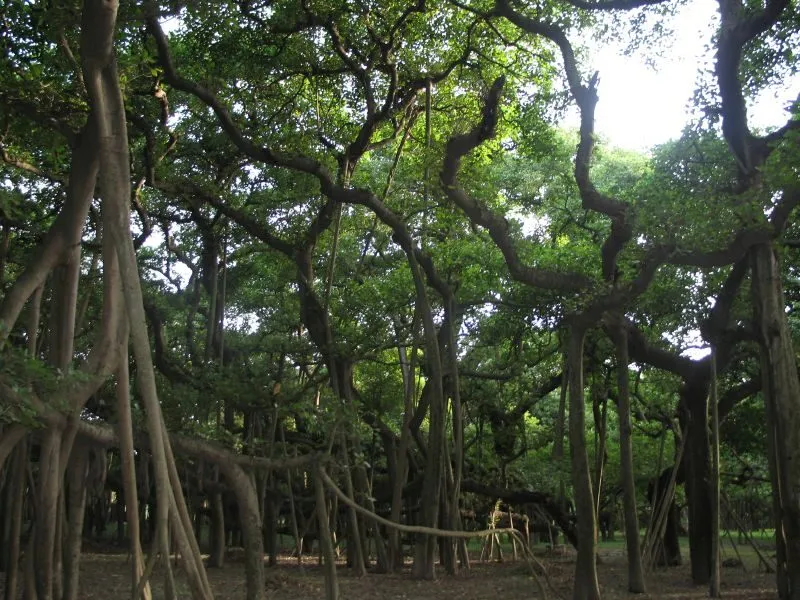
the Great Banyan Tree in Kolkata's botanic garden
Pictured the Great Banyan Tree in Kolkata's botanic garden · Kent Spillner (Wikimedia Commons)
06/07 Social Sci.

India's ancient banyan trees are keystone species holding up entire ecosystems

Earlier this year, scientists used high-precision radiocarbon dating to confirm that a banyan tree in Bihar's Munger district is around 700 years old, the oldest accurately dated banyan ever identified, and one that has outlived its original trunk entirely through a spreading network of aerial roots 233.

Scientists classify mature banyans as keystone species, meaning a single tree can feed, shelter, and sustain hundreds of birds, mammals, insects, and other creatures over its lifetime. The Great Banyan in Kolkata's Acharya Jagadish Chandra Bose Indian Botanic Garden spans nearly 4.7 acres through more than 3,700 aerial roots and now behaves less like one tree than a living forest, sheltering fruit bats, palm squirrels, barbets, bulbuls, and koels, while a roughly 400-year-old banyan near Bengaluru draws Indian flying foxes in at dusk to feast on ripe figs and carry the seeds onward.

a family tending rows of mushrooms in a converted farm building
Pictured a family tending rows of mushrooms in a converted farm building · Zen Chung (via Pexels)
07/07 Plant-Based

An Iowa hog farm became a mushroom farm, and it's a model for the whole industry

The Faaborg family spent three decades raising pigs in Iowa, the country's leading pork-producing state, before transforming their operation into a specialty mushroom farm with help from The Transfarmation Project 199.

Their farm, 1100 Farm in Radcliffe, just opened as Transfarmation's second demonstration hub, a living example other farmers can walk through and see for themselves. "We spent generations raising pigs. Today, we're showing that the next generation of farming can look different," said Tanner Faaborg, whose family is betting on a specialty mushroom market projected to reach $5.58 billion in North America by 2030.

Fresh today · July 31, 2026

Good news you might have missed

Brazil Bans Foie Gras Production And Sales Nationwide Brazil just became the first country in the world to ban both making and selling foie gras, after activists sent more than a million messages to lawmakers on behalf of the geese and ducks force-fed to produce it 210. Plant Based News
Global Hunger Falls Below 8% for the First Time Since the Pandemic For the third year running, global hunger has dropped, and it's now below 8% of the world's population for the first time since COVID, down from nearly 35% outside Europe and North America back in 1970 224. Nineteen years after Argentina reintroduced giant anteaters to the Iberá Wetlands, the population has grown from zero to around 200 wild, wild-born animals 222. Good News Network
Woman's Viral Video Raises More Than $174K for Disabled Veteran She Spotted Working at Airport A stranger noticed a Navy veteran limping across the tarmac on bad knees, posted about it, and raised enough for him to finally consider retiring after 20 years of working through the pain 223. Good News Network
The Youngest Lighthouse Keeper in Britain Is Putting a Fresh Face on an Old Job Jeri Cormack, 28, is now tending three Scottish lighthouses her own great-grandfather helped build a century ago, one of just two women among Britain's 17 remaining keepers 226. Nice News
Spreading Crushed Rock on Newly-Planted Forests Boosts Carbon Storing and Nutrients A Welsh field experiment found that sprinkling crushed basalt rock over young reforested woodland boosted aboveground carbon storage by 27% in early results 225. Good News Network
What went right this week: the good news that matters The EU approved an eye implant that restores usable vision to people with age-related macular degeneration, improving sight in 80% of clinical trial patients 227. Positive News
What went right this week: the good news that matters Food banks worldwide rescued half a million tonnes of food from landfill last year, keeping roughly two million tonnes of CO2 out of the atmosphere while feeding 2.5 million more people than the year before 227. Positive News
Robertson Foundation Invests $19M to Curb Methane Through Plant-Rich Diets & Food Waste Reduction A philanthropic foundation just put $19 million behind six organizations working to cut methane from the food system, from campus dining halls serving more plant protein to schools composting instead of landfilling 197. Green Queen
How a Peaceful Protest by UP Schoolchildren Brought Fans and Better Classrooms Students at an Indian college organized a peaceful protest over sweltering classrooms with no fans, and officials responded within days by installing fans and fixing the furniture 230. The Better India
This IAS Officer Led 360 Raids to Stop Fake Milk From Reaching Maharashtra Homes After nearly 79% of tested milk samples in Maharashtra failed purity checks, one official led 360 raids in 30 days, arresting 350 people and sealing 274 illegal operations, no exceptions for famous names 231. The Better India
A Wild Himalayan Spice Is Helping 200 Families Protect 100 Sq Km of Forest Villagers in Arunachal Pradesh turned a wild forest spice called Khagi into a source of income, so every kilogram sold now funds forest patrols and gives 200 families a reason to keep the woods standing 235. The Better India
How 3 Women Turned Textile Waste Into Jobs for 50 Artisans With Disabilities A Mumbai social enterprise called Karmann has upcycled over 10,000 kilograms of textile waste into products while employing 50 artisans with disabilities, proving inclusion and profit aren't a trade-off 237. The Better India
'Love on the Spectrum' star reveals secret benefit of her neurodivergence: Autistic joy Autism advocate Kaelynn Partlow is pushing back on the idea that autism is only ever difficult, describing an overwhelming, full-body "autistic joy" that research on the condition is only just starting to document 242. Upworthy
Scientists left cinderblocks in a barren part of the sea. 3 months later they were ecstatic. Divers stacked plain concrete pyramids in a barren patch of Caribbean seafloor off Grenada in 2013, and within three months feather duster worms, lobster, and juvenile fish had moved in; a decade later the reef hosts over 30 fish species and 14 kinds of coral 247. Upworthy

Everything we read today

Natural Sciences 87 articles
PLOS One
Life Sciences & Medicine 13 articles
Psychology & Behavioral Science 32 articles
Social Sciences 28 articles
The Conversation Articles
Technology & Innovation 34 articles
Plant-Based & Vegan 26 articles
Solutions & Good News 30 articles
Human Stories & Ideas 16 articles
The long view · not today's news, the story behind it

Today's discoveries didn't come from nowhere. Here's the older, ongoing story they belong to, a moment from this day in history, and a question to test what stuck.

The story so far

On this day in science

1964 The first close-up pictures of the Moon NASA's Ranger 7 sent back the first close-up images of the Moon before crashing into its surface, showing detail a thousand times sharper than any telescope. The photos helped plan the Apollo landings. More from the Almanac →

Before you go: today's quiz

The daily quiz

A solar panel cost $128.27 per watt in 1975. About what did it cost per watt in 2024?

Reveal the answer

$0.26

The price of a solar module fell from $128.27 per watt in 1975 to $0.26 in 2024, as manufacturing scaled and each doubling of capacity cut the price by about a fifth.

See the number →

Get this every morning.

Liked today's? Wake up to tomorrow's, in one short letter.

The full letter, every morning, free for good.

Same free letter, plus the reason it stays that way: no ads, no investors, no agenda but the good news itself.

A single gift of any amount. No account, never a recurring charge.