



The daily edition · July 27, 2026

Some brains resist Alzheimer's, and eyes evolved from an ancient "cyclops

Your morning brief

a 10-minute read

The feel-good story of the day

Kūkai (Kōbō Daishi), a Japanese Buddhist monk in ceremonial robes Taiwankengo (Wikimedia Commons)
Pictured Kūkai (Kōbō Daishi), a Japanese Buddhist monk in ceremonial robes

The monk who built roads, dug reservoirs, and founded a mountain retreat that still stands 1,200 years later

On this day in 774, in what is now Japan's Shikoku island, a boy named Saeki no Mao was born. He would grow up to become Kūkai, known to history as Kōbō Daishi, the founder of Japan's Shingon school of Buddhism.

Kūkai traveled to Tang China to study, then returned home carrying teachings and translations that would eventually reach millions. But what makes his story land is that he didn't stop at scripture. He was also a hands-on engineer, personally helping repair irrigation reservoirs that farming communities depended on, treating the practical work of keeping people fed as inseparable from his spiritual calling. In 816 the emperor granted him land on Mount Kōya to build a mountain retreat, which he didn't live to see finished but which still stands today as a UNESCO World Heritage Site and one of the most visited pilgrimage destinations in Japan.

More than five million people in Japan today identify with the Shingon sect he founded. Twelve centuries on, a monk who spent as much time fixing water systems as writing scripture is still, in a very literal sense, helping people find their footing.

The common thread · How today's discoveries connect Open editor's note
Fresh today · July 27, 2026

The discoveries, in full

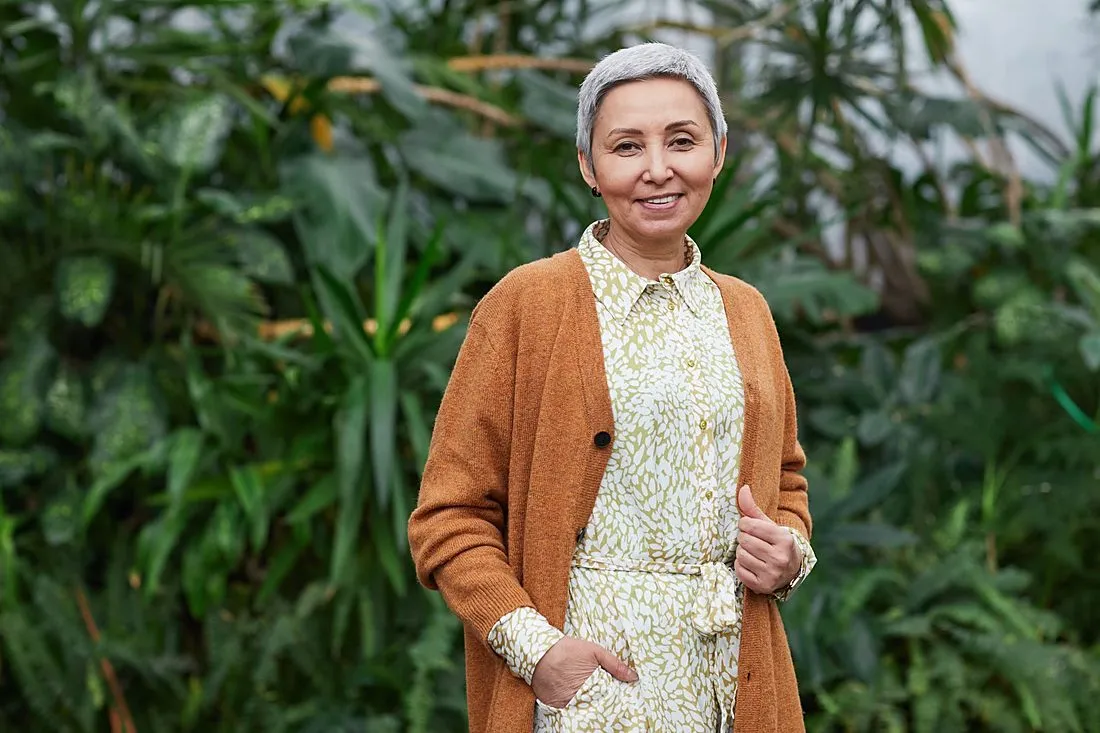
a healthy, smiling woman in her hundreds
Pictured a healthy, smiling woman in her hundreds · Marcus Aurelius (via Pexels)
01/07 Natural Sci.

The brains that resist Alzheimer's, even when the disease is already there

Researchers from VIB, KU Leuven, the UK Dementia Research Institute and Muna Therapeutics compared donated brain tissue from older adults with dementia, older adults without it, and a group of cognitively healthy centenarians, people who lived past 100 with their minds intact 2.
Some of these brains were loaded with the amyloid plaques and tau tangles that define Alzheimer's, yet the person who owned that brain never lost their memory. The team, publishing in Nature Medicine, traced the difference to microglia, the brain's resident immune cells, which shift into distinct protective states in the resistant brains. "This has been an exciting journey with many partners," said co-senior author Bart De Strooper. "The study provides insight into one type of resilience mechanism in the progression of AD to dementia."

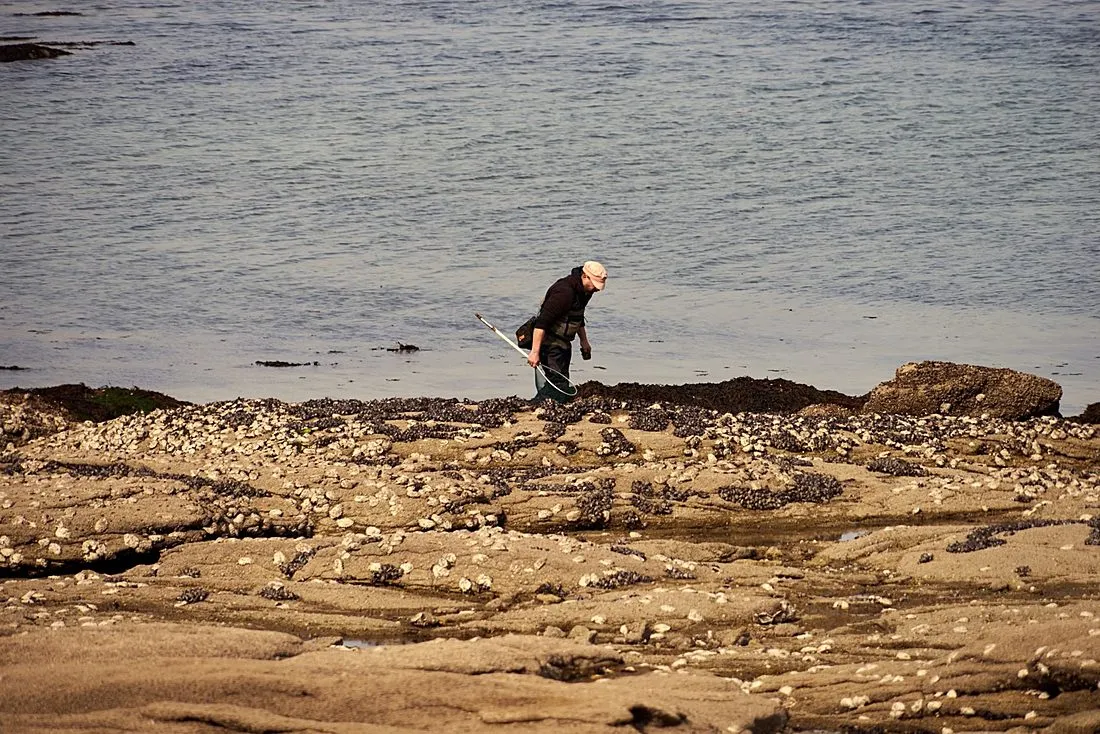
a marine biologist examining tide pool creatures
Pictured a marine biologist examining tide pool creatures · Richard REVEL (via Pexels)
02/07 Natural Sci.

Your eyes trace back to a one-eyed ancestor from 600 million years ago

Researchers from Lund University and the University of Sussex propose that every vertebrate, humans included, descends from a tiny worm-like creature that lived in the ocean nearly 600 million years ago with a single eye centered on top of its head 8.

That animal likely started out with two eyes, lost them because it settled into a stationary, filter-feeding life where paired vision wasn't worth the upkeep, and kept only a simple central eye good for telling night from day. "The results are a surprise. They turn our understanding of the evolution of the eye and the brain upside down," said Lund's Dan-E Nilsson. When descendants of that creature started swimming and hunting again, parts of that old median eye were repurposed into the paired eyes vertebrates use today.

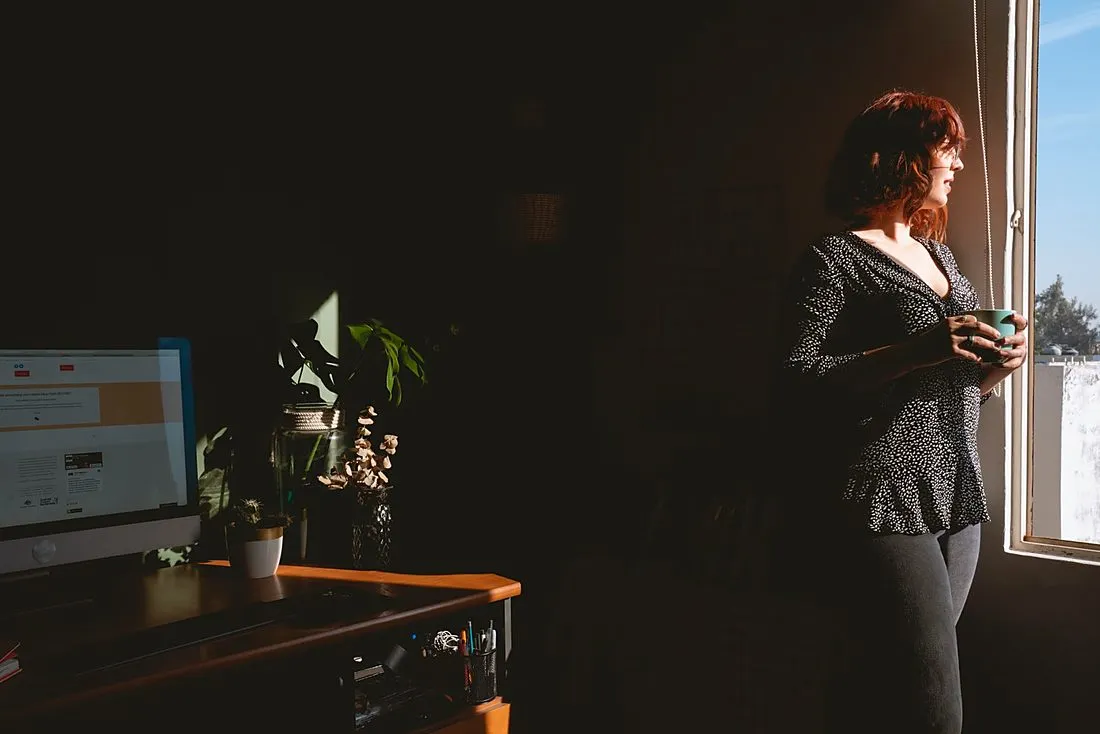
a person taking a deep breath at a desk by a window
Pictured a person taking a deep breath at a desk by a window · Los Muertos Crew (via Pexels)
03/07 Psychology

A sigh isn't just a sigh, it's your brain's reset button

Researchers Ralph Andrews, Michael Melnychuk and Paul Dockree ran two experiments to find out why we spontaneously sigh during boring tasks 32. In the first, 72 adults stared at a screen for eight straight eight-minute blocks, clicking whenever a shape faded slightly.

In the second, 57 people tapped along to audio tones for 21 minutes. Across both, spontaneous sighs showed up as a kind of physiological correction: they steadied breathing that had drifted into chaotic variability, and they appeared linked to the brain's noradrenaline system, the one that governs alertness and makes your pupils dilate when you need to pay attention.

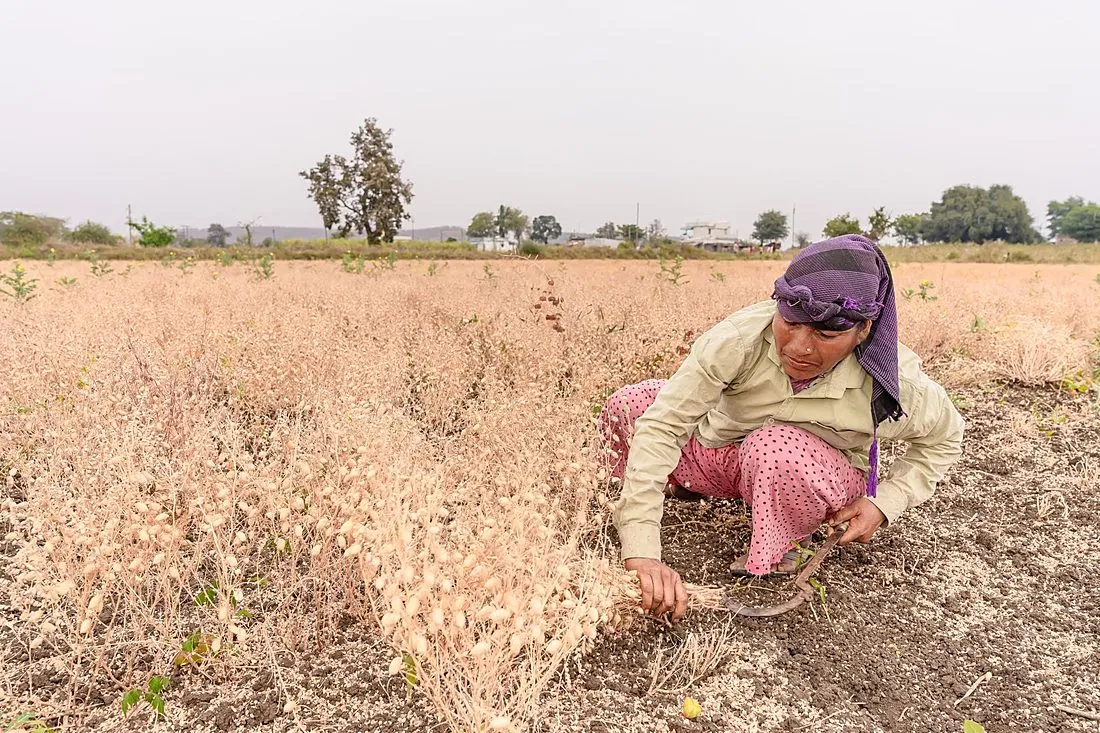
a farmer harvesting crops on a South American farm
Pictured a farmer harvesting crops on a South American farm · EqualStock IN (via Pexels)
04/07 Social Sci.

South America just posted its lowest hunger rate on record

A UN Food and Agriculture Organisation report released July 21 found that hunger in South America has fallen by a third since 2020, the fastest decline of any region on Earth, down to just 3.5% of the population, the lowest level ever recorded there 57.

Brazil, Chile and Guyana have all been removed from the UN's Hunger Map entirely. Argentina sits just under 3%. Colombia and Paraguay are close behind at 4%, and even Peru and crisis-battered Venezuela are making inroads near 5%. "If there is a region in the world that can potentially achieve" zero hunger by 2030, said FAO chief economist Máximo Torero, "it's South America."

wind turbines and solar panels at sunset
Pictured wind turbines and solar panels at sunset · Quang Nguyen Vinh (via Pexels)
05/07 Technology

Clean energy just got two strange new ways to store power for weeks, not hours

On the site of a former coal plant in Trafford, near Manchester, Highview Power is building a facility that cools air down to -321°F, shrinking it to one seven-hundredth of its volume as a liquid, then lets it warm and expand back into gas to spin a turbine 134.

Once running, it will deliver 300 megawatt-hours of storage and power roughly half a million homes for six hours. In Nevada, a separate project heats industrial salt to 1,040°F and can hold that heat almost indefinitely. Neither needs the cobalt, nickel or lithium that conventional batteries do. Former Manchester mayor Andy Burnham called the Trafford project evidence that "this decade is the most exciting since the Victorian period" for the region.

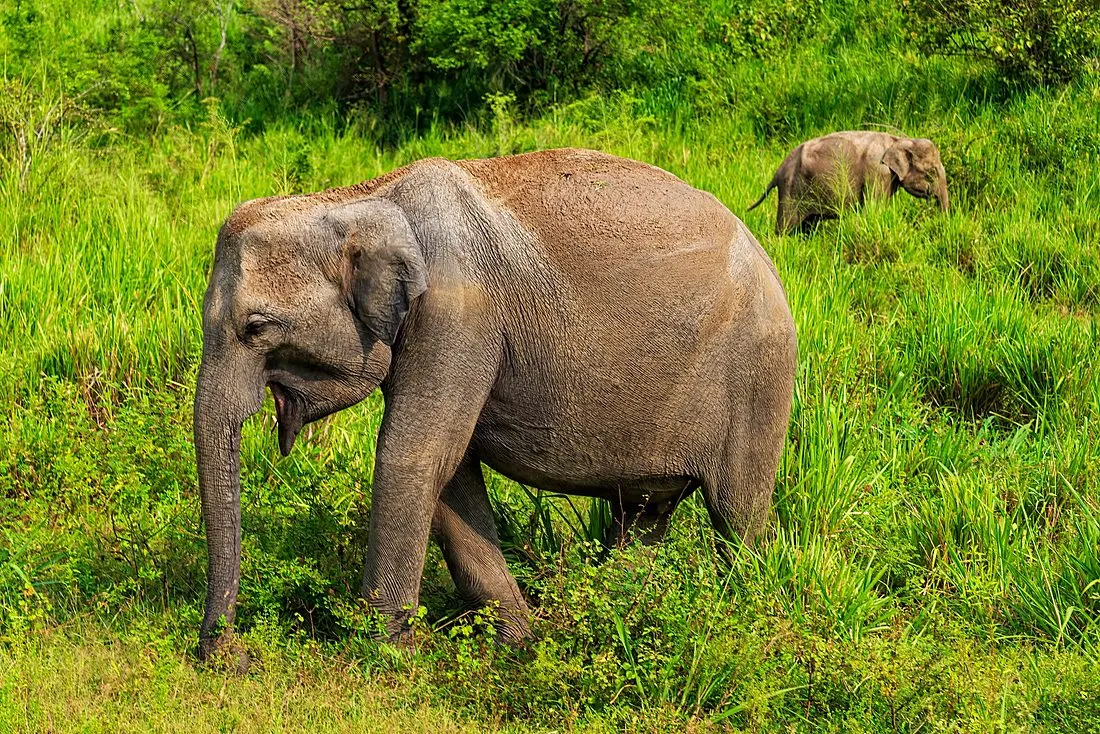
an elephant walking freely across an open sanctuary
Pictured an elephant walking freely across an open sanctuary · Eyup Sayar (via Pexels)
06/07 Good News

Portugal's last circus elephant just got 1,000 acres to herself

Julie was captured as a calf in Africa in the late 1980s and began performing in Portuguese circuses in 1988. In 2018, Portugal passed a law banning wild animal performances by 2024, but Julie had nowhere to go until Pangea Elephant Sanctuary, Europe's first sanctuary built specifically for working elephants, reached out to her longtime owner 125.

On June 30, after an 18-month wait while the sanctuary was built, she made the three-hour truck ride to her new 1,000-acre home in Alentejo and, by all accounts, settled in immediately. "There couldn't be a more fitting first resident than Portugal's last circus elephant," said managing director Kate Moore.

a colorful plate of fresh fruits and vegetables
Pictured a colorful plate of fresh fruits and vegetables · VINVIVU ® (via Pexels)
07/07 Plant-Based

A worldwide shift to a plant-rich diet could prevent 15 million deaths a year

A new analysis in Nature ran 10 different food system models comparing business-as-usual through 2050 against a global shift toward the EAT-Lancet Commission's Planetary Health Diet, one where fruits and vegetables make up over half of what people eat and animal proteins like meat, dairy and seafood drop to just 3.6% each 111.

The Commission estimates that transition could prevent 15 million premature deaths every year, more than a quarter of all premature deaths worldwide, while cutting food-system emissions by 20% by 2050 when paired with halved food waste and better farm productivity. "Transforming food systems would deliver enormous potential benefits to our health and the environment," said lead author Matt Gibson.

Fresh today · July 27, 2026

Good news you might have missed

CRISPR makes prostate cancer vulnerable to immunotherapy Scientists used a CRISPR-based RNA tool to make "immune cold" prostate tumors visible to T cells, and in mice it dramatically improved how well immunotherapy worked against a cancer that normally shrugs it off 4. ScienceDaily
One of The Oldest Psychedelics Just Had Its Brain Effects Mapped For The First Time Researchers scanned rats on mescaline and found it lit up a connection between the cerebellum and the hippocampus that's normally almost silent, a real clue toward how a substance used ceremonially for thousands of years actually reshapes perception 22. ScienceAlert
Super-agers share traits linked to living healthier for longer In Sardinia's Blue Zone, researchers studying 125 adults aged 71 to 101 found the region's famous long-lived residents scored higher on openness, better coping strategies, and more frequent hobbies than their neighbors just outside the zone 103. New Atlas
99.9999% pure: US scientists create ultra-clean silicon for next-gen quantum chips Oak Ridge and Pacific Northwest National Laboratories built silicon over 100 times purer than anything commercially available, quiet enough that quantum computers built from it should hold their fragile quantum states far longer 101. Interesting Engineering
A fraction of world's seawater could meet energy needs for generations Scientists calculate that just 0.1% of the world's seawater holds enough magnesium, lithium and rare-earth metals to power humanity for 50,000 years, and PNNL researchers are already pulling magnesium hydroxide straight out of it 105. New Atlas
Hyundai Partners with Healthy Seas to Turn Scourge 'GhostNets' into Floor Mats for Cars Divers pulled abandoned fishing nets off a shipwreck near Catalina Island and Hyundai is recycling the nylon into car floor mats, part of a partnership that's recovered more than 1,300 tons of ocean netting worldwide since 2013 123. Good News Network
Europe's Air Quality Dramatically Improves in 10 Years, With 39-59% Drop in Industrial and Road Toxins A decade of EU air policy has cut industrial sulphur oxide emissions by 59% and road transport nitrogen oxide by 40% since 2015, proof that pollution rules actually change the air you breathe 124. Good News Network
Unearthing Paris' Mythical Second River Paris is digging its long-buried second river, the Bièvre, back out from under a century of concrete to cool the city and bring back butterflies, fish and green space along its banks 127. Reasons to be Cheerful
Building Resilience through Environmental Volunteering Research on conservation volunteers found the work builds a genuine sense of belonging and purpose, with one study linking it to better mood and less depression, especially for people rebuilding a sense of agency after hard times 45. Psychology Today
Newborn brains respond more strongly to crying than to speech, study finds Scanning 25 newborns, researchers found their brains react more strongly to the sound of infant crying than to full sentences of speech, suggesting babies are wired to process the one sound they can already make, from the very first days of life 38. PsyPost
Diversity in graduate school linked to higher starting salaries A study of nearly 3,000 business school cohorts and over 3,300 law school cohorts across decades found that racially diverse graduating classes had higher median starting salaries, not lower, undercutting the argument that diversity comes at an economic cost 34. PsyPost
Woman feeds squirrel daily and then it leaves a surprise treat at her door A woman who'd been feeding the same squirrel every day came home to find it had climbed her front steps and left a cookie on her windowsill, a tiny, deliberate thank-you caught on her doorbell camera 137. Upworthy
He Drove Cross-Country in a 'Giant Purple Van' to Interview Inspiring Americans Scott Shigeoka spent six months driving from Los Angeles to Philadelphia interviewing people quietly rebuilding their communities, including a former coal miner's family who turned a strip mine into a farm now feeding the local food bank 126. Nice News
2 meteor showers peak on the same night this week The Southern Delta Aquariids and Alpha Capricornids both peak the night of July 30 into 31, and while a near-full moon will wash out the faint ones, the Capricornids are known for bright, colorful fireballs worth staying up for 11. Live Science

Everything we read today

Natural Sciences 27 articles
Life Sciences & Medicine 4 articles
Psychology & Behavioral Science 24 articles
Social Sciences 26 articles
National Bureau of Economic Research Working Papers
Technology & Innovation 28 articles
Plant-Based & Vegan 12 articles
Solutions & Good News 21 articles
The Optimist Daily: Making Solutions the News
Human Stories & Ideas 4 articles
The long view · not today's news, the story behind it

Today's discoveries didn't come from nowhere. Here's the older, ongoing story they belong to, a moment from this day in history, and a question to test what stuck.

The story so far

On this day in science

1921 Insulin is discovered Frederick Banting and Charles Best in Toronto showed that the hormone insulin could regulate blood sugar, a breakthrough for people with diabetes. Within a year it was saving lives. More from the Almanac →

Before you go: today's quiz

The daily quiz

In what year did Alexander Fleming first notice a mould killing bacteria, the discovery that became penicillin?

Reveal the answer

1928

Alexander Fleming spotted the mould on a lab plate in 1928. Howard Florey and Ernst Chain later turned it into a usable drug in the early 1940s.

See the Lifesaver →

Get this every morning.

Liked today's? Wake up to tomorrow's, in one short letter.

The full letter, every morning, free for good.

Same free letter, plus the reason it stays that way: no ads, no investors, no agenda but the good news itself.

A single gift of any amount. No account, never a recurring charge.