



The daily edition · July 24, 2026

A queen mole-rat rules by scent, and kidneys can finally wait

Your morning brief

a 10-minute read

The feel-good story of the day

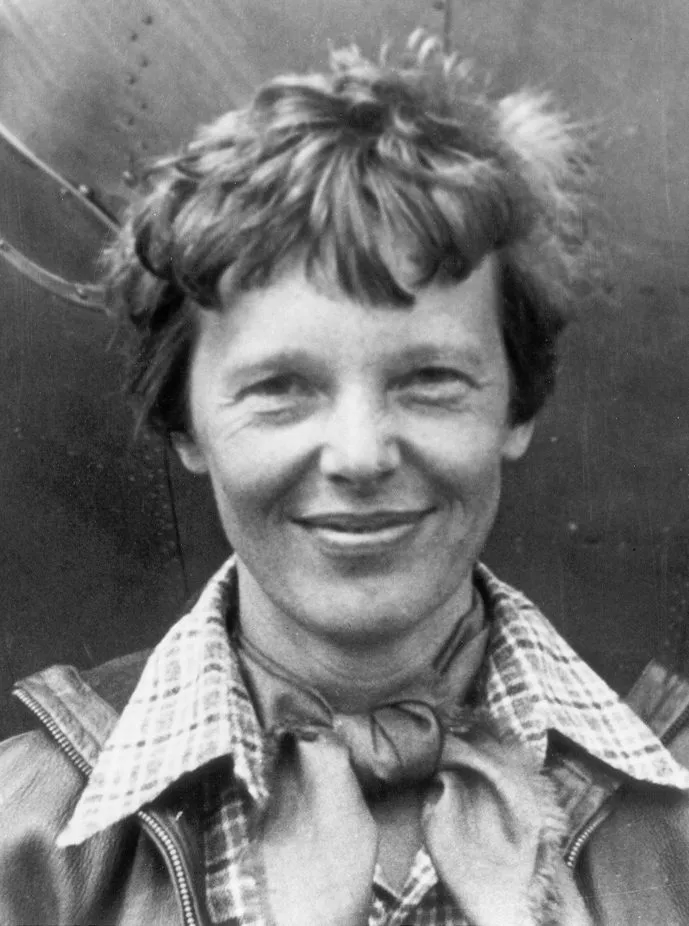
Amelia Earhart Wikimedia Commons / Amelia Earhart
Pictured Amelia Earhart

The girl from Atchison who taught the sky to expect women in it

On July 24, 1897, Amelia Earhart was born in her grandparents' house in Atchison, Kansas, a river town that had no idea it was raising the woman who'd redraw the map of what was possible. She grew up climbing trees, hunting rats with a rifle, and keeping a scrapbook of newspaper clippings about women succeeding in fields dominated by men, long before she'd ever sat in a cockpit.

She didn't take her first flying lesson until she was 23, and it took her six months of odd jobs, including driving a gravel truck, to save the $1,000 for her own plane. Five years later, in 1932, she became the first woman to fly solo across the Atlantic, and she kept going from there: first person to fly solo from Hawaii to the mainland US, first to fly solo nonstop across the country, setting altitude and speed records most male pilots of her era never touched.

She vanished in 1937 attempting to circle the globe, and the world never learned exactly what happened. But the scrapbook she kept as a girl worked, in a sense, on a much larger scale. Generations of women who never met her have pointed to Amelia Earhart as the first proof that the sky didn't belong only to men. That's not a small thing to leave behind.

The common thread · How today's discoveries connect Open editor's note
Fresh today · July 24, 2026

The discoveries, in full

The naked mole-rat queen who rules an entire colony with one smell
Evgeny Kochurov (via Pexels)
01/07 Natural Sci.

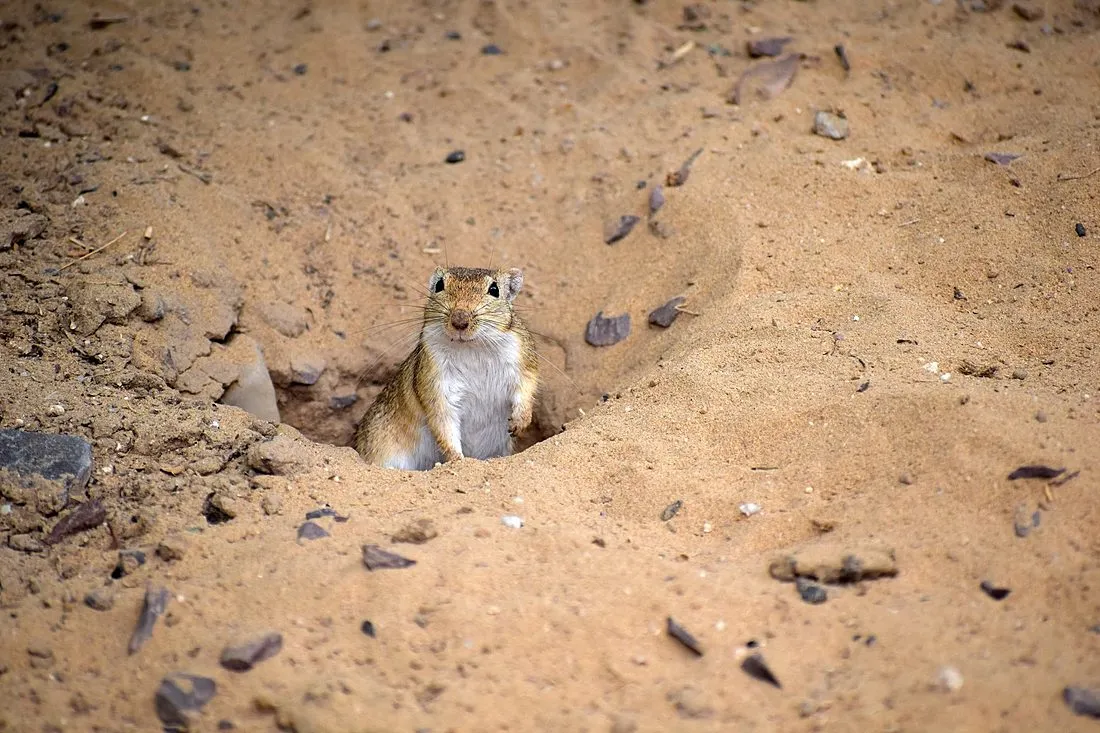
The naked mole-rat queen who rules an entire colony with one smell

Naked mole-rats live like ants, dozens of workers digging tunnels and raising pups under a single breeding queen, and for decades no one knew how she kept everyone else from reproducing before her decline.

Researchers at Berlin's Max Delbrück Center collected samples from more than 350 mole-rats and identified hundreds of volatile compounds drifting through their tunnels 77. One, a chemical called isopropyl myristate, showed up abundantly in queens and almost nowhere else, peaking exactly when she was ovulating. It works even on animals exposed to nothing but the scent itself, no queen required. "The idea that a single scent can maintain peace and prevent violence may sound like science fiction," said neuroscientist Mohammed Khallaf, the study's first author. "In the world of naked mole-rats, it is reality" 77.

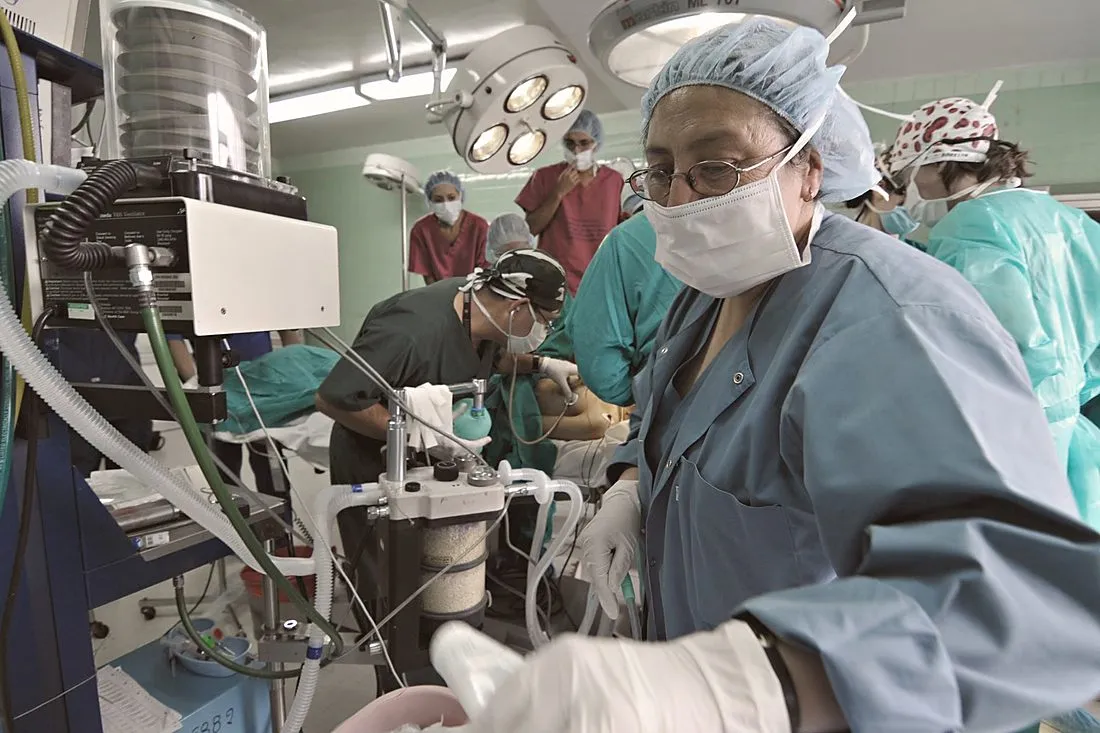
a surgeon carrying an organ transport cooler
Pictured a surgeon carrying an organ transport cooler · DΛVΞ GΛRCIΛ (via Pexels)
02/07 Technology Social Sci.

The organ shortage is shrinking from two directions at once

Right now, more than 104,000 Americans are waiting for a kidney, and 17 die every day before one arrives 202. Two separate advances are quietly closing that gap.

At Texas A&M, thermodynamicist Matthew Powell Palm built a pressure-controlled device that chills kidneys to -4°C without ice ever forming, keeping them viable for days instead of the usual 24 hours; rewarmed pig kidneys transplanted from the device did better than organs stored on ice the old way 202. Meanwhile, the way organs are recovered at all has quietly transformed. A decade ago almost all donated organs came from brain-dead patients on ventilators, a narrow and rare category. Now nearly half of US organ donors, like 34-year-old Emily Hoffman after a Pittsburgh crosswalk collision in 2023, donate after their heart stops rather than their brain dying, a method called donation after circulatory death that new preservation machines have finally made practical 143.

What each field noticed (2)
MIT Technology Review

Supercooled kidneys...

focused on the physics: keeping an organ liquid below freezing without cryoprotectants, and the years of failed frozen-organ attempts this finally gets around 202.

Read the story
a salsa dance class
Pictured a salsa dance class · Marko Zirdum (via Pexels)
03/07 Psychology

Eight weeks of salsa classes beat depression like a real treatment

University of Oxford and Oxford Health NHS Trust researchers ran a randomized controlled trial with 121 young adults aged 18 to 24 who had mild to moderate depression and anxiety 266.

Half took eight weeks of salsa classes; half didn't. Everyone filled out mental health questionnaires before, during, and after. The dancers came out the other side with measurably lower depression, less social anxiety, and more happiness day to day, published in Psychological Medicine. Lead author Brennan Delattre has a theory for why: "As salsa is physical, social, musical, structured, and often playful, it asks people to engage with others, but within a clear framework: steps, patterns, partner rotation, and a predictable class routine" 266.

a numbat
Pictured a numbat · Rajesh S Balouria (via Pexels)
04/07 Good News

The numbat is off the endangered list after 40 years of work

The IUCN has just moved the numbat, Western Australia's striped, termite-eating marsupial emblem, from Endangered to Near Threatened on its Red List 265. By the late 1970s, introduced foxes and cats had chewed the population down to around 300 animals, extinction territory.

Conservationists went after the predators first, baiting and culling foxes and cats across numbat habitat, and one original population alone climbed to 2,000. They also built predator-proof fenced sanctuaries and moved numbats, wild-caught and zoo-bred, into five new populations spread across Western Australia, South Australia, and New South Wales. Total numbers across all sites now sit between 2,000 and 3,000. "I feel very elated," said Tony Friend, who's worked on the recovery for four decades 265.

a hotel restaurant dining room
Pictured a hotel restaurant dining room · Quang Nguyen Vinh (via Pexels)
05/07 Plant-Based

A third of every hotel meal on Earth is about to go plant-based

The Global Sustainable Tourism Council, the UN-backed body that accredits sustainability certification across the hospitality industry, has published its first-ever food and beverage standard, and it requires certified hotels, restaurants, and tour operators to make at least 30% of their menu plant-based or predominantly plant-based 217.

More than 2,000 GSTC-certified hotels worldwide will need to comply as they come up for certification or renewal. If the hotel industry were a country, it would rank among the top quarter of global polluters, and food sourcing drives 62% of a hotel's food-related emissions, with animal ingredients alone responsible for 70% of that 217.

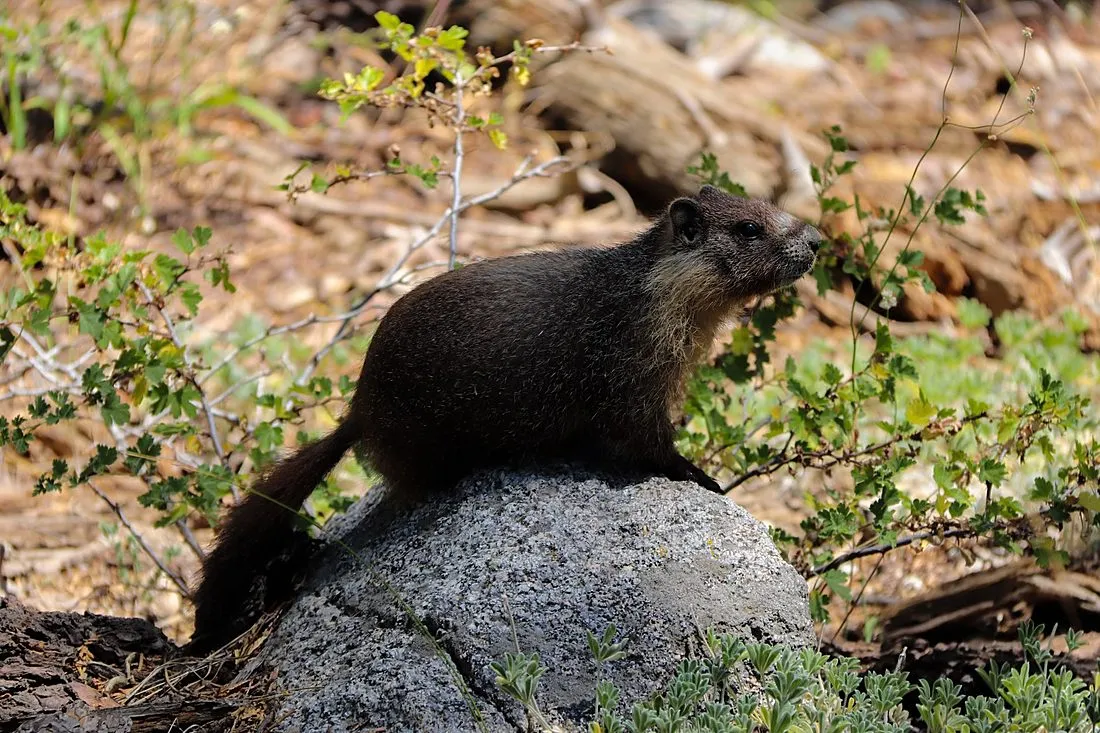
a yellow-bellied marmot
Pictured a yellow-bellied marmot · Patrick Gamelkoorn (via Pexels)
06/07 Natural Sci.

Scientists are funding a 65-year study with marmot videos

Researchers at the Rocky Mountain Biological Laboratory have studied yellow-bellied marmots in Colorado continuously since 1962, the second-oldest continuous study of individually marked mammals on Earth, tracking up to 65 years of data on how animals respond to a changing environment 10.

Federal funding cuts left the project scrambling, so UCLA's Daniel Blumstein and his graduate students launched an OnlyFans account on June 17 called "OnlyMarms," posting exclusive marmot footage to raise supply money. "I spend a lot of time waiting for marmots to do things and had the idea one slow morning," Blumstein said 10.

a police sniffer dog
Pictured a police sniffer dog · maxed. RAW (via Pexels)
07/07 Good News

A rescued street dog became India's newest kind of police hero

In 2019, instead of importing another German Shepherd or Labrador, Uttarakhand's Bomb Detection and Disposal Squad adopted a thin stray puppy wandering near the Dehradun police lines and named him Thenga, Hindi slang for defiance 263.

Handler Kamlesh Pant raised him for a month before formal training began. At eight months old, during an obstacle drill, Thenga cleared five-foot jumps, threaded hoops, and showed scent-tracking precision that pedigree dogs usually take months longer to master, in some drills outperforming the imported breeds long considered the gold standard.

Fresh today · July 24, 2026

Good news you might have missed

Visually impaired Europeans can now get an implant that restores sight A retinal implant that lets people with vision loss do things like a crossword puzzle is now available in Europe, with US access expected soon. [203] via MIT Technology Review's The Download
What went right this week: the good news that matters Global hunger has fallen for a third straight year, down to 7.8% of the world's population in 2025, while road traffic deaths have dropped 21% worldwide even as a billion more vehicles hit the roads, and Brazilian Amazon deforestation just hit its lowest point in a decade. [248] Positive News
World's First Commercial Octopus Farm Plans Scrapped Following Opposition After 43,000 emails and years of pressure from scientists and animal advocates, Spain's Port of Las Palmas has permanently dropped plans for the world's first commercial octopus farm. Plant Based News
Discovery of New Avocado Types Could Lead to More Superfood Choices and Resilience Scientists found a hidden "hotbed" of avocado diversity in Nicaragua's rainforest, genetic variety that could protect the world's Hass-dominated avocado supply from being wiped out by a single disease. Good News Network
5 New Marine Reserves to Protect Dolphins and Kelp Forests off New Zealand's South Island New Zealand just designated 308 square miles of new no-take marine reserves, co-managed with the local Māori community, to protect yellow-eyed penguins, sea lions, and Hector's dolphins. Good News Network
Daily almond consumption may boost cognitive processing speed for adults with prediabetes A clinical trial found that a daily handful of almonds measurably improved processing speed and executive function in adults with early blood sugar trouble, a simple habit with a real brain payoff. PsyPost
'Not Your Average Chickpea': NuCicer Unveils Higher-Protein Version of Beloved Bean A California startup bred a new chickpea with 50% more protein and 25% less fat than the standard bean, using nothing but classic plant genetics sped up with AI. Green Queen
People with rare 'hyperphantasia' condition share what having an incredibly vivid imagination is like A small slice of people, 3 to 6%, can conjure an apple in their mind so vividly they can smell it and hear it crunch, a wonderfully strange reminder of how differently human minds actually work. Upworthy
Instead of Anger, This Driver Gave the Man Who Hit Him a Hug After a fender-bender in Camboriú, Brazil, one driver comforted the visibly shaken man who'd hit him with a hug instead of a shouting match, and the security footage has been watched more than 200,000 times. Sunny Skyz
Veterinarians Press Congress to Preserve State Animal Welfare Laws More than 700 US veterinarians signed a letter urging Congress to protect state laws like California's Proposition 12, which require that pigs, calves, and chickens have room to turn around and lie down. Sentient
4 Beluga Whales from Shuttered Canadian Park Arrive at Chicago's Shedd Aquarium After Rescue Four beluga whales rescued from a shuttered, abuse-plagued Ontario theme park flew safely to Chicago's Shedd Aquarium on a special chartered jet, the first of 30 whales finding real homes. Good News Network
Meet the 102-YO Lawyer Who Ran a Secret Jungle Radio During Goa's Freedom Struggle At 102, Libia Lobo Sardesai still remembers flying over Goa dropping liberation leaflets in 1961, one of the last living voices from a movement that ended 450 years of colonial rule. The Better India
US energy storage gets 500 MWh-plus boost from sodium-ion battery technology A new sodium-ion battery partnership could bring over 500 megawatt-hours of grid storage online by 2032, using cheap, abundant materials instead of supply-chain-strained lithium. Interesting Engineering
A 62-YO Pune Woman's Craft Room Is Helping 100+ People Swap Screen Time for Creativity A retired social worker turned her Pune apartment into a crochet and embroidery studio that's welcomed over 100 people in less than a year, proving a needle and thread can still out-compete a phone screen. The Better India

Everything we read today

Natural Sciences 85 articles
PLOS One
Proceedings of the National Academy of Sciences: Proceedings of the National Academy of Sciences: Table of Contents
Life Sciences & Medicine 25 articles
STAT
Psychology & Behavioral Science 32 articles
Social Sciences 30 articles
Technology & Innovation 44 articles
Plant-Based & Vegan 26 articles
Solutions & Good News 35 articles
Human Stories & Ideas 17 articles
The long view · not today's news, the story behind it

Today's discoveries didn't come from nowhere. Here's the older, ongoing story they belong to, a moment from this day in history, and a question to test what stuck.

The story so far

On this day in science

1969 Apollo 11 returns safely home The Apollo 11 crew splashed down in the Pacific Ocean, completing humanity's first round trip to the surface of the Moon. The safe return fulfilled the promise made eight years earlier. More from the Almanac →

Before you go: today's quiz

The daily quiz

About how many people did smallpox kill in the 20th century alone?

Reveal the answer

300 million

The WHO states smallpox killed about 300 million people in the 20th century alone, before it became the first human disease ever eradicated, in 1980.

See the Lifesaver →

Get this every morning.

Liked today's? Wake up to tomorrow's, in one short letter.

The full letter, every morning, free for good.

Same free letter, plus the reason it stays that way: no ads, no investors, no agenda but the good news itself.

A single gift of any amount. No account, never a recurring charge.