




The daily edition · July 18, 2026

A once-in-a-millennium asteroid flyby, and touch returns to a paralyzed hand

Your morning brief

a 10-minute read

The feel-good story of the day

an elderly Chick-fil-A employee greeting customers Giovana Montes Furlan (via Pexels)
Pictured an elderly Chick-fil-A employee greeting customers

The 92-year-old whose real job was never the chicken

At the Chick-fil-A on Oleander Drive in Wilmington, North Carolina, 92-year-old Gilbert Martin, known to everyone as Mr. Gil, shows up Monday through Friday to clean tables, restock sauces, and greet every single person who walks in. He spent decades in the natural gas industry, then more than twelve years as a Sam's Club greeter, and when that job was eliminated he lasted about two months before boredom sent him to apply at Chick-fil-A.

"The main thing is that I take care of people out here first," he says, and he means it literally. Some regulars come in straight from a hard doctor's appointment, and he's learned to spot who needs an encouraging word before they even order. "I don't know what 92 is supposed to be," he says, "but I feel great."

Six years in, his boss says Mr. Gil brings the whole team joy through nothing more complicated than showing up and meaning it. It's a small, unglamorous kind of heroism: deciding, every weekday, that the most useful thing you can do is notice the person standing in front of you.

The common thread · How today's discoveries connect Open editor's note
Fresh today · July 18, 2026

The discoveries, in full

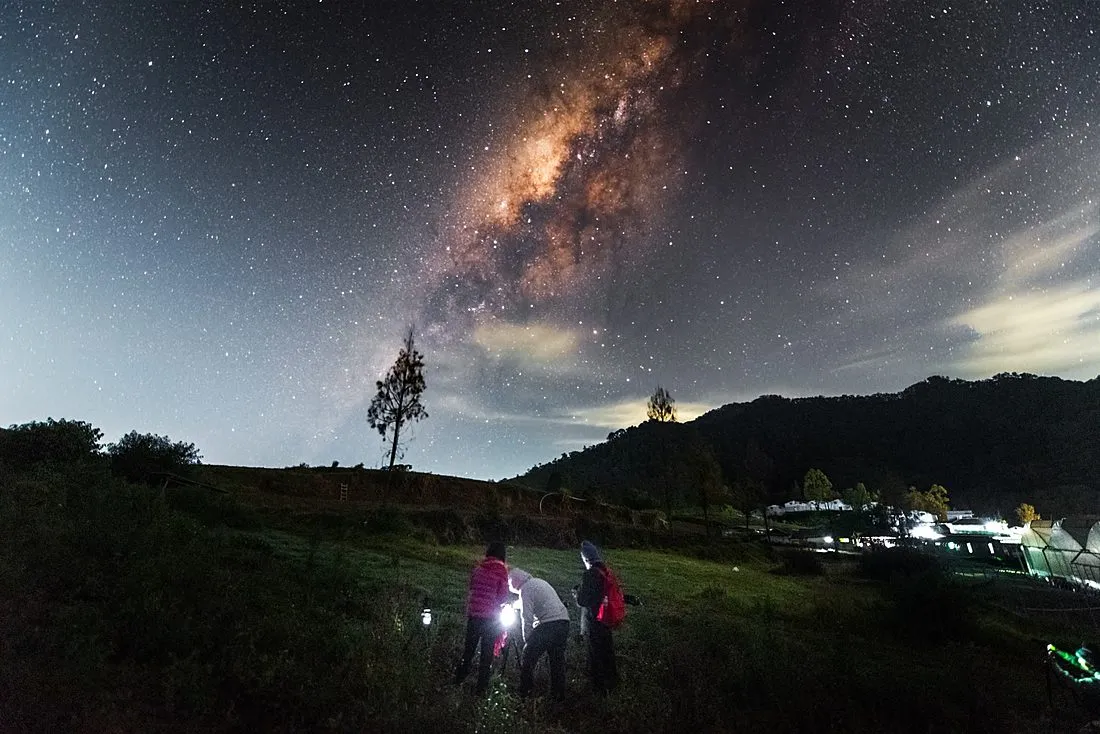
a crowd stargazing at night
Pictured a crowd stargazing at night · Martin Marthadinata (via Pexels)
01/07 Natural Sci.

A skyscraper-sized asteroid will pass closer than some satellites, and almost everyone alive will get to see it

On April 13, 2029, the asteroid Apophis, about as wide as the Empire State Building is tall, will pass within roughly 19,000 miles of Earth, closer than many geosynchronous satellites [13].

Scientists at the Apophis T-3 Years workshop in Padua, Italy, mapped exactly who will be able to see it: up to 7.6 billion people, about 90 percent of everyone on the planet, with nothing more than their own eyes [13]. It's the first time astronomers have ever been able to predict, years ahead of time, an asteroid flyby visible without a telescope. "Sighting Apophis as it passes by is a way of feeling a shared cosmic experience, realizing the smallness of Earth in the vastness of space," MIT planetary scientist Richard Binzel said [13]. There's currently zero chance it hits us, this pass or within the next century [13].

an oceanographer collecting sediment cores aboard a research ship
Pictured an oceanographer collecting sediment cores aboard a research ship · Jess Loiterton (via Pexels)
02/07 Natural Sci.

Earth has been quietly cooling itself for 60 million years, and scientists just found the missing piece

For more than 100 million years, Earth has cooled and warmed within limits that kept it livable, and nobody could fully explain why. A new study in PNAS, led by Ros Rickaby at Oxford with Zunli Lu at Syracuse, traces the mechanism to phosphate [6].

When sea levels rose, shallow coastal shelves trapped this nutrient before it reached the open ocean, so fewer marine organisms grew, less carbon sank and got buried in seafloor mud, and carbon dioxide built up in the air instead, warming the planet. When seas fell, the reverse happened: more phosphate reached open water, more life grew and sank, and more carbon came out of the atmosphere and into the seafloor [6]. "We have had remarkably little understanding of where that carbon ended up," Rickaby said. "Our results suggest that enhanced burial of organic carbon in marine sediments played a much more important role than was previously appreciated" [6].

a man in a wheelchair with a small dog
Pictured a man in a wheelchair with a small dog · Kampus Production (via Pexels)
03/07 Life Sciences

A brain implant let a paralyzed man feel his dog again

In 2020, Keith Thomas broke his neck in a diving accident in a pool in Montauk, New York, and lost all feeling and movement below his neck. This year, as part of an experimental study, researchers used a brain-computer interface paired with a spinal cord stimulator to restore real sensation and movement to his hand and arm [85].

When a STAT reporter caught up with him over Zoom, Thomas talked animatedly with his hands, telling stories about his dog, a Malshipoo named Bow [85].

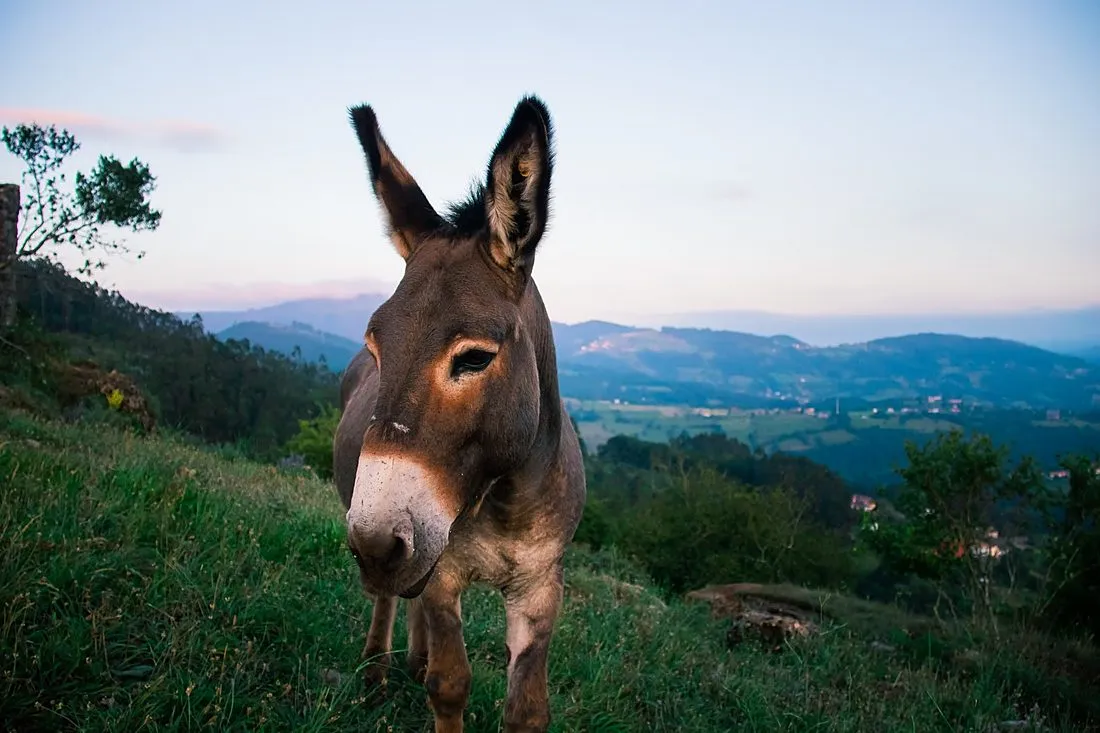
a donkey grazing in a dry Spanish landscape
Pictured a donkey grazing in a dry Spanish landscape · Miguel Del Cano costa (via Pexels)
04/07 Technology Good News

Wildfires are being fought from orbit, and also by donkeys who just eat the fuel first

On July 7, the first three satellites in the Google-backed FireSat constellation launched from Vandenberg Space Force Base aboard a SpaceX Falcon 9 [139]. Each carries multispectral imaging that sees through smoke and cloud to spot fires as small as 16 by 16 feet, far smaller than older satellites can catch [139].

Google put in $15 million and the Bezos Earth Fund $26 million to help build it. Fire agencies in California, Colorado, Australia, and Portugal start using the data this year, covering every fire-prone region on Earth at least twice a day, building toward hourly global checks by 2029 and 20-minute checks once the full fleet of more than 50 satellites is up in the early 2030s [139]. Meanwhile in Spain's Doñana National Park, the fire prevention technology is a lot lower-tech: donkeys. Animals named Leonor, Ainoa, and Ume graze seven hours a day along fire breaks, eating the shrubs and dry grass that would otherwise become fuel, and the park hasn't had a wildfire in nine years [212]. "A donkey weighs three times as much as a goat, so when it moves, it breaks up vegetation more effectively," said Joan Cedó, who started a donkey brigade in Catalonia in 2020. "Since we introduced donkeys in our municipality, there have been no wildfires," he said [212].

What each field noticed (2)
A dementia care village lets residents keep being themselves, right to the end
Andrea Piacquadio (via Pexels)
05/07 Psychology

A dementia care village lets residents keep being themselves, right to the end

The Hogeweyk, a residential facility a short train ride from Amsterdam, rebuilt itself around one idea: treat residents with severe dementia as the specific people they've always been, not as patients on a schedule [101].

Instead of long corridors and dispensed meals, the center is now 27 independent townhouse-style homes, each with a working kitchen and living room, housing six or seven residents grouped by shared interests and supported by two attendants apiece [101]. Caregivers noticed that even residents with severe cognitive decline kept pursuing the hobbies and routines of their earlier lives, joyfully, once simply given the chance and the support to do so [101].

Sonam Wangchuk
Pictured Sonam Wangchuk · Wikimedia Commons / Sonam Wangchuk
06/07 Good News

The boy whose village had no school built one that raised pass rates from 5 percent to 75 percent

In the remote village of Uleytokpo, Sonam Wangchuk's only teacher until he was nine was his mother, numbers traced in mud and letters in dust, because there was no school to attend [224].

Sent away to study in Srinagar, he struggled with an unfamiliar language and watched capable Ladakhi students get labeled failures by a system that was never built to understand where they came from [224]. After finishing his engineering degree in 1988, he went home instead of taking an easier path, founded SECMOL, and in 1994 helped launch Operation New Hope, training teachers and building locally relevant material so students learned by repairing solar heaters and building their own mud-brick dormitories instead of only reading textbooks [224]. Over two decades, regional pass rates climbed from around 5 percent to nearly 75 percent [224]. He later invented the Ice Stupa, a cone-shaped artificial glacier that stores winter meltwater for farmers to use in spring, and won the 2018 Ramon Magsaysay Award for the work [224].

a catnip plant
Pictured a catnip plant · Chris (via Pexels)
07/07 Good News

A homegrown catnip lotion repels mosquitoes as well as DEET, and farmers can grow it themselves

Researchers from Cardiff University and Ugandan collaborators tested a lotion made from nepetalactone, the compound in catnip essential oil, against mosquitoes, and found a 6 percent concentration repelled them about as well as DEET, with a 2 percent version only slightly less effective [210].

Catnip, unlike DEET, is cheap and easy for subsistence farmers to grow and distill themselves. "DEET is out of the price bracket for most rural Ugandan subsistence farmers, so buying commercially available mosquito repellents is just not practicable," said Cardiff's Dr. Simon Scofield [210]. The team designed the lotion so local people could be part of producing and selling it, rather than depending forever on imported repellent or grant money [210].

Fresh today · July 18, 2026

Good news you might have missed

Gone for 60 Years, Indian Grey Hornbills Return to Gir Indian grey hornbills are breeding again in Gir, Gujarat for the fourth year running, after vanishing from the area in the 1950s and 60s; about 40 birds were reintroduced between 2021 and 2023, and scientists say their return signals the whole forest is healthy again [226]. The Better India
Meet the Man Who Collected 11 Lakh Mango Seeds to Help Farmers Grow Fruit Orchards Jasmit Singh Arora has turned more than 11 lakh donated mango seeds into over eight lakh free fruit tree saplings for Indian farmers, one gutli at a time [219]. The Better India
It Takes a Village to Raise a Child, But This Lonely 4-yo First Had to Raise His Neighborhood A lonely 4-year-old in North Carolina waved at every passerby until his elderly neighbors started waving back, and now his whole block knows each other because of him [211]. Good News Network
In just 15 days, this Ohio woman crocheted her own wedding dress and the wedding party's attire Tymesha Scott crocheted her own wedding gown, her husband's suit, and her whole bridal party's outfits, finishing her tiara in the bridal suite the morning of the ceremony [228]. Upworthy
Chinese-Russian Biologists Release Nearly 500,000 Young Sturgeon into the Amur River Chinese and Russian conservationists released roughly 485,000 juvenile kaluga and Amur sturgeon into the once-overfished Amur River, and monitored fish are now living past age 5 for the first time in recent memory, old enough to spawn [213]. Good News Network
Vegan Jiu-Jitsu Black Belt Wins Twice At Zürich Competition Benjamin Tettü, vegan for eight years, took first place in two categories at one of grappling's biggest tournaments, proof plant-based fueling and elite combat sports get along just fine [197]. Plant Based News
18 years ago, scientists solved the mystery of 'phantom' traffic jams with an odd experiment Put 22 cars in a loop with zero obstacles, and a traffic jam still forms in under a minute, just from one driver tapping the brakes; the ripple effect physicists uncovered still explains your commute today [232]. Upworthy
Ringo made The Beatles change the lyrics of 'With a Little Help From My Friends.' Good call. Ringo Starr refused to sing a line about fans throwing tomatoes at him, remembering real jelly-bean bombardments from Beatlemania, and talked John and Paul into a better lyric on the spot [230]. Upworthy
Cataloging Growth: A Re-Evaluation of 1900-1990 Economists fed 5.1 million Sears catalog listings from 1900 to 1990 into a language model to properly price-adjust a century of American goods, and found real consumption grew by a factor of 39, nearly four times faster than standard measures ever showed [122]. Marginal Revolution
Cyborg cockroaches go amphibious ... thanks to a new diving suit Scientists in Singapore and Japan gave remote-controlled cyborg cockroaches a tiny wearable diving suit with an onboard oxygen generator, letting them survive three hours underwater for future search-and-rescue work [178]. New Atlas
Why nature has never evolved a perfect weapon for any species A study of 140 puncture tools across the tree of life, fangs, stingers, spines, thorns, found they all obey the same physics trade-off between piercing well and not snapping in half, which is why nature never landed on one perfect design [179]. New Atlas
US scientists find new material that outperforms copper in tiny computer chips Cornell researchers found that niobium arsenide, unlike copper, actually becomes a better conductor as its wires get thinner, which could keep computer chips shrinking well past the point where copper runs out of road [170]. Interesting Engineering

Everything we read today

Natural Sciences 77 articles
PLOS One
Life Sciences & Medicine 8 articles
Psychology & Behavioral Science 32 articles
Social Sciences 21 articles
Technology & Innovation 48 articles
Plant-Based & Vegan 22 articles
The Vegan Society - One world. Many lives. Our choice.
Solutions & Good News 29 articles
Human Stories & Ideas 19 articles
The long view · not today's news, the story behind it

Today's discoveries didn't come from nowhere. Here's the older, ongoing story they belong to, a moment from this day in history, and a question to test what stuck.

The story so far

On this day in science

1966 Gemini 10 advances the road to the Moon Gemini 10 launched from Cape Kennedy and successfully docked with a target vehicle in orbit, proving techniques the Apollo program would need. Each Gemini flight brought a lunar landing closer. More from the Almanac →

Before you go: today's quiz

The daily quiz

How many deaths did measles vaccination avert worldwide between 2000 and 2024?

Reveal the answer

Nearly 59 million

The WHO reports that measles vaccination averted nearly 59 million deaths between 2000 and 2024, more than any other vaccine over that span.

See the Lifesaver →

Get this every morning.

Liked today's? Wake up to tomorrow's, in one short letter.

The full letter, every morning, free for good.

Same free letter, plus the reason it stays that way: no ads, no investors, no agenda but the good news itself.

A single gift of any amount. No account, never a recurring charge.