


The daily edition · July 29, 2026

Cave paintings finally get a true age, and a rat-free island's birds return

Your morning brief

a 9-minute read

The feel-good story of the day

a man who taught himself computer programming as a teenager Aesthos AR. Photography (via Pexels)
Pictured a man who taught himself computer programming as a teenager

A homeless teenager's piggy bank became a promise to 300 children

In 1987, an 11-year-old named Vivek Shangari walked past a school doorway in Bhilai, India, and saw technicians setting up four BBC Micro computers, one of them running a ping pong game. There was no computer teacher, no curriculum, just a thick manual. While his classmates played cricket at lunch, Vivek went to the computer lab, and when school hours weren't enough, he spent the coins from a piggy bank his grandmother had given him to rent computer time by the hour in town.

That self-taught skill became his lifeline. After losing his mother at four and being thrown out of his uncle's house during college, Vivek was homeless at 18. He talked his way into a job at a Bhilai computer institute by demonstrating his coding ability, and slept there among twenty computers and a wall of textbooks he used to teach himself what school had failed to. He rode India's IT boom to build companies and, eventually, real wealth.

Today Vivek has given away more than 96 percent of that wealth through a trust that pays for children's education, and he's part of a growing community of Indians called LivingMyPromise who pledge half their net worth to charity on nothing more than an email and their word. "Being homeless at 18 is not an adventure," he says. "It is cold and exhausting and profoundly lonely." He remembers exactly what that felt like, which is why he built a way out for someone else's kid.

The common thread · How today's discoveries connect Open editor's note
Fresh today · July 29, 2026

The discoveries, in full

the painted caves of Font-de-Gaume, Dordogne, France
Pictured the painted caves of Font-de-Gaume, Dordogne, France · Niceley (Wikimedia Commons)
01/07 Natural Sci.

A cave painting finally gets its true birthday

For more than a century, nobody could say for certain when the black paintings inside Font-de-Gaume, one of Dordogne's most celebrated decorated caves, were actually made.
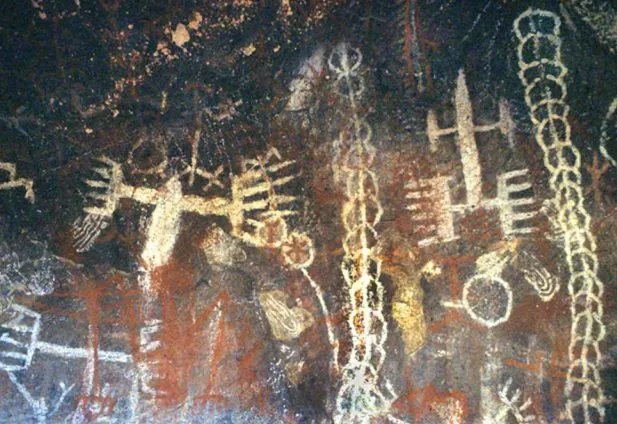
Radiocarbon dating needs carbon, and the black pigments were long assumed to be pure iron and manganese oxide minerals with none. Using Raman microspectrometry and hyperspectral imaging, techniques gentle enough not to damage the art, researchers found hidden charcoal woven into the black paint of two figures 2. The bison, it turns out, was painted about 13,000 years ago. A masklike figure nearby was even stranger: different sections of it were added during widely separated visits, meaning people returned to that same wall across generations to keep adding to it.

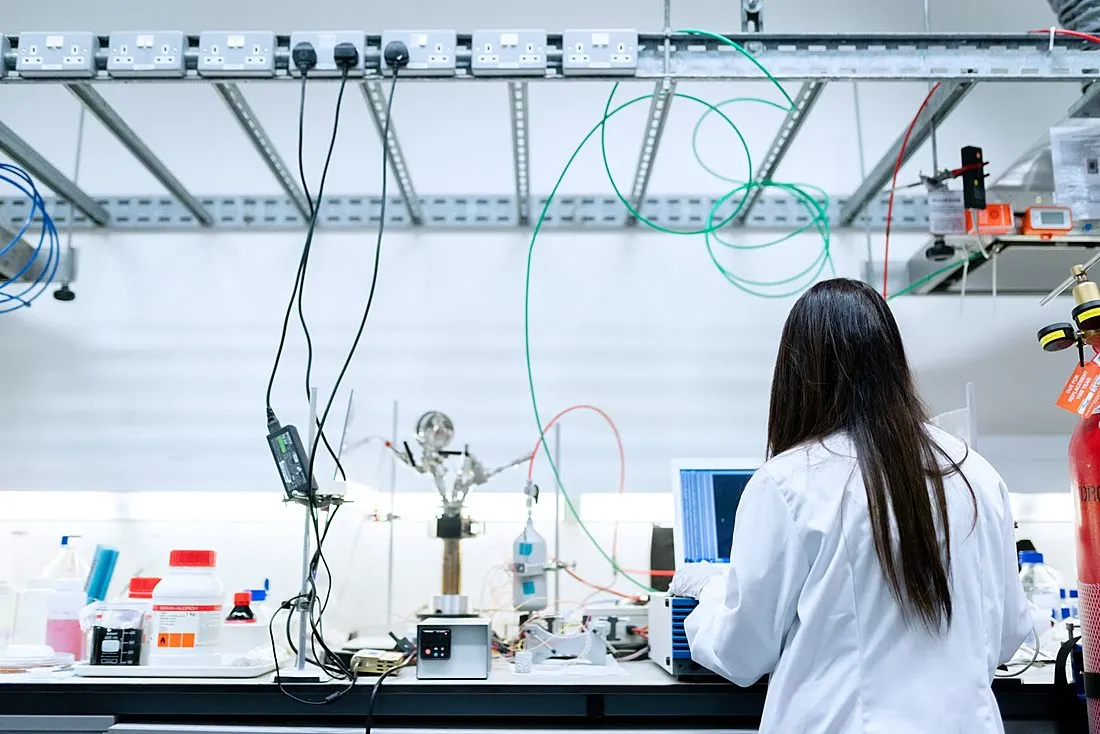
a quantum computing research laboratory
Pictured a quantum computing research laboratory · ThisIsEngineering (via Pexels)
02/07 Natural Sci.

A 20-year-old quantum theory just got proven right

Physicists at the Institute of Science and Technology Austria and the Technical University of Munich figured out how to entangle qubits, the basic units of quantum computers, using nothing but a "quantum bath" of low-energy microwaves 89.

Older methods to link qubits require either firing a single controlled photon between them or waiting for each to release a photon that must be precisely matched, both finicky and hands-on. This new approach is fully automatic: subject two distant qubits to the same microwave bath, and they lock into a stable, synchronized entangled state with no active tinkering, in principle over any distance.

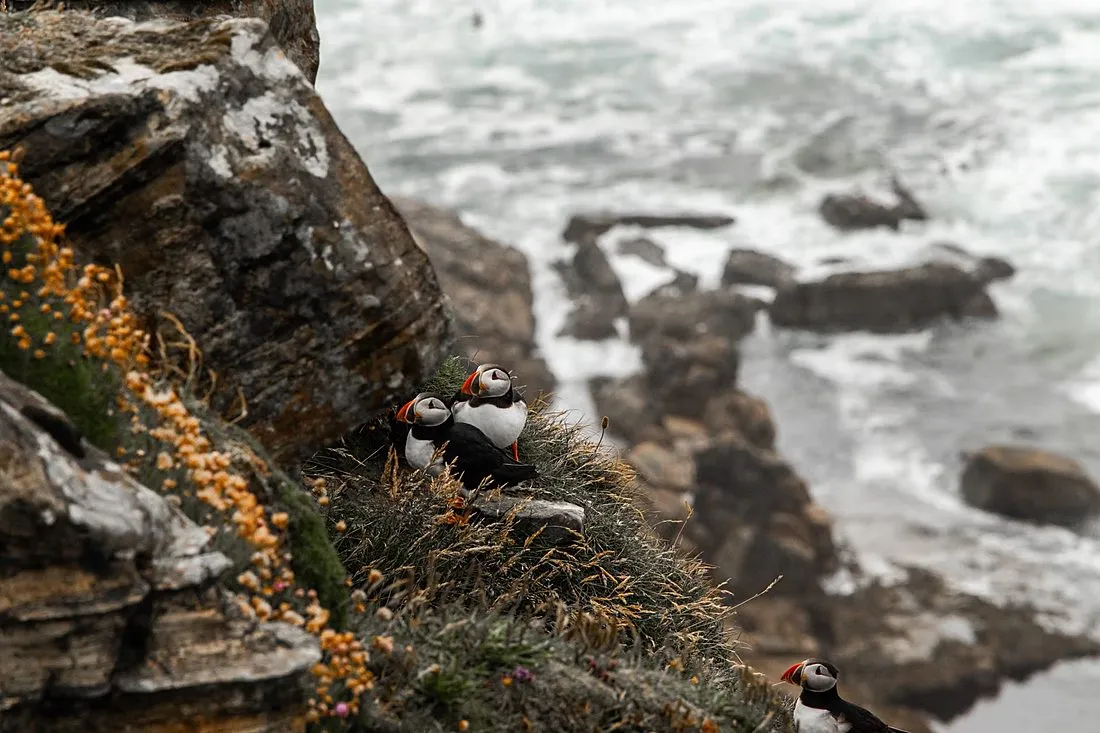
a puffin on a sea cliff
Pictured a puffin on a sea cliff · h1ghland_fox - (via Pexels)
03/07 Natural Sci.

An island just won its war on rats

On Rathlin Island in Northern Ireland, guillemots, fulmars, kittiwakes, and puffins pack the cliffs so tightly they look like part of the rock. Rats threaten every one of those chicks and eggs, and Rathlin just pulled off one of the largest rat eradications ever attempted on a populated island, using lethal traps, poison, thermal drones, and a sniffer dog 41.

It's the same fight that has played out on hundreds of New Zealand's islands since Polynesian and European ships first brought rats ashore, a threat conservation biologist James Russell calls "one of the most powerful conservation interventions possible."

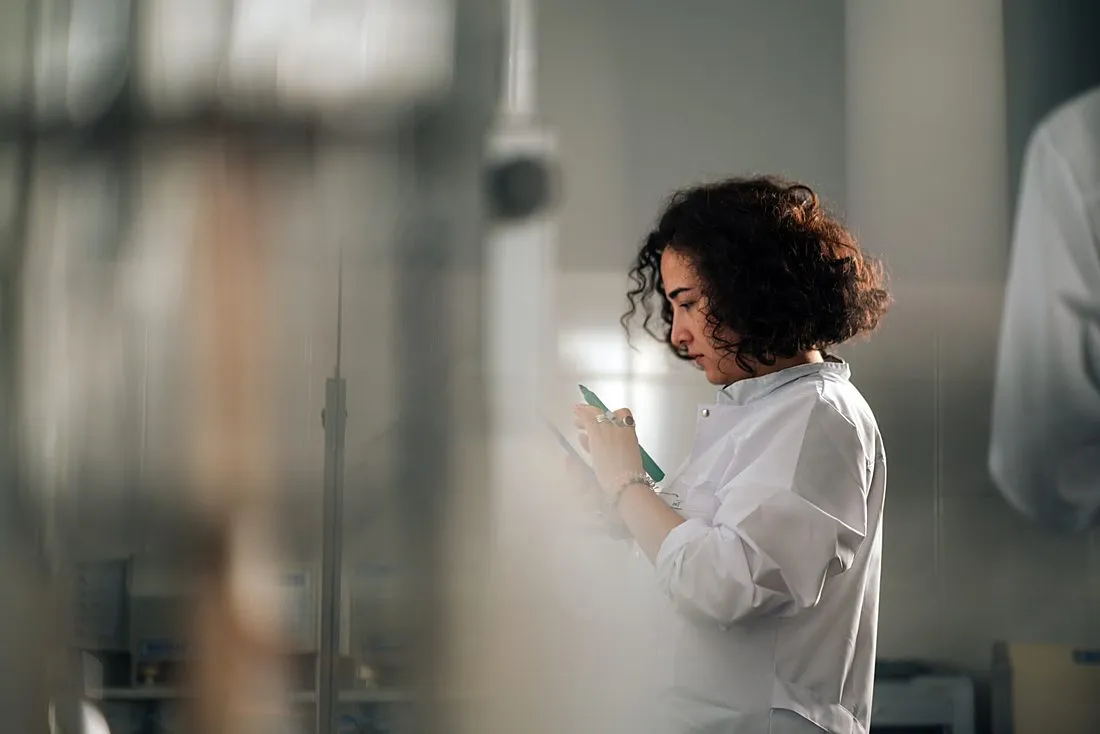
a pharmaceutical research chemist in a lab
Pictured a pharmaceutical research chemist in a lab · Mikhail Nilov (via Pexels)
04/07 Natural Sci.

A new kind of drug that doesn't block its target, it demolishes it

Most pills you take, like ibuprofen, work by binding to and blocking one specific protein. Protacs, a drug class first proposed back in 2001, do something stranger: they grab a target protein and drag it straight to the cell's own disposal system, destroying it completely rather than just muting it 45.

That matters because many disease-causing proteins are "undruggable," meaning no small molecule can find a good enough grip on them to block them at all. Protacs don't need that grip; they just need to touch the protein long enough to flag it for destruction. This year marked the approval of the first protac drug, two decades after the idea was first floated as a long-shot lab curiosity.

a person practicing a new physical skill in a rehabilitation lab
Pictured a person practicing a new physical skill in a rehabilitation lab · Yan Krukau (via Pexels)
05/07 Psychology

A single dose of LSD helped the brain learn new physical skills

Researchers at the University of Fribourg ran a randomized, double-blind, crossover trial with 45 healthy volunteers ages 21 to 55, giving them a single dose of LSD and then testing them the next day and over the following week 136.

The drug improved motor learning, the brain's ability to pick up and lock in a new physical skill, the day after dosing, and participants reported lower perceived stress for up to a week afterward. Using tools that measure sensory processing and muscle-control signals, the team also found subtle, lingering shifts in how the brain handles sound and movement.

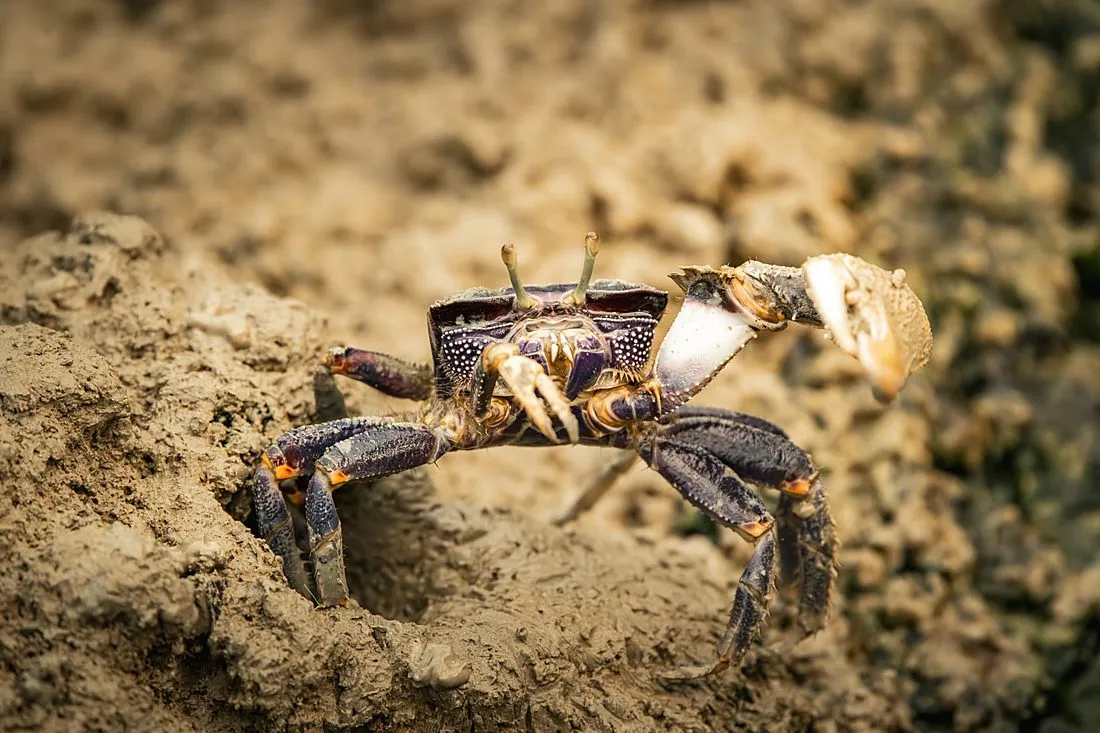
a mangrove land crab on a beach
Pictured a mangrove land crab on a beach · Leon Aschemann (via Pexels)
06/07 Good News

Tiny bamboo bridges just doubled a crab migration

Every summer between July and September, mangrove land crabs at Taiwan's Taijiang National Park try to walk from the interior to the beach to lay their eggs, only to find their ancestral paths cut by new roads and waterways.

Local volunteers and park staff responded with the simplest fix imaginable: small bamboo bridges over the water crossings, and closing a stretch of road whenever the crabs are on the move 252. Last year, 10,000 crabs completed the migration, double the number counted the year before.

a high school graduation ceremony
Pictured a high school graduation ceremony · Green odette (via Pexels)
07/07 Social Sci.

Native American high schools just hit their highest graduation rates ever recorded

High schools funded or managed by the Bureau of Indian Education posted the highest average graduation rates in the agency's history for the 2025-26 senior class: eight schools graduated every single senior, and thirteen more hit 90 percent or higher 255.

The overall rate now lines up with the national average of 87 to 88 percent, closing a gap that stood at just 51 percent as recently as 2015. BIE credits modernized data systems, real-time dashboards for catching struggling students early, and remote-learning options that let students balance school with family caregiving or work.

Fresh today · July 29, 2026

Good news you might have missed

This Rare Purple Himalayan Flower Has Returned to India After 158 Years Botanists found Cyananthus hookeri, a delicate purple-blue bellflower last recorded in India in 1867, blooming on a 3,600-meter alpine slope in Arunachal Pradesh, extending its known range into a whole new state. The Better India
It's a Record Breeding Year for National Bird of Serbia: The Eastern Imperial Eagle Serbia counted 29 breeding pairs of eastern imperial eagles and 25 fledged chicks this year, the best season since conservation work began in 2017 with just a single known pair. Good News Network
Internet Access Soars, Costs Plummet on Island Following the End its Federal Telecom Monopoly Ending a 30-year government telecom monopoly in the Federated States of Micronesia dropped mobile data costs from $705 per megabyte to about $30, and internet access has jumped 2,000 percent since 2014. Good News Network
EU Court Finds Switzerland Violated Vegan Prisoners' 'Freedom Of Conscience' The European Court of Human Rights ruled that denying two vegan prisoners fully plant-based meals violated their protected freedom of conscience, a judgment that's binding on Switzerland and likely to influence prison food policy across Europe. Plant Based News
How Drones Helped Rescue Teams Reach Flood-Hit Families in Gujarat When floods cut off neighborhoods in Dholka, Gujarat, a local drone startup mobilized within 30 minutes to guide rescuers to stranded families, including after dark when ground visibility failed. The Better India
Disney donates 18,000 Toy Story 5 toys and sets up screenings for youngsters in children's hospitals Disney sent 18,000 toys, 34,000 character-themed hospital gowns, and free screenings of Toy Story 5 to more than 400 children's hospitals, plus surprise visits from Woody and Jesse. Upworthy
Woman pulls up and invites strangers to do yoga on the spot. They get a mat and so much more. A Cincinnati yoga instructor and doula drives through underserved neighborhoods, pulls over when she spots a group hanging out, and simply sets up mats on the sidewalk, no studio, no cost, no catch. Upworthy
He let the weed everyone was fighting take over. It grew into a forest, then died out on its own. A botanist convinced New Zealand farmers to stop spraying invasive gorse on 109 hectares of exhausted hill country in 1987, since gorse actually shelters native seedlings as they grow, then dies off once it's shaded out; it's now a 1,500-hectare native forest. Upworthy
Laboratoria's Mariana Costa Empowers Women in Tech Mariana Costa's nonprofit Laboratoria has trained thousands of women across 11 Latin American countries for tech careers and placed graduates at major companies, work IEEE just honored with its President's Award. IEEE Spectrum
With €7M in EU Funding, Salina Project Eyes Seaweed-Based Novel Foods, Cosmetics & More A 22-member EU consortium is building low-carbon seaweed farms across four European coastlines to turn macroalgae into food, cosmetics, and construction materials instead of fossil-derived ones. Green Queen
BMC Ingredients Gets Health Canada Approval for Rhiza Mycoprotein, Targeting 2027 Launch A California startup's mushroom-based protein just cleared Health Canada with more protein than eggs, more fiber than oats, and more iron than beef, all from fermenting a fungus with a long history in traditional foods. Green Queen
After Fire Destroyed His Orchard, This Jharkhand Farmer Grew a Rs 40 Lakh Cactus Farm After an unexplained fire wiped out his 36-acre orchard, farmer Chaitanya Kumar Ganjhu started over with spineless cactus, a thornless, drought-tolerant crop that can double as livestock fodder, and now runs Jharkhand's first cactus farm at this scale. The Better India
Strangers Unite to Save 3 Women Trapped in Overturned Car After It Falls Off Overpass When a car flew off a Houston overpass and landed upside down on a busy freeway, total strangers grabbed sledgehammers and their bare hands to free three trapped women, then quietly shook hands and walked away before anyone could get their names. Sunny Skyz

Everything we read today

Natural Sciences 101 articles
PLOS One
Life Sciences & Medicine 23 articles
Psychology & Behavioral Science 33 articles
Psyche | Know Your Self
Social Sciences 20 articles
Technology & Innovation 45 articles
Plant-Based & Vegan 28 articles
The Vegan Society - One world. Many lives. Our choice.
Solutions & Good News 30 articles
Human Stories & Ideas 22 articles
Aeon | a world of ideas
The long view · not today's news, the story behind it

Today's discoveries didn't come from nowhere. Here's the older, ongoing story they belong to, a moment from this day in history, and a question to test what stuck.

The story so far

On this day in science

1958 NASA is founded President Eisenhower signed the act creating NASA, the agency that would send humans to the Moon and robots across the solar system. It gave scientific space exploration a permanent home. More from the Almanac →

Before you go: today's quiz

The daily quiz

Who was the first patient successfully treated with insulin, in January 1922?

Reveal the answer

Leonard Thompson

The first patient successfully treated with insulin was 14-year-old Leonard Thompson, in Toronto in January 1922. He recovered within days.

See the Lifesaver →

Get this every morning.

Liked today's? Wake up to tomorrow's, in one short letter.

The full letter, every morning, free for good.

Same free letter, plus the reason it stays that way: no ads, no investors, no agenda but the good news itself.

A single gift of any amount. No account, never a recurring charge.