

June 25, 2026

Ancient burial cave held only women, and $500 million wants to end the common cold

7 discoveries · 13 good-news notes · 272 articles read
Natural Sci.

For a decade, the Rising Star cave system in South Africa has been yielding Homo naledi bones, nearly two dozen skeletons of a small-brained, two-legged relative of ours that lived around 300,000 years ago. Nobody had been able to determine their sex.

Read the full story
Technology

The payment company Stripe has launched a $500 million nonprofit called Intercept whose stated goal is to prevent the common cold and the flu, and eventually to eliminate respiratory viruses altogether [194]. The funders include Anthropic, the OpenAI Foundation, Flu Lab, Bill Gates, and several traders at the...

Read the full story
Life Sciences

Sudden cardiac arrest kills more than 350,000 people a year in the United States, and the particular cruelty of it is that an implantable defibrillator could prevent it in many of those cases. The problem has always been identifying who needs one before something happens [96].

Read the full story
Good News

In 2023, a 53-year-old sales professional named Naresh Shanbhag had a stroke and lost the ability to form sentences [236]. His therapist at Bengaluru's National Institute of Mental Health and Neurosciences is Shantala Hegde, a professor of neuropsychology who also happens to be a trained classical vocalist.

Read the full story
Good News

The Royal Botanic Gardens Kew has completed a marathon digitization project: every one of its 7.4 million plant and fungi specimens, some collected as far back as Charles Darwin's era, is now scanned, catalogued, and freely accessible online to any researcher in the world [233]. Combined with contributions from...

Read the full story
Good News

Pakistan's Finance Minister Muhammad Aurangzeb announced this month that the country will scrap its 18 percent sales tax on locally produced sanitary products [249]. The change came after a legal challenge filed by two young lawyers, Mahnoor Omer, 25, and Ahsan Jehangir Khan, 29, who argued that the charge amounted...

Read the full story
Psychology

For decades, the dominant view in neuroscience was that sophisticated spatial attention, the ability to filter out distractions and lock onto what matters, was managed primarily by the prefrontal cortex, the most recently evolved part of the brain. That view had a persistent problem: birds, fish, and frogs are...

Read the full story

The feel-good story of the day

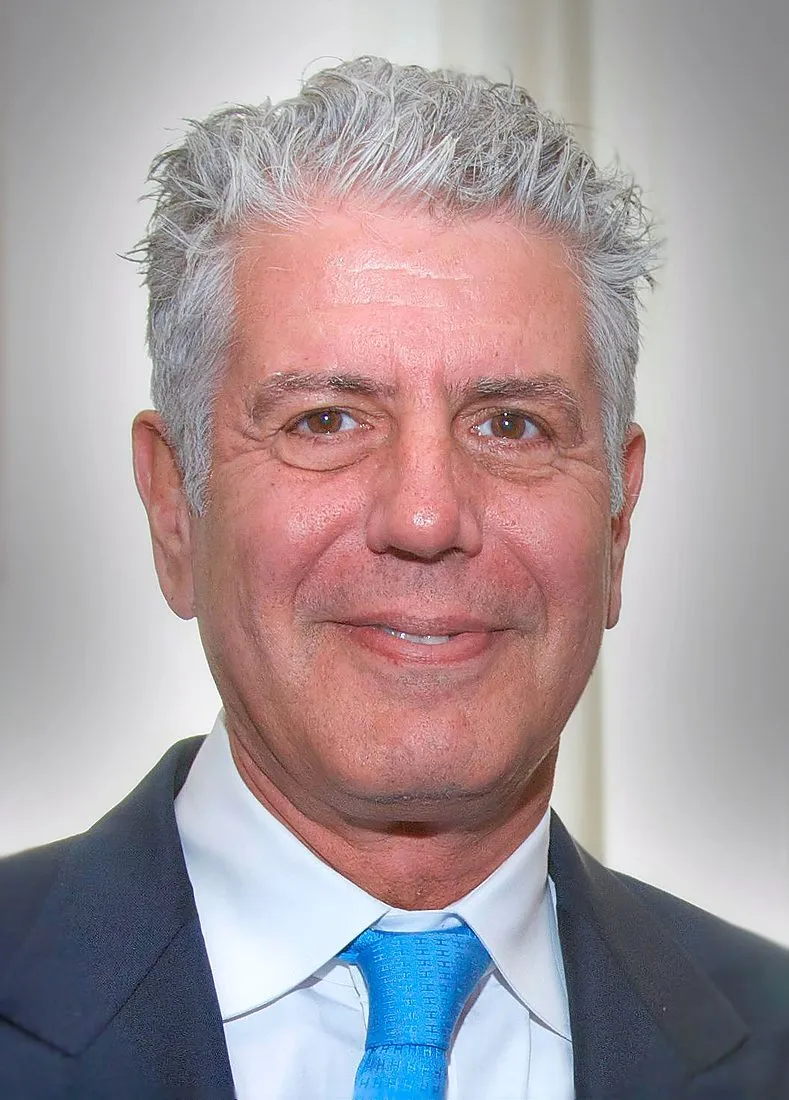
Anthony Bourdain Wikimedia Commons / Anthony Bourdain

The kitchen storyteller who showed that food is never just food

Anthony Bourdain was born on June 25, 1956, in New York City [229]. He spent years as a line cook and executive chef before writing Kitchen Confidential in 2000, a book that described restaurant kitchens the way nobody had dared to before: loud, sweaty, and full of people who had earned every opinion they held. It sold millions of copies. What it launched was a television career that mattered more than most food shows do.

No Reservations and Parts Unknown were ostensibly about eating, but they were really about showing Americans what the rest of the world looked like from inside someone's kitchen. He ate pho with Barack Obama on a plastic stool in Hanoi. He filmed in Lebanon during the 2006 war. He went to Gaza and did not pretend the situation was complicated in ways it wasn't. He used his platform to push for better pay and recognition for kitchen workers, particularly the immigrant workers who ran most of the best kitchens in the country and received almost none of the credit. He was also, at 60, a Brazilian jiu-jitsu gold medalist, which he found funnier than almost anything that had ever happened to him.

His death in 2018 was a grief that many people who never met him still carry. His birthday is a good day to remember what it looks like when a person takes the serious thing seriously, and still finds the whole ride worth telling [229].

The discoveries, in full

Natural Sci.

Every skeleton in the ancient hominin cave is female

For a decade, the Rising Star cave system in South Africa has been yielding Homo naledi bones, nearly two dozen skeletons of a small-brained, two-legged relative of ours that lived around 300,000 years ago.

Nobody had been able to determine their sex. Now a team has used proteomics, reading ancient proteins preserved in dental enamel long after DNA would have degraded, to analyze 20 teeth from the skeletons [17]. Every single one is female. That includes Neo and DH1, the two most complete skeletons, both assumed for years to be male. The gene variant AMELY, found only in biological males, was simply absent from every sample [17]. There are no known human cemeteries anywhere on Earth, and no collections of ancient nonhuman primate bones, that consist entirely of one sex. The Rising Star team has argued for years that Homo naledi intentionally buried its dead, an unexpected behavior in a hominin with a brain roughly the size of an orange. If the new proteomic data holds up, the implication is stranger still: that these small-brained relatives of ours may have practiced sex-specific mortuary rituals.

What each field noticed (1)
Live Science

A weird result from an already weird hominin

This is a primary research story, just published in Cell, and Live Science treated it exactly that way [17]. The technique matters: proteomics can sequence ancient proteins that survive longer than ancient DNA, which is why this was possible at all. The study's authors are careful with their language. "Weird" is Lee Berger's own word. The most plausible explanation, as paleoanthropologist John Hawks writes, is "cultural selection after death by sex," which would make Homo naledi the earliest known practitioner of sex-specific burial [17]. That is a claim nobody fully believes yet, which is exactly what makes it worth watching.

Read the story
Technology

$500 million to end the common cold

The payment company Stripe has launched a $500 million nonprofit called Intercept whose stated goal is to prevent the common cold and the flu, and eventually to eliminate respiratory viruses altogether [194].

The funders include Anthropic, the OpenAI Foundation, Flu Lab, Bill Gates, and several traders at the quantitative hedge fund Jane Street Capital. Stripe executive Nan Ransohoff is leading it alongside venture capitalist Charlie Petty. The case they make is simple: people spend 5 percent of their lives fighting a cold or the flu, and yet pharmaceutical companies have had almost no commercial incentive to fix it, because the sniffles are caused by more than 200 different viruses and no single vaccine could be profitable enough to justify the research [194]. Intercept will fund vaccines alongside large-scale air-cleaning systems for schools, offices, and other public spaces. The scientific inspiration came from David Veesler, a structural biologist at the University of Washington, who argued that broad countermeasures working against whole virus families are technically feasible, using RNA drugs, antibodies, and computational protein design [194]. This is the same Stripe that organized the $1.8 billion Frontier program for carbon removal, building on a thesis that the most important problems in the world are often the ones the market will not bother with.

What each field noticed (1)
MIT Technology Review

Stripe, Anthropic, and OpenAI are backing an effort to stop respiratory infections

MIT Technology Review put this in both its daily newsletter and a full feature because it sits at the intersection of the two things this publication tracks most closely: what is technically possible and what is being funded [193][194]. The framing is deliberately analogous to Frontier: some problems are technically solvable but lack commercial incentive, and that is the gap a well-capitalized nonprofit can fill. Veesler's work on computational protein design, and the maturing tool kit of RNA drugs and engineered antibodies, is what makes this feel real rather than aspirational [194].

Read the story
Life Sciences

AI identified the hidden heart defect that kills apparently healthy people

Sudden cardiac arrest kills more than 350,000 people a year in the United States, and the particular cruelty of it is that an implantable defibrillator could prevent it in many of those cases.

The problem has always been identifying who needs one before something happens [96]. A study published in Nature used artificial intelligence to analyze cardiac imaging across a large dataset and look for the features shared by patients who went on to die of sudden cardiac arrest. The AI found something that clinicians had largely dismissed: scattered cardiac fibrosis, scar tissue distributed throughout the heart rather than concentrated in one visible area, is the marker most commonly present in the highest-risk patients. Fibrosis of this kind had been considered relatively benign. The AI said otherwise [96].

What each field noticed (1)
STAT

AI wades into a vexing medical mystery: What causes sudden cardiac death?

STAT's focus is on the clinical translation: if this AI tool can be validated and deployed in practice, physicians could finally approach the question they face with every apparently healthy patient, "do you need a defibrillator?", with something better than a guess [96]. The fibrosis finding is the mechanism. Understanding why scattered scar tissue predicts fatal arrhythmia may eventually point toward treatments, not only risk scores.

Read the story
Good News

A music lab in Bengaluru is teaching stroke survivors to speak through song

In 2023, a 53-year-old sales professional named Naresh Shanbhag had a stroke and lost the ability to form sentences [236]. His therapist at Bengaluru's National Institute of Mental Health and Neurosciences is Shantala Hegde, a professor of neuropsychology who also happens to be a trained classical vocalist.

She noticed that Shanbhag could sing more fluently than he could speak. So she asked him to sing his sentences. Three years later, he still does it: every morning when he heads out to buy milk and groceries, his shopping list is a song [236]. The lab serves dozens of patients a month at $42 for 20 sessions. Patients regain functional speech, coordination, and independence in daily tasks. The mechanism is neuroplasticity. Specific musical exercises engage the entire brain and strengthen the connections between areas, allowing undamaged tissue to compensate for what the stroke destroyed. Simply listening to music has its own well-documented effects, but the exercises are what produce rehabilitation gains [236].

What each field noticed (1)
Reasons to be Cheerful

Singing the Shopping List: How Music Can Rewire the Brain After Stroke

This piece is doing what solutions journalism does best: not just reporting that music therapy exists, but following one patient and one clinician to show how it actually works in a real clinical setting [236]. The $42 for 20 sessions price point is a crucial detail, and Reasons to be Cheerful noticed it. Hegde is at a government hospital in India. This is not a luxury Western wellness treatment.

Read the story
Good News

7.4 million plants and fungi specimens, digitized and free to anyone

The Royal Botanic Gardens Kew has completed a marathon digitization project: every one of its 7.4 million plant and fungi specimens, some collected as far back as Charles Darwin's era, is now scanned, catalogued, and freely accessible online to any researcher in the world [233].

Combined with contributions from other herbariums, 145 million plant, animal, and fungi samples are now open access. The practical payoff is already arriving. AI models trained on the digitized specimens can identify species from microscopic details that human eyes miss, including mosses and small flowering plants that look nearly identical across species. The archive has already revealed that flowers worldwide are blooming weeks earlier than in previous decades, a climate signal embedded in 180 years of collected material [233]. This is happening in the middle of what the Progress Network describes as the fastest era of species discovery in the history of taxonomy: between 2015 and 2020, scientists described new species at more than 16,000 per year, partly because DNA sequencing has dropped from tens of millions of dollars to a few hundred [250].

What each field noticed (2)
Good News Network

7.4 Mil. Plant and Fungi Samples Have Been Digitized

The Good News Network framing focuses on what the archive enables going forward: new species discovery, extinction mapping, and searching for chemical compounds locked in plants we have never studied properly [233]. Penicillin and statins were both isolated from fungi. There are an estimated 2 million fungal species still undescribed.

Read the story
The Progress Network

A Golden Age of Biodiversity Science

The Progress Network piece zooms out to the broader acceleration: cheap DNA sequencing, access to previously unreachable habitats from deep ocean to post-conflict highlands, and the international archiving effort now mean that up to a fifth of everything we know about certain animal groups was discovered in the last twenty years [250]. The rate of botanical discovery has held steadier than the zoological surge, but that too is likely to change.

Read the story
Good News

Pakistan scrapped the tax on period products

Pakistan's Finance Minister Muhammad Aurangzeb announced this month that the country will scrap its 18 percent sales tax on locally produced sanitary products [249]. The change came after a legal challenge filed by two young lawyers, Mahnoor Omer, 25, and Ahsan Jehangir Khan, 29, who argued that the charge amounted to a discriminatory "pink tax" on women.

Their petition gathered thousands of signatures. The Finance Minister, in his announcement, called sanitary products "daily necessities that are indispensable for women's health, dignity and full participation in social activities." That language is new in Pakistani official policy [249]. The context: UNICEF data shows only a minority of Pakistani women currently use commercial period products, with most relying on cloth or homemade alternatives that carry higher infection risks. Removing the tax will not immediately change that, because income and geography remain larger barriers. But the government also scrapped the 18 percent tax on contraceptives at the same time, and Omer's team is already working on removing the additional 25 percent customs charge on imported period products [249].

What each field noticed (1)
The Optimist Daily

Period tax scrapped in Pakistan

The Optimist Daily treated this as a real win with honest limits attached, which is the right frame [249]. Two lawyers and a petition moved a national tax law. Bushra Mahnoor of Mahwari Justice noted that the most valuable effect may be what the change says out loud: that menstruation is a health matter, not a private embarrassment.

Read the story
Psychology

An ancient brainstem circuit handles attention in every vertebrate on Earth

For decades, the dominant view in neuroscience was that sophisticated spatial attention, the ability to filter out distractions and lock onto what matters, was managed primarily by the prefrontal cortex, the most recently evolved part of the brain.

That view had a persistent problem: birds, fish, and frogs are excellent at focusing their attention, and they lack a well-developed prefrontal cortex [108]. A new study published in Nature Communications, led by postdoctoral researcher Ninad Kothari at Johns Hopkins, has identified the brain structure that explains this. It is a small cluster of inhibitory neurons in the brainstem called the parabigemino-lateral tegmental inhibitory complex, or PLTi. When these neurons were silenced in mice with precise genetic tools, the animals could still see normally and move normally, but they lost the ability to select which object in their environment deserved attention [108]. They could perceive; they just could not prioritize. The PLTi is evolutionarily ancient, present in mice and closely related to structures found in birds, frogs, and turtles. The machinery of attention has been running in vertebrate brains for hundreds of millions of years, long before the prefrontal cortex existed [108].

What each field noticed (1)
PsyPost

Scientists identify an ancient brainstem network that acts as an attentional selection engine

PsyPost went straight to the clinical implication: if the PLTi is the deep engine of attentional selection, then attention disorders may be partly a brainstem problem, not only a prefrontal one [108]. That reframes where researchers should look for treatments. ADHD research has focused heavily on prefrontal circuits and dopamine. The PLTi is a different structure, in a different part of the brain, using a different neurotransmitter (GABA). That is not a small difference.

Read the story

Good news you might have missed

8 Acres of Rewilding Completed Along Santa Monica Coastline The Bay Foundation has restored 8 acres of native coastal dunes on Santa Monica Beach, bringing back endangered El Segundo blue butterflies and building natural wave protection that absorbs storm surge rather than just deflecting it; the Coastal Commission has already approved an additional 30 acres down to Venice Beach [230]. Good News Network
Explorer Becomes First Person to Circumnavigate Globe by Air, Land, and Sea British adventurer James Ketchell completed a 34,000-mile solo voyage in a 40-foot boat to become the first person to circle the globe by all three modes of transport; along the way he delivered live talks to more than 10,000 schoolchildren, online while at sea and in person at port [234]. Nice News
Scientists May Have Detected The First Signature of a Black Hole's Event Horizon A gravitational wave from a merging black hole pair may contain the first direct signal from an event horizon itself, not just the surrounding spacetime; theoretical physicist Sizheng Ma at the Perimeter Institute says "using observations to learn about black-hole horizons has become something we can actually do" [76]. ScienceAlert
Dawn of Modular Architecture Sees 26-Story Apartment Finished in 5 Days China's BROAD Group assembled a fully functional 26-story residential tower in five days using pre-fitted stainless-steel modules, each complete with plumbing, windows, HVAC, and kitchen fittings, stacked by crane with no welding and no poured concrete [231]. Good News Network
Minnesota Artist's Mini Art Vending Machine Has Sold Nearly 3,000 Pieces of One-Dollar Art Minneapolis artist Lilyan Lauzon built a vending machine at a local bookstore that dispenses mystery envelopes of original art for a dollar, with every dollar going directly to the artist; nearly 3,000 pieces have sold and several artists have landed commissions from customers who found them through the machine [232]. Good News Network
Slate Auto's truck builder goes live for its $25k electric pickup The Slate electric pickup starts at $24,950, making it the cheapest new truck in the United States, with a 205-mile range, fully modular body panels designed for DIY customization, and a configurator that rates each optional part by how hard it is to install yourself [171]. Ars Technica
The JWST Spies Six Galaxies Becoming One The James Webb Space Telescope found not one galaxy but six separate ones, 1.5 billion years after the Big Bang, all merging around a supermassive black hole, offering the clearest picture yet of how the enormous galaxies of today assembled themselves piece by piece [84]. Universe Today
Verbal Episodic Processing in Newborns Infants zero to four days old can already form distinct verbal memories, and the key factor is the speaker's identity: when the same word comes from a different voice, the newborn's brain treats it as a separate episode rather than interference, a precursor to the episodic memory system that defines human cognition [103]. eLife
Mineral clocks reveal age of Earth's oldest known asteroid impact A team used tiny mineral crystals inside shocked rocks in Western Australia's Pilbara to date the North Pole Dome impact to 3.024 billion years ago, making it the only confirmed impact crater from the Archean, the period when life on Earth was just getting started [198]. New Atlas
AI Collar for Cows Spots Illness Early, Saving Indian Farmers From Income Losses An Indian startup's smart collar detects a dairy cow's silent heat cycles and early illness signs, alerting farmers to the 18-hour window they would otherwise miss; one Gujarat farmer finally caught a heat cycle he had been missing for six months, avoiding another month of feed costs with no pregnancy [244]. The Better India
Two Bengaluru Friends Used AI to Turn Stubble Burning Into a Source of Income for Farmers A Bengaluru startup is converting agricultural crop residue that farmers would otherwise burn into verified carbon credits, turning a common source of air pollution into a source of income for small rural farmers who are now being paid for climate action rather than blamed for burning [242]. The Better India
Cameras in the statehouse do not increase political polarization, study finds A study tracking when different US state legislatures began televising their sessions found no measurable increase in voting polarization or political theater afterward, challenging decades of conventional wisdom about cameras, performance, and governance [107]. PsyPost
How young coquí frogs balance the competing demands of growth and fighting disease The coquí frogs of Puerto Rico, which hatch smaller than a pinky nail, navigate an extraordinary energy trade-off between growing and fighting infection, and researchers at the University of Florida have now modeled how the season of hatching shifts that balance across the animal's entire lifetime [154]. The Conversation

Everything we read today

Natural Sciences 85 articles
PLOS One
Life Sciences & Medicine 20 articles
Psychology & Behavioral Science 31 articles
Psyche | Know Your Self
Social Sciences 21 articles
Technology & Innovation 48 articles
Plant-Based & Vegan 23 articles
Solutions & Good News 32 articles
Human Stories & Ideas 12 articles

Get this every morning.

Liked today's? Wake up to tomorrow's, in one short letter.

It's free for everyone, always. If it makes your mornings better, you can help keep it that way.

Monthly

One-time