

June 27, 2026

Psilocybin briefly restored speech in an 80-year-old with Alzheimer's, and beavers fixed London's flooding

8 discoveries · 15 good-news notes · 244 articles read
Life SciencesPsychologyHuman Stories

A psychiatrist in São Paulo named Marcos Lago was treating an 80-year-old woman with advanced Alzheimer's disease, a stage where significant functional recovery is considered essentially impossible, when he made a decision to try psilocybin. What followed surprised him.

Read the full story
Life SciencesPsychologySocial Sci.

A ten-year body of research by neuroscientists at NYU has confirmed something that sounds poetic but turns out to be literal: when people are genuinely engaged with each other face to face, their brainwaves physically synchronize [73]. The team used portable EEG headsets to track the brain activity of thousands of...

Read the full story
Natural Sci.Life SciencesTechnology

A company called Epicrispr Biotechnologies just shared the first clinical data from a human trial of epigenetic editing, a technique that does not alter the DNA sequence itself but changes the chemical tags attached to DNA, those tags that act like a mixing board controlling which genes are turned up or down [19]....

Read the full story
Good NewsNatural Sci.Social Sci.

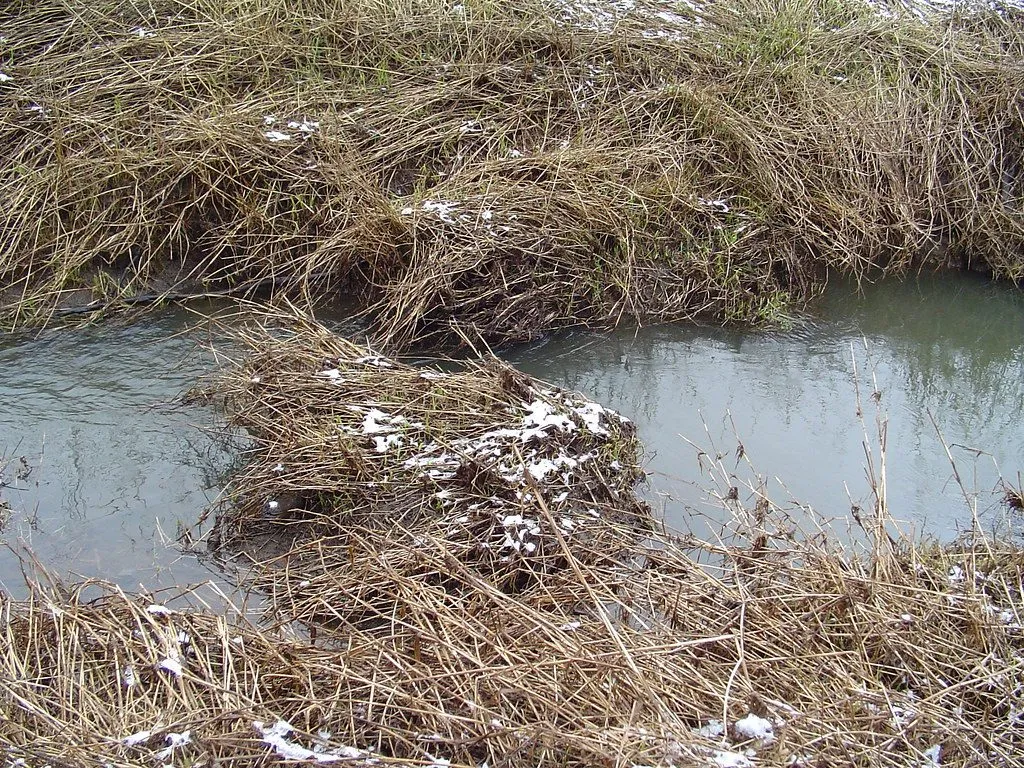
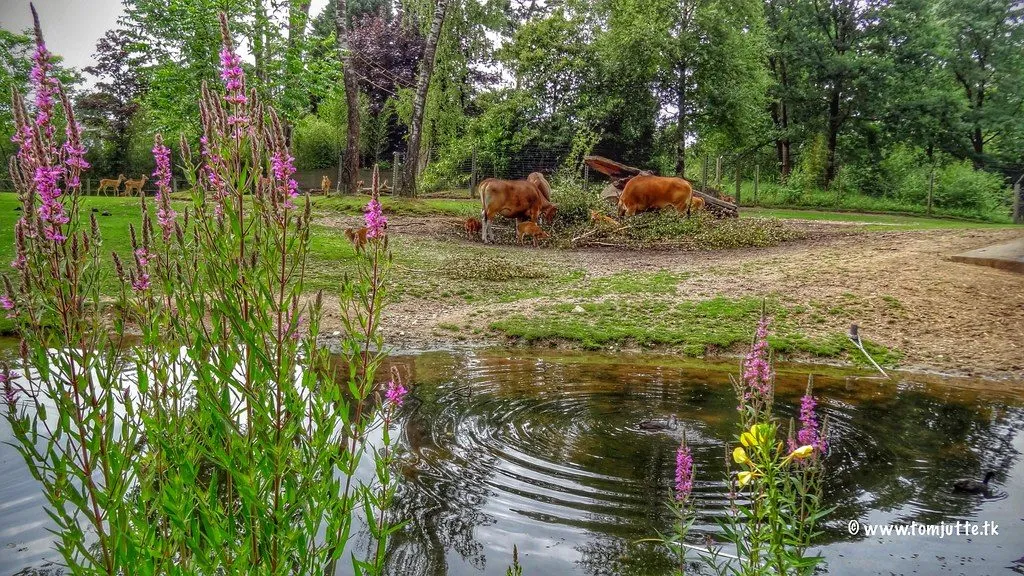
In 2023, five beavers were released into Paradise Fields, a 10-hectare former golf course in Ealing, west London [210]. They were the first urban beavers in England in four centuries.

Read the full story
Life SciencesTechnologyPsychology

Two research teams working on completely different brain-machine interface systems, one from Sant'Anna in Pisa using micro-magnets implanted inside residual forearm muscles, and one from the Cleveland Clinic using surgical nerve-redirection, compared their data and found something unexpected: both systems produced...

Read the full story
Natural Sci.Social Sci.Human Stories

The standard story of human evolution placed our species emerging on East African savannas and avoiding tropical rainforests until agriculture made survival in those environments possible, roughly 12,000 years ago [12]. Multiple lines of evidence are now dismantling that story.

Read the full story
Good NewsNatural Sci.Social Sci.

Italy now has more woodland than agricultural land, 60,000 square miles of forest covering the peninsula, a milestone that has not been true since the Middle Ages [208]. The reversal is a product of decades of rural depopulation: young people leaving mountain and plains villages for cities, agricultural land...

Read the full story
Natural Sci.TechnologyHuman Stories

NASA's Nancy Grace Roman Space Telescope arrived at Kennedy Space Center on June 21, 2026, delivered by barge from Baltimore, eight months ahead of the 2027 launch schedule [61]. The telescope is now in the clean room at the Payload Hazardous Servicing Facility, where technicians are testing its six solar panels...

Read the full story

The feel-good story of the day

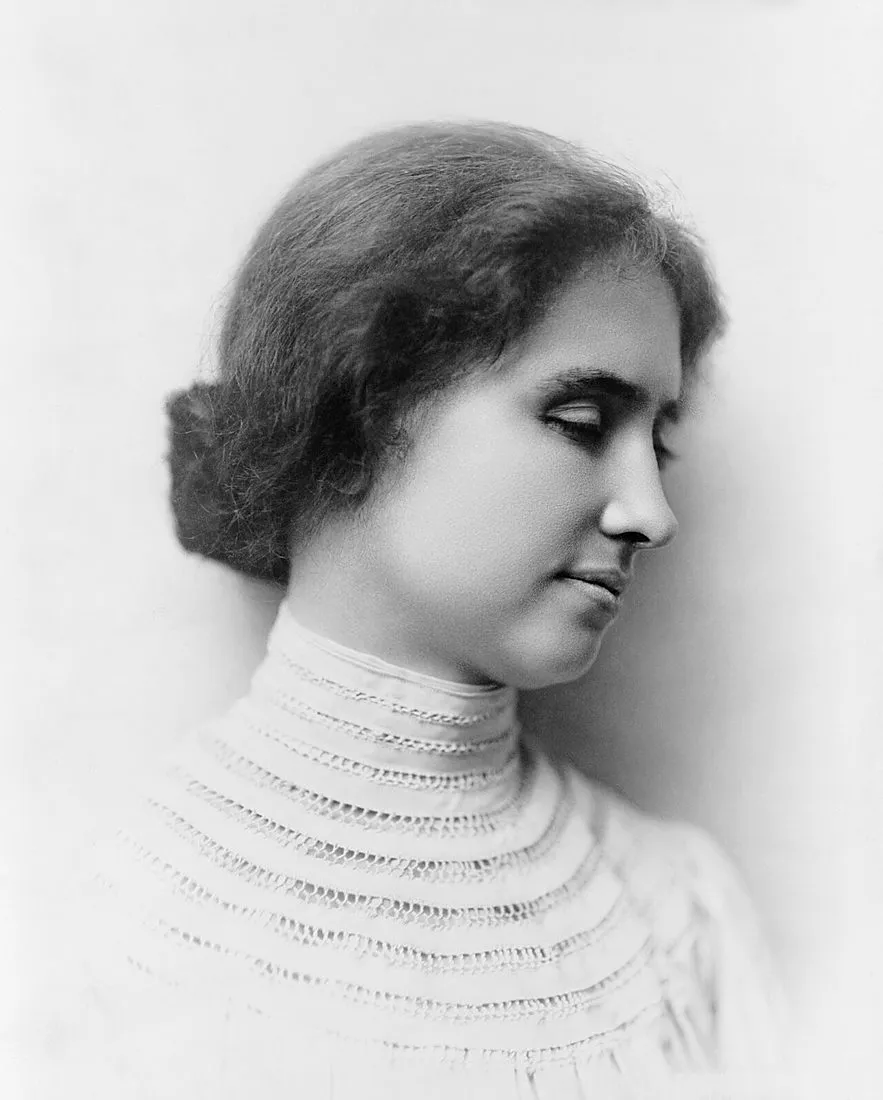
Helen Keller Wikimedia Commons / Helen Keller

Helen Keller turned words into a world, and today is her birthday

Helen Keller was born on June 27, 1880, in Tuscumbia, Alabama, and was left deaf and blind by illness before her second birthday. By twenty-four, she had graduated from Radcliffe College, becoming the first deaf-blind person in history to earn a bachelor of arts degree. She learned to speak, to read Braille, to type, and eventually to understand spoken language through her fingertips pressed to a speaker's lips and throat.

What is easy to miss in the familiar outline of her story is how much of it was driven by her own stubbornness. Her teacher Anne Sullivan was extraordinary, but Keller was the one who kept demanding more, who learned five languages, who wrote twelve books and lectured across fourteen countries, who fought for women's suffrage and workers' rights and disability access decades before those were mainstream causes. She co-founded the American Civil Liberties Union. She corresponded with Einstein and Twain and Chaplin.

She lived to 87, long enough to see much of what she had fought for become ordinary law. She said once that the best and most beautiful things in the world cannot be seen or even touched, they must be felt with the heart. That she could write that sentence, having never seen or heard the world most people take for granted, is still one of the stranger and more generous facts about what a human life can be.

The discoveries, in full

Life Sciences Psychology Human Stories

Psilocybin Temporarily Restored Speech and Mobility in Advanced Alzheimer's

A psychiatrist in São Paulo named Marcos Lago was treating an 80-year-old woman with advanced Alzheimer's disease, a stage where significant functional recovery is considered essentially impossible, when he made a decision to try psilocybin.
What followed surprised him. After a high-dose session, the patient temporarily regained specific communication abilities and daily-living functions that had been lost to the disease. The case report, published in Frontiers in Neuroscience, documents what the team describes as dormant capacities reawakening in late-stage neurodegeneration [94]. The proposed mechanism: psilocybin's active metabolite, psilocin, binds to serotonin 5-HT2A receptors and appears to briefly stimulate neuroplasticity, temporarily reshuffling large-scale brain networks including the default mode network, which is heavily disrupted in Alzheimer's [94].

What each field noticed (3)
The Marginalian

Mushrooms and Our Search for Meaning

Maria Popova's essay on fungi runs in the background here like a long note: mushrooms have been a part of human experience and medicine for millennia, yet the kingdom fungi was not even formally distinguished from plants until the 20th century. The humble mushroom that may wake up a silenced Alzheimer's patient is the same organism humans have been foraging, revering, and telling stories about for as long as we have told stories [242].

Read the story
Life Sciences Psychology Social Sci.

Brains Synchronize When People Connect, and It Could Fight Loneliness

A ten-year body of research by neuroscientists at NYU has confirmed something that sounds poetic but turns out to be literal: when people are genuinely engaged with each other face to face, their brainwaves physically synchronize [73].

The team used portable EEG headsets to track the brain activity of thousands of participants in high schools, museums, and even a studio session with musicians Bad Bunny and Residente, who were wired up while composing the song "Bellacoso" [73]. The data consistently showed that deeper social engagement produces measurable neural alignment. Lonely people show distinctly idiosyncratic brain activity that struggles to sync with others, a neurobiological signature of isolation. Armed with a new $4 million federal health grant, the team is now moving this into clinical trials to test whether engineering high synchrony between therapists and patients can accelerate psychological healing [73].

What each field noticed (3)
Neuroscience News

Can We Synchronize Human Brainwaves to Boost Connection?

The brain data here is striking. In longitudinal high school studies, the degree to which students' brainwaves synchronized with one another predicted how much they liked each other and how engaged they were with the material, not as a soft correlation but as a direct measurable link [73]. Loneliness shows up in the EEG as a pattern of activity that fails to align with others. The brain, literally, gets out of step.

Read the story
Psychology Today

Are You Threatening Me?

A quieter but related finding: even neutral faces are routinely perceived as hostile or threatening by observers, which can shut down the social engagement that synchrony requires before it starts [106]. Our social-perception system is so quick to flag potential threat that we regularly misread the blank expressions of people who are simply thinking, creating barriers to the very moments of connection that reset the lonely brain.

Read the story
The Optimist Daily: podcast on cooperation research

Social Sci.

A study of over 100,000 people across 125 countries found that people cooperate far more than they expect other people will [222]. The gap between how cooperative we actually are and how uncooperative we assume others to be is itself a kind of loneliness generator. People hold back from connection partly because they overestimate how unwilling others are to meet them there.

Natural Sci. Life Sciences Technology

Epigenetic Editing Enters Human Trials for Muscular Dystrophy

A company called Epicrispr Biotechnologies just shared the first clinical data from a human trial of epigenetic editing, a technique that does not alter the DNA sequence itself but changes the chemical tags attached to DNA, those tags that act like a mixing board controlling which genes are turned up or down [19].

The target is FSHD, facioscapulohumeral muscular dystrophy, a genetic disorder where a gene called DUX4 gets switched on when it should not be, causing progressive muscle damage. Epicrispr's approach is to reach in and flip that switch without touching the underlying code [19]. At the same time, a separate group at Cambridge published research using base editing in human embryos to study the NANOG gene, demonstrating that you can make a single-letter change in a genome of 3 billion base pairs with enough precision to deactivate a master regulator gene without the chromosomal damage that older CRISPR techniques often caused [71][77].

What each field noticed (3)
Nature

CRISPR's next act: the companies editing the epigenome to treat disease

Nature's deep profile of Epicrispr traces how targeted epigenetic editing works conceptually: rather than rewriting the genome, you change the annotations on it. The analogy the researchers use is changing the equalization settings on a track of music without changing the notes themselves [19]. The precision is the point. Epigenetic changes can, in principle, be reversed in ways that permanent DNA edits cannot.

Read the story
STAT

STAT+: Embryo editing advances reignite ethical debates

The Cambridge base-editing work found something interesting about human embryo biology: NANOG in humans is exclusively required for the epiblast, the cluster of cells that builds the entire fetal body. Remove it and the placenta forms fine, but the body-forming line fails. This diverges sharply from mouse models, which means decades of mouse-based assumptions about early human development were incomplete [71][77].

STAT

STAT+: Embryo editing advances reignite ethical debates

STAT notes the technological inflection: base editing is sufficiently gentle that embryos can tolerate it and still develop to implantation-ready stages. That is not a clinical application yet, but it does mean the tools are now precise enough that the limiting factor is biology and ethics, not technique [77].

Good News Natural Sci. Social Sci. Plant-Based

Beavers Fixed London's Flooding for Free

In 2023, five beavers were released into Paradise Fields, a 10-hectare former golf course in Ealing, west London [210]. They were the first urban beavers in England in four centuries.

Within a year, they had dismantled a dam volunteers had built and replaced it with a better one. They created a new lake. They bred. And as of this week, engineers and conservationists confirmed that the area around Greenford Tube station, which had flooded regularly for years and left the local council facing expensive engineering works, had not flooded even during heavy rainfall [210]. England's first urban beaver officer, Seniz Mustafa, described watching it happen: "Even in situations like on Monday, where there was really heavy rainfall, the area didn't flood. When they put their minds to it, they really get things finished" [210]. The beavers also brought in four new species to the area in eleven months alone, including stickleback fish and rare red pole birds. At least fourteen species of butterfly were counted in one recent month [210].

What each field noticed (3)
by implication from the Positive News report

Natural Sci.

Beavers are ecosystem engineers in the precise sense: their modifications to a landscape cascade into changes for dozens of other species. The recolonization of stickleback fish, dragonflies, toads, freshwater shrimp, and butterflies in under a year at Greenford is a real-time demonstration of how quickly these cascades move once the keystone species returns [210].

policy and urban-planning lens

Social Sci.

The Ealing project is now a live case study in what urban rewilding can deliver at a neighborhood scale. The question for cities across the UK and Europe is whether this can be deliberately designed rather than discovered by accident. Not every borough has a former golf course next to a flood-prone tube station, but the principle, that devolving some infrastructure work to ecosystem processes costs less and delivers more, is scalable [210].

Life Sciences Technology Psychology

A Bionic Hand That Lets the Brain Feel Again

Two research teams working on completely different brain-machine interface systems, one from Sant'Anna in Pisa using micro-magnets implanted inside residual forearm muscles, and one from the Cleveland Clinic using surgical nerve-redirection, compared their data and found something unexpected: both systems produced identical perceptual maps in patients [66].

The brain organizes incoming sensory data from these very different technologies into the same pre-coordinated movement patterns, what researchers call cortical synergies, whole-hand grasp trajectories rather than isolated finger signals [66]. A 34-year-old Italian amputee who underwent a six-week trial with the Sant'Anna system reported high-fidelity perceptions of hand opening and finger closing that felt close to natural proprioception [66]. In parallel, a MultiSensy platform combining VR with transcutaneous electrical nerve stimulation achieved nearly twice the motor recovery rate on standardized assessments compared to conventional stroke rehabilitation, and the gains transferred into real daily life activities [68].

What each field noticed (2)
Neuroscience News

Dual Brain-Machine Interfaces Unlock Bionic Hand Kinesthesia

The Sant'Anna and Cleveland data together prove that the brain's cortical synergy system does not care which hardware produced the signal. Give the brain the right input, in the right pattern, and it will interpret it as natural movement. A significant portion of the kinesthetic feedback was processed entirely beneath conscious awareness, which is exactly what natural proprioception does [66].

Read the story
Neuroscience News

Hybrid VR and Nerve Stimulation Doubles Stroke Recovery

MultiSensy went beyond motor recovery and addressed body schema distortion, the phenomenon where stroke survivors perceive their paralyzed arm as warped in size or position. The electrical feedback during VR tasks directly corrected those perceptual errors, not just the movement itself. The platform also logged continuous kinematic data during sessions, giving clinicians objective markers of neuroplastic recovery [68].

Read the story
Natural Sci. Social Sci. Human Stories

Ancient Humans Thrived in Rainforests, Rewriting the Origin Story

The standard story of human evolution placed our species emerging on East African savannas and avoiding tropical rainforests until agriculture made survival in those environments possible, roughly 12,000 years ago [12].

Multiple lines of evidence are now dismantling that story. Ancient rock art found on the Indonesian island of Sulawesi, dated to nearly 70,000 years ago, is the oldest known rock art in the world, and it is in the tropics [12]. Fossil and genetic evidence is pointing toward early Homo sapiens originating from multiple subdivided populations across Africa, not one parent group, and some of those populations would have been living in tropical forest biomes from the very beginning [12]. Researchers like archaeologist Patrick Roberts at the Max Planck Institute argue that understanding how modern humans adapted to rainforests, with their dense canopy, venomous animals, parasites, and seasonal food availability, may illuminate something essential about what makes our species distinctive [12].

What each field noticed (2)
Live Science

Early Homo sapiens may have lived in rainforests, new clues suggest

The evidence is converging from multiple independent directions: cave sites in Sulawesi, bone chemistry suggesting forest diets in African sites, ancient DNA from forest-edge populations, and the Jebel Irhoud fossils in Morocco that placed our earliest known ancestors not in East Africa but in North Africa, 300,000 years ago. None of these findings alone rewrites the story. Together they demand a substantially more complex one [12].

Read the story
anthropological lens from the same Live Science piece

Social Sci.

The rainforest-adaptation question carries large implications for how we understand human cognitive flexibility. Surviving in a tropical forest requires different tools, social strategies, and ecological knowledge than savanna life. If those capacities were present from the earliest days of our species, our extraordinary adaptability may be more ancient than we thought [12].

Good News Natural Sci. Social Sci.

Italy's Forests Are Bigger Than Its Farmland for the First Time Since the Middle Ages

Italy now has more woodland than agricultural land, 60,000 square miles of forest covering the peninsula, a milestone that has not been true since the Middle Ages [208].

The reversal is a product of decades of rural depopulation: young people leaving mountain and plains villages for cities, agricultural land falling out of use, and nature quietly filling the gap [208]. The milestone was officially reached in 2020 but was revealed this week in a report from Italy's National Union of Mountain Municipalities. In one municipality in the Rieti Province, Marcetelli, where 94 percent of the land is now forest, the natural functions of those trees, carbon storage, water filtration, air cleaning, erosion prevention, would cost roughly $9.5 million if provided by industrial systems [208]. And since 2021, 932 Italian municipalities showed positive net migration back into heavily forested areas, reversing a two-decade trend [208].

What each field noticed (3)
Good News Network

Italy's Forest Cover is Larger Than Agriculture Land for the First Time Since the Middle Ages

Good News Network frames this as a headline win for rewilding: bears and wolves gaining habitat in the Alps and Apennines, forests absorbing carbon and filtering water with no public spending required [208]. The irony is that this particular rewilding was driven not by conservation policy but by economic migration, and it is having conservation effects that deliberate programs would be hard-pressed to achieve at this scale.

Read the story
rewilding context

Natural Sci.

Forest recovery at this scale creates cascading ecological benefits: soil stabilization, water cycle restoration, carbon sequestration, and expanded corridors for wildlife. Italy's mountain forests are now providing measurable ecosystem services that were absent two generations ago [208].

migration and rural economy lens

Social Sci.

The surprise finding in the report is the migration reversal. Since 2021, people have been moving back toward heavily forested rural municipalities at a rate of 10 per 1,000 inhabitants. Whether this is driven by remote-work flexibility, eco-tourism opportunity, or a post-pandemic shift in how people weigh urban and rural life is not yet clear. Probably all three [208].

Natural Sci. Technology Human Stories

The Nancy Grace Roman Space Telescope Is Eight Months Ahead of Schedule

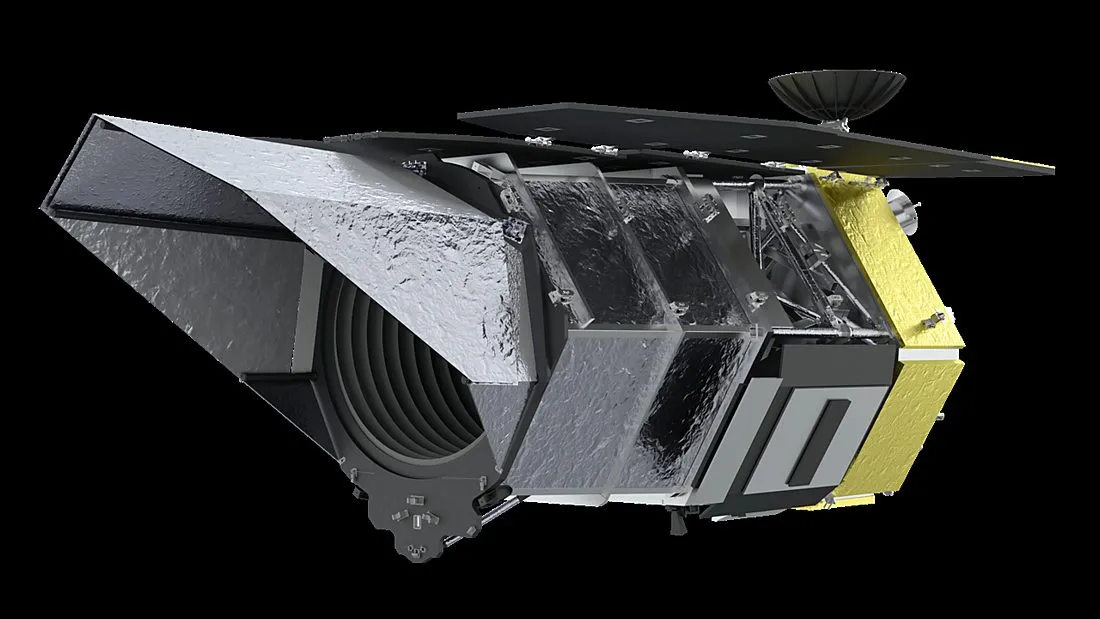
NASA's Nancy Grace Roman Space Telescope arrived at Kennedy Space Center on June 21, 2026, delivered by barge from Baltimore, eight months ahead of the 2027 launch schedule [61].

The telescope is now in the clean room at the Payload Hazardous Servicing Facility, where technicians are testing its six solar panels, inspecting thermal blankets, and loading its fuel tanks with 290 gallons of hydrazine [61]. The Roman telescope carries a 2.4-meter primary mirror and a field of view 100 times wider than Hubble's. During its five-year primary mission at the second Sun-Earth Lagrange point, it is predicted to detect over 100,000 exoplanets and image light from a billion galaxies [61]. It is named for Nancy Grace Roman, NASA's first female executive and its first Chief of Astronomy, who spent the 1960s and 70s classifying stars and advocating for space-based observatories, work that eventually led to the Hubble Space Telescope [61].

What each field noticed (3)
Universe Today, same article

Technology

Being eight months ahead of the original schedule on a mission of this complexity is not a small thing. The same week, NASA's inspector general warned that Artemis infrastructure is behind and overextended [154]. Roman is an outlier.

the story of Nancy Grace Roman

Human Stories

Roman spent her career at a time when NASA actively discouraged women from scientific careers. She joined in 1959, became the agency's first female executive, and spent decades quietly building the institutional case for a space telescope. Hubble exists in part because she kept making the argument. Her name on this successor telescope is the institution acknowledging the debt [61].

Good news you might have missed

370,000 Acres of Rainforest and Granite Peaks Now Protected in French Guiana France created the Rocky Peaks of Armontabo reserve, protecting 370,000 acres of Amazon rainforest and isolated granite mountains in French Guiana, pushing the territory closer to its goal of 10 percent under strong protection by 2030 [205]. Good News Network
Unique Double Cochlear Implant Surgery Lets Twins Hear Mom's Voice For the First Time, Together Twins Artie and Jack, born prematurely and profoundly deaf, received four cochlear implants in a single eight-hour surgery in Australia, and when they were turned on, they turned their heads toward their mother's voice for the first time [206]. Good News Network
Breastfeeding Linked to Reduced ADHD Symptoms A longitudinal study of 37,600 families found that six months of exclusive breastfeeding predicted lower ADHD symptom scores at ages three, five, and eight, with the protective effect holding even after controlling for genetic confounders through sibling-pair analyses [70]. Neuroscience News
Hybrid VR and Nerve Stimulation Doubles Stroke Recovery The MultiSensy platform, which pairs VR hand tasks with synchronized skin electrodes, produced nearly twice the motor recovery on standardized assessments compared to conventional rehab, and worked in chronic stroke patients more than three months post-event, when recovery was thought to have plateaued [68]. Neuroscience News
150-Year-Old Neuroanatomy Mystery Confirmed via MRI A brain feature first described in 1876 by anatomist Richard Heschl, a rare cortical bridge connecting two lobes, has been confirmed in modern MRI data at the same prevalence (0.8 percent) Heschl calculated by hand from 1,087 post-mortem brains, and turns out to be shaped by womb environment rather than genetics [69]. Neuroscience News
Zohran Mamdani Appoints Vegan Environmentalist To Direct NYC Food Policy New York City's new mayor appointed Siddhartha Sanchez, a lifelong vegan with twenty years of food justice work, to lead the Mayor's Office of Food Policy, with a mandate to build five city-run grocery stores focused on the city's food deserts [192]. Plant Based News
Could Two Honolulu Zoo Elephants Win Legal Rights? Hawaii's Highest Court Will Decide The Hawaii Supreme Court agreed to hear a habeas corpus case on behalf of Mari and Vaigai, two Asian elephants who have lived at the Honolulu Zoo for over 40 years, in what would be the first legal challenge of its kind to reach a state supreme court [191]. One Green Planet
How Shining a Light on Ships Could Help Solve Illegal Fishing Sixteen countries signed the Mombasa Declaration at the Our Ocean Conference in Kenya, pledging coordinated enforcement, updated vessel registries, and corporate accountability to fight illegal fishing, which currently accounts for nearly one in five fish caught worldwide [194]. Sentient
After 80 Years, Mathematicians Give Famed 'Erdős Method' an Upgrade For the first time in eight decades, mathematicians have meaningfully improved on Paul Erdős's 1947 probabilistic method for proving the existence of mathematical objects, making progress on a problem in graph theory that had been stuck since Erdős first solved it [53]. Quanta Magazine
New solid-state material converts sunlight into higher-energy UV light Researchers at Kyushu University created a solid-state material that converts two visible-light photons into one UV photon at a 1.9 percent efficiency, opening a path to solar-powered air purification, 3D printing resin curing, and UV chemistry that requires no grid power [4]. ScienceDaily
Pune Students Took Soil Testing Beyond the Classroom to Help Farmers Students at Deep Griha Academy in Pune have expanded a school soil-testing program into nearby farming villages, teaching farmers what is in their soil and helping them shift toward organic methods, with the school's crop plots run entirely by children from nursery through Class 8 [217]. The Better India
Scientists Turn Factory Waste Into a Rs 25 Fix That Removes Toxic Dye From Rivers Researchers at NIT Rourkela developed a ceramic water-cleaning material made from fly ash and blast-furnace slag, two industrial waste products that India generates in enormous quantities, that removes Methylene Blue textile dye from wastewater at a fraction of the cost of existing treatments [219]. The Better India
For 7 Years, This Daily Wage Worker Has Collected Leftover Rotis From Homes to Feed Stray Animals Gautam Yadav, a daily wage laborer in Berunda, has spent seven years collecting leftover flatbreads from neighbors' homes every evening and distributing them to roughly 300 stray cows and calves, inspiring enough community participation that the act has become a shared neighborhood ritual [220]. The Better India
Why Finland is betting on sand to solve renewable energy storage Polar Night Energy's sand battery in Pornainen, Finland, which stores renewable electricity as heat in thousands of tonnes of sand inside an insulated silo, performed above simulated predictions during one of Finland's coldest winters last year, providing eight hours of heat per charge to local district systems [165]. Interesting Engineering
Firemen Rushed a 5-year old's Fingertips to Hospital Where She Recovered and Painted a Thank-You Picture for Them After a merry-go-round accident severed five-year-old Olive's fingertips, eight Essex firefighters found and iced every digit, then drove them to the hospital with sirens blaring. Eight weeks later, Olive visited the station with paintings she made with the same hand, now fully healed [207]. Good News Network

Everything we read today

Natural Sciences 65 articles
PLOS One
Life Sciences & Medicine 20 articles
Psychology & Behavioral Science 31 articles
Social Sciences 20 articles
Technology & Innovation 46 articles
Plant-Based & Vegan 22 articles
Solutions & Good News 27 articles
Human Stories & Ideas 13 articles

Get this every morning.

Liked today's? Wake up to tomorrow's, in one short letter.

It's free for everyone, always. If it makes your mornings better, you can help keep it that way.

Monthly

One-time