

June 26, 2026

Cervical cancer deaths near zero in young women, and Neanderthals weren't doomed

6 discoveries · 15 good-news notes · 305 articles read
Natural Sci.Technology

IBM built a chip that fits 100 billion transistors into the space of a human fingernail, roughly twice the density of today's best technology [9][212]. The trick is vertical stacking.

Read the full story
Life SciencesPsychology

Three separate Alzheimer's studies landed this week, each naming a different piece of a puzzle that has resisted scientists for decades. King's College London researchers identified a new pathway by which neurons destroy themselves, which they named karyoptosis: toxic protein buildup causes the cell's nucleus to...

Read the full story
Natural Sci.Life Sciences

Scientists at Cambridge used base editing, a more precise cousin of CRISPR that changes a single DNA letter rather than cutting both strands, to disable the NANOG gene in donated human embryos, then watched what happened. The result surprised everyone.

Read the full story
Natural Sci.Technology

Two separate findings this week from ancient human relatives, and both contradicted what researchers thought they had figured out. Scientists recovered genetic data from 27 more Neanderthals at 10 archaeological sites in Belgium and France, including the Goyet cave system.

Read the full story
Life SciencesSocial Sci.

A Mass General study used a tightly controlled "constant routine" protocol, stripping out sleep, light exposure, activity, and every other behavioral variable, to isolate what the body's own clock does to how you burn food [98]. What they found: your internal circadian system independently peaks calorie burning in...

Read the full story
PsychologyGood News

Psychology Today's piece on queer safety offered a clear scientific frame for something many queer people know from the inside. People who grow up receiving the message that part of who they are is unacceptable develop a nervous system organized around monitoring for threat.

Read the full story

The feel-good story of the day

mother and son embracing Ed Yourdon (via Openverse)

"I love you regardless": how one Indian mother's certainty became a movement

On December 3, 2007, Aruna Desai's 17-year-old son Abhishek came to her in tears. He had been circling the conversation for days. When she finally asked him directly, he said yes, he was gay, and then asked the question that changed the rest of her life: "Mumma, do you hate me now? Will you accept me?"

She took him to dinner that evening and said: "I love you regardless."

Then she kept going. Desai, an HR professional in Mumbai, soon realized that what had felt instinctive to her was, for many Indian families, unimaginable. She began connecting families whose children had just come out with parents who had already walked that road. What started as informal conversations became Sweekar, The Rainbow Parents, a pan-India network that has since counseled thousands of families. The name means acceptance. Parents who had already arrived at "I love you regardless" offered peer counseling to those who were still trying to find the words.

She is not a therapist or a public figure. She is a mother who made one clear decision at a dinner table eighteen years ago, and then spent the years since helping other parents make the same one. Sweekar now operates across multiple cities and has extended to Indian families abroad. Somewhere tonight, a parent is making that call for the first time, and Aruna Desai's network is ready for it.

The discoveries, in full

Natural Sci. Technology

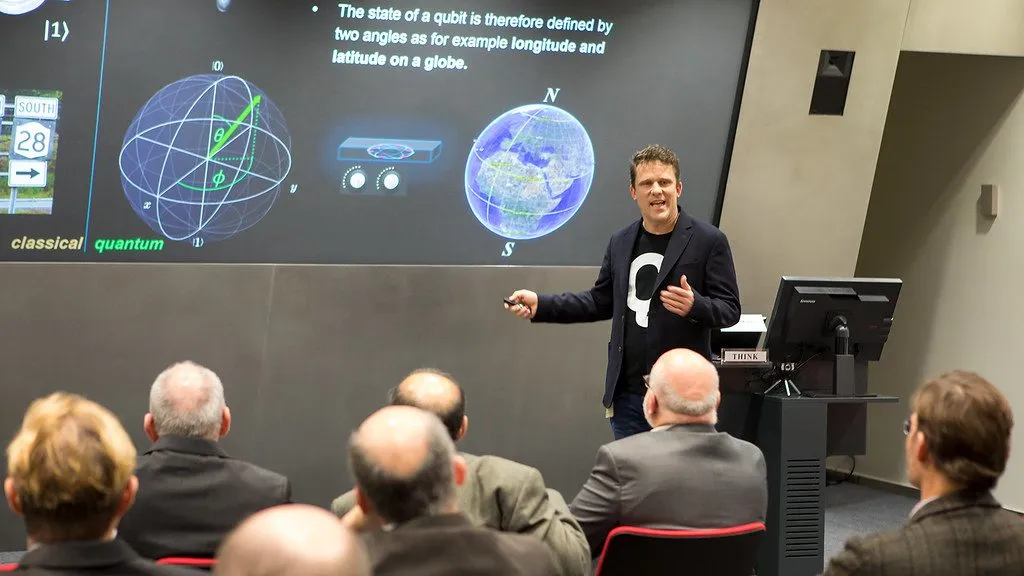
IBM's new chip extends Moore's Law another decade

IBM built a chip that fits 100 billion transistors into the space of a human fingernail, roughly twice the density of today's best technology [9][212]. The trick is vertical stacking.

Instead of shrinking transistors smaller, which quantum mechanics now actively resists, engineers layered them on top of each other in what they call a NanoStack architecture. The result does 50% more work in the same time and uses 70% less energy than the current generation [212]. At 0.7 nanometers, the transistors are now measured in angstroms, the unit physicists use for atoms. A glucose molecule is about this wide [9].

What each field noticed (2)
Live Science

World's first sub-1nm chip keeps Moore's Law alive

Live Science focused on what the chip means for the roadmap. Transistors have been approaching a hard physical limit for fifteen years, and the conventional response has been to make them smaller, which works until it doesn't. NanoStack sidesteps that problem entirely by building upward, the way cities solve housing shortages. Within a decade, chips using this design could be in every data center, running AI computations at a fraction of today's energy cost [9].

Read the story
Life Sciences Psychology

Three new clues about how Alzheimer's kills neurons

Three separate Alzheimer's studies landed this week, each naming a different piece of a puzzle that has resisted scientists for decades. King's College London researchers identified a new pathway by which neurons destroy themselves, which they named karyoptosis: toxic protein buildup causes the cell's nucleus to warp, shrivel, and disintegrate.

Analysis of over 3,000 brain cells from deceased patients found this happening in 35% of neurons in the frontal cortex of Alzheimer's brains, compared to 15% in healthy aged controls [93]. Separately, the Salk Institute described a process they call chronoferroptosis: iron gradually accumulates in neurons over years, stripping away their antioxidant defenses until even a minor secondary stress causes catastrophic collapse. Neurons exposed to iron for nine days behaved entirely differently from those exposed for six to eight hours. That time gap is exactly why previous short-term studies kept missing it [89]. A third study, out of Edith Cowan University, found that the AQP4 gene, which regulates the brain's glymphatic waste-removal system that flushes amyloid beta out during sleep, interacts with sleep quality to change how much brain shrinkage a person accumulates in old age. People with certain AQP4 variants who sleep poorly appear to face meaningfully higher Alzheimer's risk [124].

What each field noticed (2)
Neuroscience News: "New Form of Cell Death Discovered in Alzheimer's"; "Long-Term Iron Accumulation Strips Neurons"

Life Sciences

The karyoptosis paper pinpointed a specific molecular switch: an enzyme called p38 MAP kinase interacts with a nuclear structural protein called LaminB1 under pressure from misfolded proteins. Block that interaction in rat neurons, and the nuclear breakdown stops. The chronoferroptosis work points toward a different target: the iron-export machinery inside neurons seems to fail with age, allowing iron to pool indefinitely. The Salk lab has already synthesized several candidate compounds to inhibit this pathway [89][93].

PsyPost

Genetic risk for Alzheimer's disease could depend on how well you sleep

The psychology lens brought in a behavioral lever. Sleep is the main window during which the brain runs its glymphatic cleaning cycle. If a genetic variant affects how well that system works, poor sleep may be the mechanism by which the genetic risk actually manifests, not just a correlation. The study followed 351 older adults with an average age of 75 and found sleep quality modified the effect of AQP4 gene variants on both brain volume and memory scores [124].

Read the story
Natural Sci. Life Sciences

Human embryo base editing rewrites what we knew about early development

Scientists at Cambridge used base editing, a more precise cousin of CRISPR that changes a single DNA letter rather than cutting both strands, to disable the NANOG gene in donated human embryos, then watched what happened.

The result surprised everyone. In mice, NANOG is essential for forming the yolk sac. In human embryos, the yolk sac formed fine. But the epiblast, the cluster of cells that goes on to become every tissue in the body, failed to form properly [20]. This is the kind of finding that only a human embryo can yield. Mouse models have been actively misleading for this particular gene, and the discrepancy matters enormously if you are trying to understand why some early pregnancies fail, or how to improve IVF outcomes. The embryos were allowed to develop for about a week and then stopped, well within established research guidelines [20][112].

What each field noticed (2)
Nature

Edited human embryos reveal secrets of our development

Nature's coverage centered on the scientific surprise: NANOG's role in humans is genuinely different from its role in every animal model we have. Working under dim red light to avoid activating light-sensitive proteins in the embryonic cells, the Cambridge team used base editing's precision to get a clean result that CRISPR-Cas9 could not have delivered. The method appears less damaging to the genome, which makes interpretation sharper [20].

Read the story
STAT

Next-gen CRISPR tools improve editing accuracy in embryos

STAT focused on what this signals for the future. An embryo can now survive base editing and continue developing to the point where it could theoretically be implanted. That is not yet happening, and serious ethical questions remain about when or whether embryo editing should be used clinically. A different study reported earlier this month found a similar result but also noted that not every cell in the edited embryo got a consistent edit. That mosaic problem remains unsolved [112].

Read the story
Natural Sci. Technology

Two remarkable findings about our ancient human relatives

Two separate findings this week from ancient human relatives, and both contradicted what researchers thought they had figured out. Scientists recovered genetic data from 27 more Neanderthals at 10 archaeological sites in Belgium and France, including the Goyet cave system.

The late Neanderthals of northwestern Europe showed substantially more genetic diversity than the Siberian Neanderthals who had previously defined our picture of the species. Inbreeding, which the Siberian evidence had made look catastrophic and possibly fatal, was not a feature of the late European population at all [8]. Separately, a molecular analysis of 23 Homo naledi teeth from four different cave chambers deep in South Africa's Rising Star Cave system found that every single tooth contained amelogenin-X, the protein encoded on the X chromosome, and none contained the male version. All known Homo naledi individuals appear to be female [182]. The odds of that being random are roughly one in a million.

What each field noticed (2)
Live Science

Some of the last surviving Neanderthals were remarkably diverse

The key correction: we had been drawing conclusions about an entire species from a handful of genomes from one edge of its range. The Belgian-French late Neanderthals diverged from a common ancestor with other known groups about 54,000 years ago and formed their own regional population, but within that group, genetic diversity was high. The real cause of Neanderthal extinction remains an open question [8].

Read the story
Ars Technica

Every Homo naledi we know of is female

Ars Technica noted the statistics. Getting 20 individuals all female by chance is the same probability as flipping a coin 20 times and landing on heads every time: 0.0000954%. The most plausible explanation is that Homo naledi was deliberately placing its female dead in specific chambers, possibly separated from males, for reasons we can barely begin to guess. A species with a brain one-third the size of ours was apparently making meaningful decisions about how to treat the dead [182].

Read the story
Life Sciences Social Sci.

When you eat matters more than you thought

A Mass General study used a tightly controlled "constant routine" protocol, stripping out sleep, light exposure, activity, and every other behavioral variable, to isolate what the body's own clock does to how you burn food [98].

What they found: your internal circadian system independently peaks calorie burning in the biological morning, around 7 AM, and drops to its lowest point in the biological evening, around 7 PM. Not because you are more active in the morning. The clock itself is running a different metabolic program, and it runs that program regardless of when you woke up. Meanwhile, a separate 10-year study analyzed nearly 300,000 chess games played by almost 10,000 expert players from 178 countries, looking for any decline in move quality among Muslim players during Ramadan. The answer, with more than 25 million moves analyzed: essentially none [156].

What each field noticed (2)
Neuroscience News

Body Clock Dictates Morning Calorie Burning

The mechanism is diet-induced thermogenesis, the extra calories your body burns simply to digest and process food. That thermal cost is substantially higher in the morning than the evening, driven by the body clock, not by behavior. Eating the same meal at 7 PM costs you fewer calories burned and more stored, independent of everything else you do [98].

Read the story
Marginal Revolution

Does fasting harm cognitive performance?

The Ramadan chess study is an unusually well-powered natural experiment. Muslim players served as their own controls across a decade. The headline finding is reassuring and specific: voluntary religious fasting for a month, at the intensity practiced by observant Muslims, does not measurably impair the kind of complex cognitive work that tournament chess demands. The 0.13 additional percentage points of large errors during Ramadan was fragile across alternative analyses and disappeared in most of them [156].

Read the story
Psychology Good News

What queer people know about safety, and what one Indian mother built from it

Psychology Today's piece on queer safety offered a clear scientific frame for something many queer people know from the inside. People who grow up receiving the message that part of who they are is unacceptable develop a nervous system organized around monitoring for threat.

The body does not automatically update when the external situation improves. Minority stress, the cumulative burden of anticipated rejection, self-monitoring, and conditional acceptance, persists even after acceptance arrives [136]. On December 3, 2007, Aruna Desai, an HR professional in Mumbai, sat across from her 17-year-old son Abhishek as he came out to her in tears. He asked her: "Mumma, do you hate me now? Will you accept me?" She took him to dinner and said "I love you regardless." Then she kept going. She founded Sweekar, The Rainbow Parents, a pan-India network that has since counseled thousands of families struggling with the news that a child is LGBTQ+ [273].

What each field noticed (2)
Psychology Today

Why Feeling Safe Can Be Complicated for Queer People

The psychology piece explained a specific mechanism: when emotional safety is uncertain for years, the brain's alarm systems become sensitized, and that sensitization does not switch off simply because circumstances improve. A person can live in a supportive community, be in a loving relationship, and still find intimacy or relaxation difficult because their nervous system was conditioned differently. The article was about recognizing that lag with patience rather than confusion [136].

Read the story
The Better India

'Mumma, I'm Gay. Do You Hate Me Now?'

Desai's account traced what happened after that dinner. She began connecting parents whose children had just come out with parents who had already walked that road. Over time what started as peer connections became Sweekar, a formal, multi-city network now extending to Indian families abroad. The organization's mission, as Desai describes it, is to turn personal acceptance into collective support at a national scale. Parents who have already made the journey offer peer counseling to those who are just beginning it [273].

Read the story

Good news you might have missed

What went right this week: the good news that matters No women in their early 20s died from cervical cancer in England between 2020 and 2024, the first time that has ever been true [266]. The HPV vaccine, introduced in 2008, has reduced the risk of cervical cancer death before 30 to what researchers call "effectively zero," with around 200 deaths prevented in England so far and many more coming as vaccinated generations age. Positive News
What went right this week: the good news that matters Smoking rates in India have halved since 2000, a remarkable trend in a country where nearly one million people die from smoking each year [266]. The decline covers both men and women, and India's progress is part of a global pattern: the WHO reports a 27% fall in the number of people smoking worldwide since 2010. Positive News
Lost books by ancient philosophers recovered from 'unreadable' scrolls AI virtually unwrapped a charred 2,000-year-old scroll from Herculaneum that generations of scholars had written off as unreadable, recovering 1.5 metres of Stoic philosophy text across 22 columns [29]. The scroll's content mentions the nephew of Chrysippus, the great Stoic philosopher, making him the most likely author of words nobody has read since Vesuvius buried them in AD 79. New Scientist
USA's Largest Renewable Project Comes Online–With More Power Than the Hoover Dam SunZia, a 3,650-megawatt wind project in New Mexico connected to Arizona by a 550-mile transmission line, is now fully operational and can power approximately one million American homes annually [264]. It was built on time and on budget, a rarity for infrastructure at this scale, in genuine partnership with local communities and with helicopters delivering tower components to remote, environmentally sensitive terrain. Good News Network
Dead lithium batteries revived to 95% capacity via electrochemical bath Cornell University researchers restored spent lithium-ion batteries to 95% of their original capacity using an electrochemical solution that treats the electrode directly, rather than shredding the battery and extracting materials [226]. The method could cut recycling costs by 56% and means batteries retiring with structurally intact electrodes, which is most of them, may have a real second life. New Atlas
After 70 years of excavation, ancient Sardis becomes a UNESCO World Heritage site The ancient Lydian city of Sardis in western Turkey, where the world's first coins were minted and King Croesus amassed his legendary wealth, has received UNESCO World Heritage status after nearly seven decades of continuous excavation by the Harvard-Cornell project [2]. The site spans Greeks, Romans, Byzantines, and Ottomans, offering a virtually unbroken 3,000 years of recorded urban life in a single place. ScienceDaily
Mars Perseverance Rover Completes a Marathon on Mars Five years into its mission, NASA's Perseverance rover has driven 26.2 miles across Mars, confirmed Jezero Crater once held a lake, collected samples potentially including the oldest solidified rock on Mars, and captured the first video of a Martian solar eclipse [265]. The sample return mission that would bring those rocks to Earth is still without a firm plan, but the samples sit cached and waiting. Good News Network
New Brain Map Reveals Deep Roots of Vertebrate Intelligence Scientists built the first 3D single-cell atlas of an entire lamprey brain, finding that the basic molecular architecture of vertebrate intelligence has held steady for 450 million years [94]. The lamprey, unchanged since before the dinosaurs, shares strikingly conserved gene-expression patterns with modern mice across multiple core brain regions. Neuroscience News
New prison food rules: what the revised prison food policy means for imprisoned vegans England and Wales' new prison food framework, in force since February 2026, formally recognizes ethical veganism as a protected characteristic under the Equality Act [252]. Prisons must now proactively provide nutritionally adequate vegan meals, treat veganism as a matter of conscience rather than personal preference, and consult imprisoned vegans about whether meals actually meet their needs. The Vegan Society
Musée d'Orsay Opens Gallery Dedicated to Still-Unclaimed Artworks Stolen by Nazis in WWII The Musée d'Orsay has opened a permanent room displaying 225 works looted during the Nazi occupation of Paris, with the stated goal of one day having it empty [263]. In the past 30 years, 15 works have been returned to their rightful owners or heirs. The gallery rotates the works and publishes the investigative file for each one, inviting the public to help identify families. Good News Network
Solar fridges lift African farmers' incomes by 50 percent Off-grid solar cold storage is cutting post-harvest food loss among African farmers from as high as 50% to under 2%, allowing farmers to hold produce until prices improve rather than selling at harvest-day rates [281]. Provider Soko Fresh reports farmers earning up to 50% more per kilogram; the model now operates across Kenya, Nigeria, Ethiopia, Rwanda, and South Africa. The Optimist Daily
Plant-Based Milk Outpaces Dairy Growth in US Foodservice Dollar sales of non-dairy milk in US restaurants and coffee shops rose 16% in 2025, outpacing dairy growth, and plant-based milk now holds a 13% share of all milk-pound sales in foodservice [230]. The largest gains came from chains that eliminated plant-based surcharges, or made plant-based the default option. Green Queen
Mumbai Startup's Clean-Tech Solution Revives Dead Solar Panels & Cuts Water Use by 55% TriNANO Technologies, incubated at IIT Bombay, developed a nanotechnology coating that revives aging solar panels to near-original efficiency while cutting the water used to clean them by 55% [278]. The original inspiration was a farmer who had to use precious drinking water to wash his panels because he could not afford the efficiency loss from leaving them dirty. The Better India
How Honeybees Use the Waggle Dance to Share Food Locations in the Sundarbans The honeybee waggle dance, first decoded by Karl von Frisch in the 1940s, turns out to have a layer nobody knew about: bees teach the dance to each other through observation, and what the audience does changes how the dancer performs [269]. New research shows bees adapt their dance in response to who is watching, suggesting a social dimension to what was assumed to be a fixed, instinctive signal. The Better India
New Business Formation is Surging–Again Every month in 2026 has set a new US business formation record, with 2.9 million new businesses registered in the first five months, the strongest start on record [159]. Among businesses using Stripe, the 2025 cohort is reaching $1M in cumulative revenue three times faster than the 2019 cohort; France, too, has hit record business creation levels, driven heavily by solo entrepreneurs. Marginal Revolution

Everything we read today

Natural Sciences 88 articles
PLOS One
Proceedings of the National Academy of Sciences: Proceedings of the National Academy of Sciences: Table of Contents
Life Sciences & Medicine 34 articles
Psychology & Behavioral Science 30 articles
Psyche | Know Your Self
Social Sciences 19 articles
Technology & Innovation 56 articles
Plant-Based & Vegan 33 articles
Solutions & Good News 32 articles
Human Stories & Ideas 13 articles

Get this every morning.

Liked today's? Wake up to tomorrow's, in one short letter.

It's free for everyone, always. If it makes your mornings better, you can help keep it that way.

Monthly

One-time