The week in review · September 21 to 27, 2026

The week in review: Stanford finds two brains hiding inside one skull

In the week to September 27, 2026, Today Got Better followed 54 discoveries across all eight fields, plus 97 smaller wins. Here is what the week added up to.

Days
7
Discoveries
54
Fields
8
Good-news wins
97

Breakthrough of the week

Stanford finds two brains hiding inside one skull

Every yoga teacher who has told you to slow your breath had the right instinct, but nobody had isolated the actual mechanism until now: the physical rhythm of air crossing your nasal sensors appears to dial anxiety…
Followed across 3 days: Sep 22, 2026 · Sep 23, 2026 · Sep 26, 2026

The week, day by day

  1. Monday, Sep 21, 2026 Today's discoveries are what happens when measurement finally catches up to wonder: a dinosaur's actual pulse, gravity's stubborn refusal to add up, and the quiet biological math of sleep and hormones protecting a brain for decades. Read that morning
  2. Tuesday, Sep 22, 2026 Today's discoveries are mostly about things that held on despite the odds: night vision, a species overlooked for a century, and a highway that's finally safe to cross. Read that morning
  3. Wednesday, Sep 23, 2026 Everywhere today, something written off as permanent turned out not to be. Read that morning
  4. Thursday, Sep 24, 2026 A lot of today's discoveries are about undoing damage everyone assumed was permanent, from a paralyzed mouse walking again to a dinosaur rib caught mid-heal. Read that morning
  5. Friday, Sep 25, 2026 Today's discoveries all point the same direction: help works even in forms you wouldn't expect, a scan years before symptoms, a bond built one awkward hallway conversation at a time, a hog barn turned into a mushroom farm. Read that morning
  6. Saturday, Sep 26, 2026 Today's science keeps finding the actual lever to pull, whether that's a hidden protein on a cancer cell, a virus circulating in a dog population, or the pace of air moving through your own nose. Read that morning
  7. Sunday, Sep 27, 2026 Today's discoveries kept finding hidden lines of communication: between a shinbone and a brain, between an old scroll and the X-ray that can finally read it, between a Brazilian fish and the humans who just met it in time to try to save it. Read that morning

Story arcs

Findings that came back on more than one day, and where they ended up.

Sep 22, 2026 → Sep 23, 2026 → Sep 26, 2026

Stanford finds two brains hiding inside one skull

Every yoga teacher who has told you to slow your breath had the right instinct, but nobody had isolated the actual mechanism until now: the physical rhythm of air crossing your nasal sensors appears to dial anxiety…

Sep 23, 2026 → Sep 25, 2026

Students turned oyster shell waste into a coral reef with a 100 percent survival rate

Even the program's harshest skeptics land on a shared point: a UN Environment Programme coordinator notes that even if only half the planted trees survive, the soil still holds more moisture and more carbon than before.

What each field explored

Natural Sciences

Psychology & Behavioral Science

Technology & Innovation

Solutions & Good News

The week's most wondrous

The good news that made us stop, from seven days of small wins.

  • Natural Sciences Scientists may have solved a 2,000-year-old Dead Sea Scrolls mystery Researchers at Tel Aviv University think the Qumran sect really did run their community on a tidy 364-day calendar, 52 perfect weeks, before it drifted out of sync with the seasons and got abandoned [3]. A 2,000-year-old scheduling problem, finally explained.
  • Natural Sciences 'Rusty treasure' found in the Danube is full of 2,000-year-old iron bars Gravel workers in Austria stumbled onto 500 semifinished iron bars, a two-millennia-old shipwreck's cargo, enough metal to have forged 500 swords or 8,000 nails [9]. It came within inches of being sold to scrap dealers before anyone realized what it was.
  • Natural Sciences Stars turn neon-green in first test image from NASA's Roman telescope Roman's new 300-megapixel camera just opened its eyes for the first time, seeing lime-green loops of unfocused starlight on its way to a parking spot beside the James Webb telescope [10]. Its future images will each cover 100 times more sky than Hubble's.
  • Natural Sciences Scientists discover a hidden 'ID card' in cat urine Cats may recognize each other for months through 13 unusual fatty acids in their urine that stay chemically stable even as the scent around them fades [4]. Cats remember you, or at least your chemistry, longer than you'd think.
  • Life Sciences & Medicine Scientists Have Ranked Which Exercises Are Best For Your Bones A review of 124 trials and over 18,000 people found brisk walking or jogging beat every fancier workout for bone density in people over 40 [15]. About 2 to 3 hours a week is the dose that starts making a real difference.
  • Life Sciences & Medicine Microscopy and AI Decipher Fruit Fly Neural Architecture After nearly two decades of work, scientists have mapped all 166,000 neurons and every synapse in an adult fruit fly's nervous system, a project once considered impossibly slow that AI helped speed up more than a thousandfold [32]. The same tools are now aimed at transparent fish brains.
  • Life Sciences & Medicine The Brain Is Two Separate Organs Joined by Evolution Stanford researchers found the brain's front and back halves grow from two entirely separate cell lineages, a discovery that let them finally grow working human hindbrain neurons in a dish for the first time, opening a path to studying ALS and related diseases [30].
  • Life Sciences & Medicine Brain's 'Blue Place' Rewrites How Norepinephrine Drives Learning Allen Institute scientists mapped a brainstem region long assumed to blast the whole brain with one chemical signal, and found it actually routes precise messages to exact destinations, including a single mouse neuron with an axon over 70 centimeters long, the longest ever recorded in the species [31].
  • Technology & Innovation World's first zero-degradation elastocaloric cooling device A Hong Kong team built a solid-state cooling device using a fatigue-resistant alloy that held steady through one million operating cycles with zero performance loss, a real shot at refrigeration without the usual greenhouse gases [108].
  • Technology & Innovation Scientists create world's first floating titanium RMIT researchers 3D-printed a titanium lattice, filled its hollow beams with foam, and got a metal four times denser than water to float, even after they deliberately cracked and broke parts of it [119].
  • Solutions & Good News 165-Mile Bike Trail Through Minnesota Finally Completed After 30 Years The Mesabi Trail, three decades and countless partners in the making, now links 28 Minnesota communities along old iron-mining country, one of the longest paved cycling trails in America [141].
  • Solutions & Good News Couple Fosters 59 Dogs in Retirement Nicole and Gary Wordsworth have spent 15 years giving anxious shelter dogs a quiet place to decompress between kennel stays and forever homes, 59 dogs and counting [140].

The long view

Brain implants leave the lab

Brain-computer interfaces are moving from lab demos that needed a technician to devices people use unaided at home, restoring speech and movement to people with paralysis.

Latest · Sep 15, 2026 A UCSF team led by neurosurgeon Edward Chang tested a brain-computer interface on three patients with vocal-tract and body paralysis from ALS or brainstem stroke, reading motor cortex signals for both speech and gestures at once. Two participants controlled a full-body avatar in real time, speaking and gesturing together, and the combined brain activity for speech plus gesture exceeded the sum of the two signals alone rather than overwhelming the system as researchers had assumed.

What’s next: Whether the combined speech-and-gesture decoding replicates in more patients and moves beyond a lab prototype into something usable outside test sessions, and whether implants like Thomas's keep working as a disease like ALS progresses further.

Follow this tracker

From The Better Shelf

Book of the week

Paid link. If you buy a book through this link, Bookshop.org pays us a small commission and sends a share of the sale to independent bookstores.

  1. Firsthand account

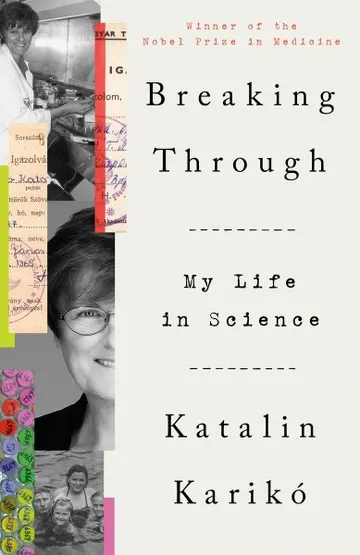
    Breaking Through (opens Bookshop.org)

    Katalin Karikó · 2023

    Katalin Karikó describes her path from communist Hungary to Penn, years of rejected grants, and the modified mRNA work that led to the COVID-19 vaccines and a 2023 Nobel Prize.

Don't miss a week.

We send the good news every morning, and it adds up to this. One letter a day, free forever.