The week in review · September 14 to 20, 2026

The week in review: A brain protein that turns back the clock in aging mice

In the week to September 20, 2026, Today Got Better followed 54 discoveries across all eight fields, plus 92 smaller wins. Here is what the week added up to.

Days
7
Discoveries
54
Fields
8
Good-news wins
92

Breakthrough of the week

A brain protein that turns back the clock in aging mice

A biological signature sounds fixed, something a child is simply born with.

Followed across 2 days: Sep 19, 2026 · Sep 20, 2026

The week, day by day

  1. Monday, Sep 14, 2026 Today's discoveries share a quiet trick: holding back, whether it's a flower giving up sunlight, an elephant overriding its own impulse, or a country choosing not to cash in a rainforest, and it keeps paying off. Read that morning
  2. Tuesday, Sep 15, 2026 Today's throughline is recovery: proof that things assumed permanently lost, a full voice, an organ's youth, can still come back. Read that morning
  3. Wednesday, Sep 16, 2026 Nature and medicine spent today quietly undoing damage nobody thought could be undone, from a volcano cleaning up its own pollution to cells taught to rebuild a bone from the inside. Read that morning
  4. Thursday, Sep 17, 2026 Today's discoveries kept dissolving lines we assumed were fixed: between species, between a tumor's own defenses and its undoing, and between a fading memory and the person still there to recite it. Read that morning
  5. Friday, Sep 18, 2026 Today's discoveries move at wildly different speeds, from a planet still gathering itself out of gas and dust to a 117-year-old woman whose body simply refused to fall apart the usual way. Read that morning
  6. Saturday, Sep 19, 2026 Today's discoveries share a quiet theme: the body and the sky are both better at repair and reinvention than we usually give them credit for. Read that morning
  7. Sunday, Sep 20, 2026 The through-line today is hidden resilience, systems and bodies turning out to be built for more than anyone gave them credit for. Read that morning

Story arcs

Findings that came back on more than one day, and where they ended up.

What each field explored

Natural Sciences

Psychology & Behavioral Science

Solutions & Good News

The week's most wondrous

The good news that made us stop, from seven days of small wins.

  • Solutions & Good News Elephants Can Think Before They Act and Resist Impulsive Behavior, Shows Study Asian elephants at Thailand's National Elephant Institute, tested with a see-through box of fruit, consistently ignored the obvious-but-blocked opening and used the side door they'd been taught instead, the first evidence of this kind of impulse control in elephants [105].
  • Solutions & Good News She 'Asked for a Sign' and Suddenly a Kingfisher Darts Up and Sits in Her Hand for 10 Minutes A park ranger in Somerset was watering flowers when a wild Eurasian kingfisher, a notoriously shy bird, flew up and perched on her gloved hand for ten straight minutes before heading back to the river [103].
  • Solutions & Good News His Fields Flooded Every Year. He Turned the Water Into Fish Farms Nazrul Haque grew up watching his family's Assam paddy fields drown every monsoon, so instead of fighting the flooding he built a fish farm around it, turning water that used to ruin the season into the thing that pays for it [111].
  • Solutions & Good News Punjab Farmer Gave Up Wheat Farming to Grow Exotic Flowers, Earns Rs 1 Lakh/Acre Gurwinder Singh Sohi swapped his family's generations-old wheat fields for 40 varieties of exotic flowers, from California poppy to delphinium, and now earns roughly two to three times what wheat ever paid him [112].
  • Technology & Innovation India's Pothole Problem Gets a Danish Fix Andhra Pradesh is testing a Danish fiber, already proven at Heathrow and on German highways, mixed into asphalt at under a kilogram per ton, and early tests show it cuts rut depth by more than half [113].
  • Technology & Innovation Just A Photo, a Problem & a Solution A free AI app called FarmerChat let a Uttar Pradesh nursery owner photograph his sick mango saplings and get a diagnosis and treatment plan in seconds, saving the crop; it's now reached nearly a million Indian farmers [116].
  • Solutions & Good News Teachers Took Nail Cutters, Not Textbooks, to This Tribal Hamlet in Tamil Nadu An 82-year-old educator who still teaches daily brought a free Saturday school to a remote tribal settlement in Kodaikanal, and over two years it grew from 25 kids to more than 52 first-generation learners now headed somewhere other than the fields [118].
  • Solutions & Good News With Adapted Sailing, the Sea Is for Everyone César Maquieira thought his degenerative muscle disease had closed off the ocean he loved, until a Spanish sailing club built custom accessible boats and hoists so wheelchair users could get out on the water themselves [109].
  • Natural Sciences Researchers Use Math to Ensure a Wordle Win 99% of the Time Binghamton University researchers applied Shannon entropy, the math of uncertainty, to Wordle and found that guessing the most informative word, not the most likely answer, solves the puzzle 99% of the time versus 90% for a standard strategy [104].
  • Psychology & Behavioral Science Stanford researchers find a single question could be the key to changing someone's mind Two studies found that simply asking "could you tell me more about that?" during a disagreement makes both people more open-minded, and the person doing the asking ends up with a more favorable view of the opposing side too [127].
  • Psychology & Behavioral Science There Is Power in Being Grateful A meta-analysis of 15 studies covering 229,000 patients found optimism measurably lowers the odds of cardiovascular events and death, adding to a growing body of evidence that gratitude isn't just a nice feeling but a real biological lever [36].
  • Natural Sciences NASA-backed scientists turn plastic waste into edible cookies Southern Illinois University researchers engineered yeast to turn PET plastic bottles and farm waste into protein, fats, and even vanilla flavoring for 3D-printed cookies called µBites, work partly funded through NASA's Deep Space Food Challenge [5].

The long view

The many-fronted fight against Alzheimer's

Researchers are attacking Alzheimer's from several directions at once: the biology of how it spreads, drugs that reprogram the brain's immune cells, and blood tests that could catch it years early.

Latest · Sep 16, 2026 A mouse study found a nasal spray derived from human placenta protected against Alzheimer's-related cognitive decline, ScienceAlert reported.

What’s next: Whether Cu(ATSM) replicates its amyloid-clearing effect in human Alzheimer's patients, whether BCG's protective amyloid shift can be confirmed in Phase III trials timed early enough to matter, whether a trial can show the shingles vaccine itself lowers dementia risk rather than simply tracking with people who were always going to stay healthier longer, whether a drug that calms the microglia-driven inflammatory response without touching plaques c

Follow this tracker

From The Better Shelf

Book of the week

Paid link. If you buy a book through this link, Bookshop.org pays us a small commission and sends a share of the sale to independent bookstores.

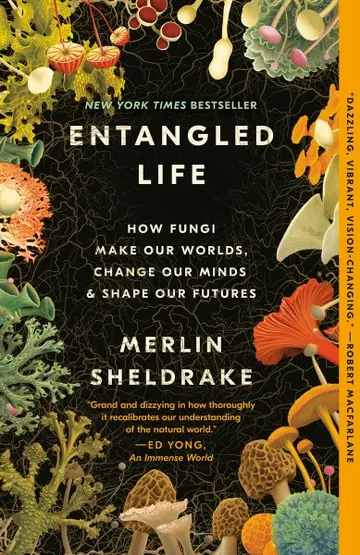
  1. Entangled Life (opens Bookshop.org)

    Merlin Sheldrake · 2020

    Biologist Merlin Sheldrake explores mycelial networks, lichens and yeast, from truffle hunting in Italy to his own experiments, in a book with a striking cover.

Don't miss a week.

We send the good news every morning, and it adds up to this. One letter a day, free forever.