Sep 7, 2026 → Sep 11, 2026 → Sep 12, 2026
Europe finally has its own path to orbit
For decades, European access to space meant government-run programs with a say in where every rocket component got built.
The week in review · September 7 to 13, 2026
In the week to September 13, 2026, Today Got Better followed 52 discoveries across 7 of eight fields, plus 98 smaller wins. Here is what the week added up to.
Breakthrough of the week
For decades, European access to space meant government-run programs with a say in where every rocket component got built.
Followed across 3 days: Sep 7, 2026 · Sep 11, 2026 · Sep 12, 2026
Findings that came back on more than one day, and where they ended up.
Sep 7, 2026 → Sep 11, 2026 → Sep 12, 2026
For decades, European access to space meant government-run programs with a say in where every rocket component got built.
Sep 7, 2026 → Sep 11, 2026
This is good news for the climate and for animals with less spin than it might sound: whole pulses are cheaper than meat substitutes and cheaper than meat itself, rising in price more slowly than food inflation overall…
Sep 9, 2026 → Sep 13, 2026
Six independently built models rarely agree on much, so a unanimous verdict, even a modest one, is the kind of signal that's hard to shrug off [23].
Natural Sciences
Life Sciences & Medicine
Psychology & Behavioral Science
Social Sciences
Technology & Innovation
Plant-Based & Vegan
Solutions & Good News
The good news that made us stop, from seven days of small wins.
The long view
In 1999, two independent teams discovered that a brain chemical called orexin controls wakefulness, a finding now being honored with the Albert Lasker Basic Medical Research Award and one that led directly to new narcolepsy and insomnia drugs, including the experimental compound oveporexton. The stakes are how far orexin-based treatments can extend beyond narcolepsy to other sleep disorders, and whether new orexin-replacement drugs reach approval.
Latest · Sep 12, 2026 Stanford's Emmanuel Mignot, who discovered in 1999 that the brain chemical orexin controls wakefulness by studying narcoleptic dogs including his own Chihuahua Watson, is sharing the 2026 Albert Lasker Basic Medical Research Award for the finding, which has since led directly to new narcolepsy and insomnia drugs.
What’s next: How far orexin-based drugs like oveporexton can extend beyond narcolepsy type 1 to the much larger population of people with ordinary insomnia.
Follow this tracker →From The Better Shelf
Paid link. If you buy a book through this link, Bookshop.org pays us a small commission and sends a share of the sale to independent bookstores.
The history
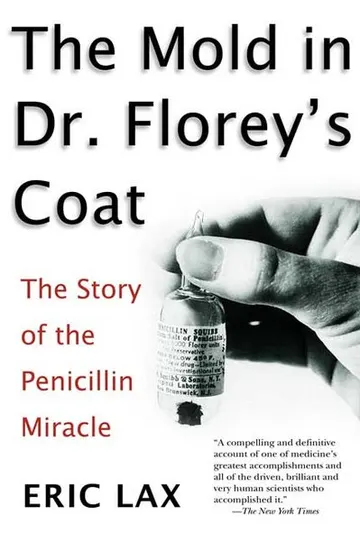
Eric Lax · 2004
Eric Lax tells how Howard Florey, Ernst Chain and Norman Heatley turned Fleming's 1928 mould into a usable drug at Oxford during the Second World War.
We send the good news every morning, and it adds up to this. One letter a day, free forever.
Free forever, no spam. One click to unsubscribe, and we never sell your email.