Nov 9, 2026 → Nov 11, 2026
The first-line immune cells that learn from experience
Netea thinks that if this first line can be tuned, it could help protect people from infections and possibly cancer.
The week in review · November 9 to 15, 2026
In the week to November 15, 2026, Today Got Better followed 50 discoveries across 7 of eight fields, plus 99 smaller wins. Here is what the week added up to.
Breakthrough of the week
Netea thinks that if this first line can be tuned, it could help protect people from infections and possibly cancer.
Followed across 2 days: Nov 9, 2026 · Nov 11, 2026
Findings that came back on more than one day, and where they ended up.
Nov 9, 2026 → Nov 11, 2026
Netea thinks that if this first line can be tuned, it could help protect people from infections and possibly cancer.
Nov 10, 2026 → Nov 11, 2026
The honest accounting runs both ways.
Natural Sciences
Life Sciences & Medicine
Psychology & Behavioral Science
Social Sciences
Technology & Innovation
Solutions & Good News
Human Stories & Ideas
The good news that made us stop, from seven days of small wins.
The long view
Researchers at the University of Chicago's HAARC Center and TGen compared the genomes of SuperAgers, people who reach their 80s and 90s with memory as sharp as someone decades younger, to cognitively average older adults and found no genetic difference. The stakes are finding what, if not genetics, protects some older adults' memory so the protection might eventually be studied and shared rather than left to chance.
Latest · Nov 15, 2026 A Stanford Medicine team compared 110 people with Alzheimer's and 180 SuperAgers over 75 using resting-state fMRI and built a single ARC score from the connections that separated them. In 1,315 adults with no cognitive impairment followed for mostly five to six years, those whose scans looked more Alzheimer's-like declined faster and were more likely to develop Alzheimer's or mild cognitive impairment.
What’s next: What in the body, brain or lifestyle protects SuperAgers' memory remains open, though Sardinia's Blue Zone and now the longevity hotspot of Rugao, China both point toward autonomy, low stress, daily movement and social engagement as recurring lifestyle correlates worth testing for a causal role.
Follow this tracker →From The Better Shelf
Paid link. If you buy a book through this link, Bookshop.org pays us a small commission and sends a share of the sale to independent bookstores.
The history
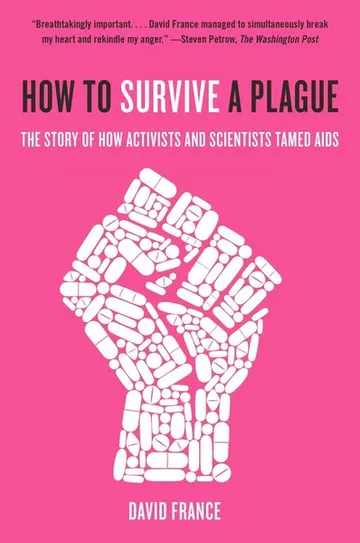
David France · 2016
Journalist David France covers ACT UP and the Treatment Action Group, whose pressure on researchers and regulators led to the combination therapy of 1996. He reported on the epidemic from 1981.
We send the good news every morning, and it adds up to this. One letter a day, free forever.
Free for good. One click to leave.