The week in review · November 2 to 8, 2026

The week in review: Great Zimbabwe's furnaces and the migration behind 500…

In the week to November 8, 2026, Today Got Better followed 50 discoveries across all eight fields, plus 93 smaller wins. Here is what the week added up to.

Days
7
Discoveries
50
Fields
8
Good-news wins
93

Breakthrough of the week

Great Zimbabwe's furnaces and the migration behind 500 languages

English, German, Dutch and the Nordic languages all trace back to this debate, and for a century linguists have argued over when and from where the first Germanic speakers came [250].
Followed across 2 days: Nov 4, 2026 · Nov 6, 2026

The week, day by day

  1. Monday, Nov 2, 2026 Today's good news came from patient looking: for a firefly missing since 1983, for an ape in Egyptian rock, and for two poisons in well water. Read that morning
  2. Tuesday, Nov 3, 2026 People kept finding more in things we thought we had already read: a dinosaur's leg bone, the mud under the Nile Delta, and the person across the political aisle. Read that morning
  3. Wednesday, Nov 4, 2026 Some things come back: frogs after a fungus, beavers after 500 years, and a childhood after a war. Read that morning
  4. Thursday, Nov 5, 2026 Today's best finds are things people treated as settled, from how many kinds of magnetism exist to who ruled Iron Age Britain. Read that morning
  5. Friday, Nov 6, 2026 Labels came loose today: an allergy diagnosis, a rule about how memories are stored, a refinery step, a language's origin story. Read that morning
  6. Saturday, Nov 7, 2026 Several things we treated as fixed, from seizures to long COVID to a canyon on Mars, turned out to still be moving. Read that morning
  7. Sunday, Nov 8, 2026 Old assumptions gave way today: Europe's primeval forest turns out to have been mostly meadow, and the missing layer in the rock record has an explanation. Read that morning

Story arcs

Findings that came back on more than one day, and where they ended up.

What each field explored

Natural Sciences

Solutions & Good News

The week's most wondrous

The good news that made us stop, from seven days of small wins.

  • Natural Sciences 2,700-year-old mummy head yields first molecular evidence linking aloe to Egyptian embalming A Marburg team analyzed 24 objects and found aloe-linked compounds in a skull radiocarbon-dated to the eighth century B.C. and in an 18th-century preparation of mummy medicine, which suggests the medieval texts that mentioned aloe were not just guessing [35].
  • Natural Sciences Humans in The Andes Seem to Have Evolved an Unusual Genetic Ability People in San Antonio de los Cobres drank water with about 200 micrograms of arsenic per liter, roughly 20 times the WHO limit, until a filtration system arrived in 2012, and a gene variant that helps them process arsenic more safely likely explains how people lived there for at least 7,000 years [41].
  • Solutions & Good News Beyond Ranthambore: How 8 Tiger Cubs Are Bringing New Hope for Rajasthan's Tiger Population Kailadevi Wildlife Sanctuary had no documented successful tiger breeding for nearly three decades, and 186 camera-trap stations have now recorded eight cubs and three adults over five years [162].
  • Solutions & Good News Ladakh Experiments With Saffron on Barren Land, Collects 22g in First 4 Days About 90,000 corms went into 4,000 square metres of restored land in Leh on October 1, and flowers appeared in under 30 days instead of the usual two months, yielding a small first harvest of nearly 22 grams [163].
  • Natural Sciences New Research Resolves the Mystery Behind Van Gogh's The Starry Night A Scientific Reports study matched the crescent Moon, Venus and the Hyades in the painting to the sky over Saint-Rémy and points to July 22, not the traditional June 18, when the Moon was a waning gibbous [46].
  • Psychology & Behavioral Science Estrogen therapy linked to fewer signs of Alzheimer’s disease in brain tissue Among 2,959 women in autopsy records, the 258 who had used estrogen-only hormone therapy were less likely to show advanced Alzheimer's pathology, though the data are observational and cannot prove cause [61].
  • Social Sciences Can Home Visits Re-Engage Chronically Absent Students? Evidence from the LEAP Program -- by Eric Brunner, Shangyue Jiang, Stephen Ross When school staff visited the homes of chronically absent students in Connecticut's 15 most disadvantaged districts, attendance rose 4 to 5 percentage points and chronic absenteeism fell 13 to 15 points [92].
  • Plant-Based & Vegan Sustainable Restaurant Association Adds 30% Plant-Based Criteria to Food Made Good Standard The 2027 edition of a standard covering over 15,000 hotels, restaurants and foodservice sites asks for a written, time-bound policy to make at least 30% of menus plant-based [141].
  • Plant-Based & Vegan Qorium Rebrands to Reyva As It Eyes 2027 Launch of Lab-Grown Leather Reyva grows leather from a small biopsy of a living cow, takes about five weeks per batch today, and aims to cut that to three or four [142].
  • Solutions & Good News Housing Nonprofit Funds $16.5 Million in Eviction Relief to Assist Renters A $50,000 GoFundMe in Atlanta grew into Star-C, which has helped over 5,500 families stay in their apartments [157].
  • Solutions & Good News Sardinian restaurants are banning phones for families at meals Fifteen Sardinian restaurants hand families a pediatrician-designed box of games and drawing prompts when they put their phones away, in a one-month pilot [169].
  • Solutions & Good News When a 100-Year-Old Peepal Was Cut Down, He Used a 50-Tonne Crane to Replant It. Now It’s Growing Bharat Sisodia's team found only six or seven feet of trunk left in Ahmedabad, moved it nearly two kilometres by crane, and the tree has reportedly started putting out new growth [166].

The long view

The many-fronted fight against Alzheimer's

Researchers are attacking Alzheimer's from several directions at once: the biology of how it spreads, drugs that reprogram the brain's immune cells, and blood tests that could catch it years early.

Latest · Nov 8, 2026 ScienceDaily reported a long-running U.S. study with up to 43 years of follow-up in which people who drank the most caffeinated coffee developed dementia at 141 cases per 100,000 a year, against 330 among people who rarely or never drank it, with the best results at two to three cups a day. ScienceAlert separately reported UK Biobank data on nearly 88,000 older adults in which at least 42 minutes a day of bright light went with a 17 percent lower relative risk of dementia about eight years later. Both are associations, not trials.

What’s next: Whether Cu(ATSM) replicates its amyloid-clearing effect in human Alzheimer's patients, whether BCG's protective amyloid shift can be confirmed in Phase III trials timed early enough to matter, whether a trial can show the shingles vaccine itself lowers dementia risk rather than simply tracking with people who were always going to stay healthier longer, whether a drug that calms the microglia-driven inflammatory response without touching plaques c

Follow this tracker

From The Better Shelf

Book of the week

Paid link. If you buy a book through this link, Bookshop.org pays us a small commission and sends a share of the sale to independent bookstores.

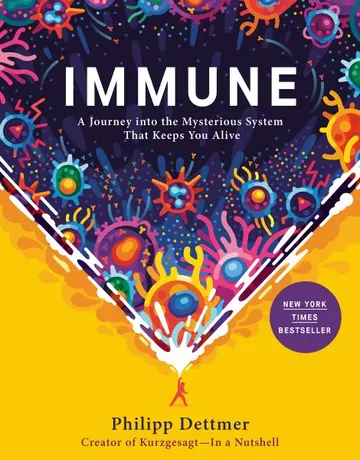
  1. Immune (opens Bookshop.org)

    Philipp Dettmer · 2021

    Philipp Dettmer, founder of the Kurzgesagt video channel, guides readers through the immune system with vivid illustrations of how cells detect and destroy invaders.

Don't miss a week.

We send the good news every morning, and it adds up to this. One letter a day, free forever.