The week in review · October 26 to November 1, 2026

The week in review: The first personalized cancer vaccine clears a Phase 3…

In the week to November 1, 2026, Today Got Better followed 49 discoveries across 7 of eight fields, plus 100 smaller wins. Here is what the week added up to.

Days
7
Discoveries
49
Fields
7
Good-news wins
100

Breakthrough of the week

The first personalized cancer vaccine clears a Phase 3 trial

The piece argues the hard part now is delivery, not proof of concept.

Followed across 2 days: Oct 26, 2026 · Oct 27, 2026

The week, day by day

  1. Monday, Oct 26, 2026 Some of today's best news fits in a vial or on a tooth: a vaccine tuned to one person's tumor, and a brush-on liquid that spares a child the drill. Read that morning
  2. Tuesday, Oct 27, 2026 Today's good news is about looking harder at what was already there: the hidden texture in a CT scan, and a 2,700-year-old eclipse record that turned out to be a clock. Read that morning
  3. Wednesday, Oct 28, 2026 Cheap, close-at-hand things did more than anyone expected today: a painted-on liquid for baby teeth and a fiber powder for sore knees. Read that morning
  4. Thursday, Oct 29, 2026 Today is about hidden repair work, from a bleached coral that healed against its own clone to a fetal brain that discards its flawed neurons. Read that morning
  5. Friday, Oct 30, 2026 The vague things, like feeling sleepy, living longer in the cold and fighting over the thermostat, turn out to have specific cells and molecules behind them. Read that morning
  6. Saturday, Oct 31, 2026 Today's best findings come from looking harder at things we thought we understood: a childhood tumor, a night of dreaming, a meteorite, a garden. Read that morning
  7. Sunday, Nov 1, 2026 Today's best finds came from looking closely at small things: a protein's docking site, a scoop of cave dirt, a bird's body clock. Read that morning

Story arcs

Findings that came back on more than one day, and where they ended up.

What each field explored

Natural Sciences

Life Sciences & Medicine

Solutions & Good News

The week's most wondrous

The good news that made us stop, from seven days of small wins.

  • Solutions & Good News The Pill That Beat the Pills In a trial of 338 previously treated lung cancer patients, divarasib gave a median survival of 17.7 months against 12.0 on the KRAS pills already approved; it is not approved yet, and serious side effects were no more common [138].
  • Solutions & Good News The Ropes Rescuers cut an orangutan named Gadis out of a suspected boar snare in Central Kalimantan with her baby, Garis, still holding on; both are at a clinic near Pangkalan Bun, and the reports disagree on whether he is nine months old or ten [139].
  • Natural Sciences Astronomers may have discovered the first moon beyond our Solar System If confirmed, a body at least as massive as Jupiter orbiting a brown dwarf in the CD-35 2722 system would be the first exomoon, and its own discoverer calls the system "super weird" [11].
  • Natural Sciences New evidence suggests spinosaurus spent most of its life underwater Yale researchers combined more than 11,000 fossil measurements with machine learning and concluded Spinosaurus lived mostly in the water, while some marine reptiles once thought fully aquatic spent real time on land [8].
  • Natural Sciences Scientists overcome a hidden obstacle to more powerful quantum computers RIKEN researchers kept about 99.9 percent accuracy with all five silicon qubits running at once by correcting for the AC Stark shift [5].
  • Natural Sciences Scientists Discovered an Amazing Practical Use For The World's Leftover Coffee Grounds Coffee grounds heated without oxygen to over 350 °C can make concrete up to 30 percent stronger; the world throws away about 10 billion kilograms of them a year, and durability tests are still running [18].
  • Solutions & Good News NYC food pantries are now stocking pet food for struggling households The city is putting $500,000 into 22 pantries across all five boroughs so people do not have to give up their own food, or their pets, to make a month work [140].
  • Solutions & Good News Snakebite Deaths in Odisha’s Angul Fell From 100+ to Double Digits. This Rescuer Is Changing How People Respond to Snakes Biplab Mahapatra, a former crime reporter, started rescuing snakes in Angul after a python that people planned to kill, and his group, registered in 2013, now works to change how villagers respond to snakes [129].
  • Social Sciences Representation, Innovation, and Product Adoption -- by Jennifer L. Kao, Tamar Oostrom After Medicare began covering clinical trial costs for elderly participants in 2000, sponsors widened eligibility and the number of trials for diseases common in older people jumped [72].
  • Social Sciences Sex and Subsistence: Income Effects on Risky Sexual Behavior and Partner Selection -- by Natalie Bau, Corinne Low, Bryce Steinberg In a randomized trial, monthly cash for University of Zambia women cut condomless sex by 30 percent and improved food security and mental health, though the payments were temporary [76].
  • Plant-Based & Vegan Europeans Urge Companies to Ditch the ‘Plant-Based’ Label & Focus on Taste Instead Across eight EU countries, "eat less meat" posters worked least well (53 percent of simple messages changed behavior), while chef recipe changes worked 91 percent of the time [110].
  • Natural Sciences Scientists Simulated Solar Explosions in The Lab – And May Have Solved One of The Sun's Biggest Mysteries Laser-made plasma at a Shanghai facility reached about 820,000 °C with a rippled target, roughly double the flat-target run, which could help explain why the Sun's corona is hundreds of times hotter than its surface [22].

The long view

The many-fronted fight against Alzheimer's

Researchers are attacking Alzheimer's from several directions at once: the biology of how it spreads, drugs that reprogram the brain's immune cells, and blood tests that could catch it years early.

Latest · Nov 1, 2026 ScienceDaily reported that Mass General Brigham researchers pooled six studies covering 2,684 older adults with no cognitive impairment and measured blood p-tau217 at baseline. In JAMA, they found that people with very high p-tau217 had a 38% risk of developing cognitive impairment within five years and an estimated 78% within ten, though the ten-year figure rests on much less data. About 478 participants eventually developed impairment, and the result describes risk in the highest group, not a diagnosis.

What’s next: Whether Cu(ATSM) replicates its amyloid-clearing effect in human Alzheimer's patients, whether BCG's protective amyloid shift can be confirmed in Phase III trials timed early enough to matter, whether a trial can show the shingles vaccine itself lowers dementia risk rather than simply tracking with people who were always going to stay healthier longer, whether a drug that calms the microglia-driven inflammatory response without touching plaques c

Follow this tracker

From The Better Shelf

Book of the week

Paid link. If you buy a book through this link, Bookshop.org pays us a small commission and sends a share of the sale to independent bookstores.

  1. Biography

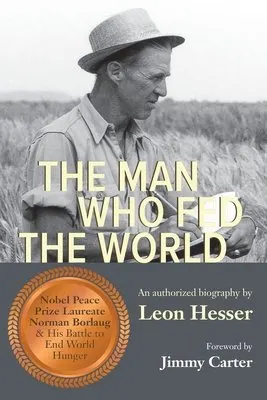
    The Man Who Fed the World (opens Bookshop.org)

    Leon Hesser · 2006

    Leon Hesser worked alongside Norman Borlaug and tells how the wheat breeder's dwarf varieties, bred in Mexico and carried to India and Pakistan, averted famine in the 1960s.

Don't miss a week.

We send the good news every morning, and it adds up to this. One letter a day, free forever.