The week in review · October 5 to 11, 2026

The week in review: A pond alga's light sensor wins the Nobel

In the week to October 11, 2026, Today Got Better followed 49 discoveries across all eight fields, plus 98 smaller wins. Here is what the week added up to.

Days
7
Discoveries
49
Fields
8
Good-news wins
98

Breakthrough of the week

A pond alga's light sensor wins the Nobel

For people losing sight to retinitis pigmentosa, the idea is to give surviving cells in the retina a way to respond to light once the usual light-sensing cells are gone.
Followed across 3 days: Oct 6, 2026 · Oct 7, 2026 · Oct 9, 2026

The week, day by day

  1. Monday, Oct 5, 2026 Familiar things, a vitamin, a pomegranate, a skipped spoonful of sugar in infancy, keep turning out to reach further into the body than anyone assumed. Read that morning
  2. Tuesday, Oct 6, 2026 The small and overlooked did the heavy lifting today: a pond alga's eye spot, a shared lunch, a village that gave up its wedding DJs. Read that morning
  3. Wednesday, Oct 7, 2026 The long bets paid off today, from a Nobel for a detector built inside Antarctic ice to aging tissue that may still know how to repair itself. Read that morning
  4. Thursday, Oct 8, 2026 Today's discoveries are all repairs: brain cells clearing their own debris, a planet assembled from a dead star's leftovers, and neighbours keeping a city's trees alive. Read that morning
  5. Friday, Oct 9, 2026 Today's finds came from things people usually pass over: a pond microbe, a dead star's leftovers, one very old tortoise, and a teenager who saw pallets of masks headed for the bin. Read that morning
  6. Saturday, Oct 10, 2026 Today is about holding on: to muscle in old age, to July's heat until January, and, for chimpanzees, to a little restraint around friends. Read that morning
  7. Sunday, Oct 11, 2026 Today's finds were mostly hiding in plain sight: a drain behind the eye, five patterns under one depression diagnosis, and the angle of your own foot. Read that morning

Story arcs

Findings that came back on more than one day, and where they ended up.

What each field explored

Natural Sciences

Solutions & Good News

The week's most wondrous

The good news that made us stop, from seven days of small wins.

  • Life Sciences & Medicine Easing constipation: A 20-minute walk can get your gut moving almost immediately In 21 healthy young adults, bowel sounds got stronger, more frequent and longer-lasting within one to two minutes of a 20-minute treadmill walk, though the boost faded within a few minutes [6].
  • Life Sciences & Medicine Vitamin D drug may help crack pancreatic cancer's protective shield A small trial added paricalcitol, an FDA-approved vitamin D analog, to chemotherapy in untreated metastatic pancreatic cancer. The combination was safe, patients had more responses and more were progression-free at a year, and those with high vitamin D receptor levels survived longest, though the trial wasn't built to test outcomes [10].
  • Natural Sciences First photos from Smile spacecraft show Earth like you've never seen it before The European-Chinese Smile mission's first ultraviolet images show a ring of aurora covering about a third of the sunlit North Pole, and from its orbit it can watch the pole for a record 45 hours at a time [12].
  • Solutions & Good News The Hospital That Silenced the Machines Royal Cornwall Hospitals NHS Trust treats alarm sound as data to be routed rather than noise to be muffled, and the pilot's results were promising enough that other UK hospital networks are preparing to copy it [143].
  • Psychology & Behavioral Science Study of 2.5 million children finds no link between MMR vaccine and autism Across 2,560,035 children in US health records, getting the MMR vaccine before age two was not associated with a higher autism risk, and the timing of the shot didn't matter [50].
  • Social Sciences Approximating the Equilibrium Effects of Informed School Choice In a Chile trial, a short video and a personalized school report card led families to pick higher-scoring schools, and those children scored about 0.2 standard deviations higher in fourth grade [80].
  • Natural Sciences How Enceladus' ocean spray becomes chemically diverse ice grains Cassini saw 961 salt-rich ice grains from Enceladus with very different chemistry, and lab freezing experiments show slow-cooling droplets sort their salts, so one ocean can produce many kinds of grain [23].
  • Technology & Innovation Japan's 4,800-ton hydrogen tanker: How its engine, batteries and motors work A 4,800-dwt coastal tanker sailed about 20 miles in Osaka Bay on September 25 with a hydrogen engine generating its electricity, cutting about 1.2 tons of CO2 versus fossil fuel [118].
  • Technology & Innovation All hail electrification. But let's talk about the hard part. The IEA's 2025 global averages say $100 of gasoline moves a car 862 miles while $100 of electricity moves an EV 2,310 miles, and a heat pump gets 42 days of heating where a gas boiler gets 30 [98].
  • Life Sciences & Medicine Decaf Coffee Might Have A Surprising Advantage Over Caffeinated, Study Finds In a small experiment with 31 coffee drinkers, only the decaf group improved significantly on two memory tests, which points at gut microbes responding to coffee's polyphenols rather than caffeine alone [35].
  • Technology & Innovation Smart wallpaper turns your wall into a small indoor powerplant A Binghamton paper wallpaper that turns indoor humidity into current reached 3.5 V across 1,596 tiles and ran a wireless keyboard with help from a capacitor, though the study gives no total power figure [123].
  • Solutions & Good News Rare 1-in-100M 'Ghost Lobster' Goes to School to Help Scientists Crack Genetic Mystery–in Time for Halloween A white lobster named Casper is joining a University of New England study of lobster color, which collects DNA noninvasively and is comparing more than 15,000 genes [139].

The long view

The many-fronted fight against Alzheimer's

Researchers are attacking Alzheimer's from several directions at once: the biology of how it spreads, drugs that reprogram the brain's immune cells, and blood tests that could catch it years early.

Latest · Oct 8, 2026 Psychiatric Times reviewed the first FDA-cleared Alzheimer's blood test, reporting that it rules the disease out about 97% of the time and confirms amyloid about 92% of the time. Severe kidney failure is the main confounder that can throw it off.

What’s next: Whether Cu(ATSM) replicates its amyloid-clearing effect in human Alzheimer's patients, whether BCG's protective amyloid shift can be confirmed in Phase III trials timed early enough to matter, whether a trial can show the shingles vaccine itself lowers dementia risk rather than simply tracking with people who were always going to stay healthier longer, whether a drug that calms the microglia-driven inflammatory response without touching plaques c

Follow this tracker

From The Better Shelf

Book of the week

Paid link. If you buy a book through this link, Bookshop.org pays us a small commission and sends a share of the sale to independent bookstores.

  1. The history

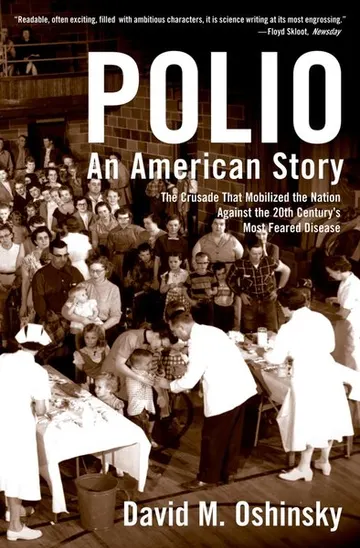
    Polio (opens Bookshop.org)

    David M. Oshinsky · 2005

    Pulitzer Prize winner David Oshinsky follows the American polio epidemics, the March of Dimes, and the rivalry between Jonas Salk and Albert Sabin that ended with the vaccines.

Don't miss a week.

We send the good news every morning, and it adds up to this. One letter a day, free forever.