The week in review · November 16 to 22, 2026

The week in review: Voyager 1 is now a full day of light away

In the week to November 22, 2026, Today Got Better followed 50 discoveries across all eight fields, plus 93 smaller wins. Here is what the week added up to.

Days
7
Discoveries
50
Fields
8
Good-news wins
93

Breakthrough of the week

Voyager 1 is now a full day of light away

The probe launched nearly 50 years ago and is still the most distant human-made object, in a region of space no spacecraft had entered before it [1].

Followed across 3 days: Nov 18, 2026 · Nov 19, 2026 · Nov 21, 2026

The week, day by day

  1. Monday, Nov 16, 2026 Old puzzles got sharper answers today: where an infused stem cell lands, what a dead star is doing, and how many genes touch Alzheimer's. Read that morning
  2. Tuesday, Nov 17, 2026 Careful timing and aim paid off today, from a sound pulse timed to a sleeping brain to stitches placed inside a womb. Read that morning
  3. Wednesday, Nov 18, 2026 Small clues carried big stories today: a twist in ancient light, and a smear of poison on a 125,000-year-old spear tip. Read that morning
  4. Thursday, Nov 19, 2026 Patience paid out today: a spacecraft launched in 1977, a drug trial begun in 2006 and a whaling ban from 1964 all delivered good news this week. Read that morning
  5. Friday, Nov 20, 2026 Several things lasted longer or held up better than the textbook said they would: a donated liver, a patient's seizure control, Antarctic ice, a bee colony. Read that morning
  6. Saturday, Nov 21, 2026 Where and when: a spacecraft a full day of light away, and two ages at which the immune system shifts gears. Read that morning
  7. Sunday, Nov 22, 2026 Today the stubborn things gave way a little: tumors once called undruggable, a cliff that hid 3,000 years of hunts, and a humpback that handed over its genome with one exhale. Read that morning

Story arcs

Findings that came back on more than one day, and where they ended up.

What each field explored

Natural Sciences

Solutions & Good News

The week's most wondrous

The good news that made us stop, from seven days of small wins.

  • Natural Sciences A High-Dose Flu Vaccine Is Linked to Nearly 55% Lower Alzheimer's Risk In nearly 165,000 adults 65 and older, a high-dose flu shot was tied to up to 22 percent lower Alzheimer's risk over two years than a standard dose [28]. It cannot prove cause and effect, and one author said he did not know the higher dose existed until public health officials asked him about it [28].
  • Natural Sciences A common osteoporosis drug blocked spinal damage in a surprising new study An existing osteoporosis drug stopped abnormal mineral buildup in the spines of zebrafish bred without a collagen IX gene, a hint at why back discs wear out [5]. It has not been tested in humans, and no drug now stops disc degeneration [5].
  • Natural Sciences A simple supplement could help your immune system fight cancer and viral infections In mice, more dietary arginine reduced colon cancer tumors and eased flu and SARS-CoV-2 infection, and giving it after flu infection also helped [6]. Whether it works in people is not yet known [6].
  • Natural Sciences NASA's Voyager 1 mission forever changed our view of Jupiter Voyager 1 reaches one light-day from Earth on Nov. 18, and one of its 1979 finds was Jupiter's thin, faint ring system, seen only because the planet was backlit [9]. Ground telescopes confirmed it soon after, and we now know all four outer planets have rings [9].
  • Natural Sciences Uranus and Neptune’s bizarre magnetic fields may finally be explained Uranus's magnetic axis is tilted 59 degrees and Neptune's 47, against 11 for Earth, and new simulations tie the oddness to how interior materials conduct electricity under extreme conditions [3]. The models suggest the poles could shift by tens of degrees within a few decades [3].
  • Solutions & Good News World-First Bone Marrow Transplant Successfully Treats Non-Malignant Disease A 40-year-old woman with a decade of aplastic anemia received marrow from a deceased organ donor, and six months later she needs no transfusions and her blood is made entirely by donor cells [124]. It is one patient, but it adds a donor source for conditions that now lean on living donors [124].
  • Technology & Innovation 'Zero-emission' aluminum production switches up the chemical equation Smelting aluminum releases about 1.5 kg of CO2 per kilogram of metal from the chemistry alone, which renewable power cannot fix, and Hydro's HalZero process just produced aluminum for the first time with a different reaction [107]. It is a demonstration, and the company says the process could eliminate direct emissions [107].
  • Social Sciences Coffeehouses and the Scientific Revolution After a parish in 17th-century London got its first coffeehouse, applied scientists and instrument shops increased, and a calibrated model puts coffeehouses behind 31 percent of London's applied scientists in the half century after the first opened in 1652 [62]. The effect was strongest among scientists with weak family ties to Oxford and Cambridge [62].
  • Technology & Innovation Korean magnetic textile cools train tracks to thwart disaster A magnetically mounted fiberglass textile blocks more than 85 percent of solar heat and lowered rail temperatures by up to 10.9 °C in Korean tests, with two technicians laying 2 km an hour [104]. The designers say it lasts up to 10 years [104].
  • Technology & Innovation World’s largest fresh water Lake sees sharpest flow rebound in 343 years A tree-ring reconstruction shows streamflow into Lake Baikal's basin recovered to 145.2 percent of its long-term average starting around 2017, the strongest rebound in 343 years of record [103]. The team ties it to a regional slowdown in Arctic warming [103].
  • Social Sciences The Health Effects of Eating Red Meat: A Natural Experiment in Alpha-Gal Syndrome Patients diagnosed with the tick-borne meat allergy lost a sustained 0.8 kg compared with patients with other tick-borne diseases, along with small drops in triglycerides, glucose, HbA1c and LDL cholesterol [86]. The authors call the benefits modest but measurable [86].
  • Plant-Based & Vegan Thailand’s Deevana Hotels & Resorts to Make 45% of Proteins Plant-Based by 2030 A five-hotel chain in Phuket and Krabi pledged a 45:55 plant-to-animal split in the weight of protein it buys by 2030, and it plans to get there by adding dishes with tofu, legumes and mushrooms, not removing meat [112].

The long view

Foie gras bans reach the ballot box

Washington, DC and Denver voters have now banned the sale of foie gras by direct vote, where earlier bans in other cities came from officials. The question is whether the bans survive legal challenges and take effect as planned.

Latest · Nov 21, 2026 Vox reported that barns full of birds from America's biggest foie gras company burned down. Separately, Vegan Food & Living reported that the UK government scrapped its promised foie gras import ban to secure an EU trade deal.

What’s next: Whether a legal challenge is filed against the bans and whether DC's sales ban takes effect in July 2027 as planned.

Follow this tracker

From The Better Shelf

Book of the week

Paid link. If you buy a book through this link, Bookshop.org pays us a small commission and sends a share of the sale to independent bookstores.

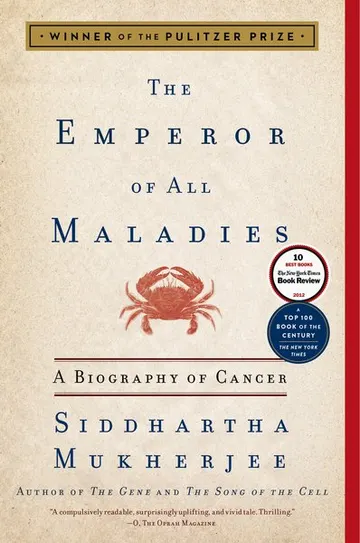
  1. The Emperor of All Maladies (opens Bookshop.org)

    Siddhartha Mukherjee · 2010

    Oncologist Siddhartha Mukherjee traces cancer from ancient Egypt to modern targeted drugs, weaving in the stories of his patients. It won the 2011 Pulitzer Prize for General Nonfiction.

Don't miss a week.

We send the good news every morning, and it adds up to this. One letter a day, free forever.