The week in review · September 28 to October 4, 2026

The week in review: Delhi stopped losing half its electricity

In the week to October 4, 2026, Today Got Better followed 50 discoveries across all eight fields, plus 94 smaller wins. Here is what the week added up to.

Days
7
Discoveries
50
Fields
8
Good-news wins
94

Breakthrough of the week

Delhi stopped losing half its electricity

Power that never reaches a customer still gets burned at a plant, so every point of loss recovered is demand met without building anything new [188].

Followed across 2 days: Sep 29, 2026 · Oct 2, 2026

The week, day by day

  1. Monday, Sep 28, 2026 Today's discoveries all trace something old still shaping something living, in rock, in a graft, in a river bent back toward life. Read that morning
  2. Tuesday, Sep 29, 2026 Today's best news came with before-and-after numbers: a highway bridge for elk, and fire crews in the Peruvian forest. Read that morning
  3. Wednesday, Sep 30, 2026 Things the textbooks gave one origin, starting with the brain itself, keep turning out to have two. Read that morning
  4. Thursday, Oct 1, 2026 Old questions got measurable answers today, from where bats came from to what a few minutes of your voice says about your brain. Read that morning
  5. Friday, Oct 2, 2026 Several things that looked stuck turned out to have a handle on them today: a gene's damage, a hard-to-catch cancer, a city's leaking power grid. Read that morning
  6. Saturday, Oct 3, 2026 Small things nobody was watching turned out to carry a lot: a sliver of neurons, a baby's first week, an angled obstacle in a tank, an empty hog barn. Read that morning
  7. Sunday, Oct 4, 2026 Context kept changing what sits inside it today: a young body seemed to reset an old heart's clock, and Earth's gravity bent a spacecraft toward Jupiter. Read that morning

Story arcs

Findings that came back on more than one day, and where they ended up.

What each field explored

Natural Sciences

The week's most wondrous

The good news that made us stop, from seven days of small wins.

  • Natural Sciences Newly Identified Frog-like Creature Named by Student Scientists After Their Moms Two Field Museum interns identified a 309-million-year-old amphibian ancestor from Illinois' famous Mazon Creek fossil beds and named it Jeanerpeton, after both their mothers, who happen to share the name Jean [124].
  • Natural Sciences Atrial fibrillation patients saw 69% lower risk with common blood thinners A randomized trial of 1,803 patients found that common blood thinners cut serious cardiovascular events by 69% in atrial fibrillation patients whose stroke risk had been considered too borderline to treat, with no rise in major bleeding [6].
  • Social Sciences Archaeologists Risked Their Lives to Save 30,000 Treasures from ISIS Terrorists As ISIS closed in on Deir ez-Zor in 2014 and 2015, Syrian antiquities staff evacuated roughly 30,000 artifacts through a narrow, dangerous corridor to a military airport, a rescue a new study calls a model for protecting cultural heritage under fire [126].
  • Social Sciences Impact of Adults' College Completion on their Parents' Mortality Using Korea's 1993 higher education reform as a natural experiment, economists found that a child completing college lowered their parents' mortality by roughly 20 to 27%, driven partly by more financial support, more contact, and healthier habits [64].
  • Psychology & Behavioral Science Study reveals which values actually stop voters from supporting antidemocratic politicians Across 5,951 voters in the US, Poland, and South Korea, a genuine personal commitment to democratic institutions, not just party loyalty, measurably reduced people's willingness to back a candidate who threatened those institutions [36].
  • Psychology & Behavioral Science The Gifts We Keep Missing: Rethinking Dyslexia Research on the roughly 1 in 5 people with dyslexia keeps finding real cognitive advantages alongside the reading struggles, including stronger 3D spatial reasoning and greater divergent creativity than non-dyslexic peers [49].
  • Solutions & Good News A man found a strange egg and incubated it. 28 days later, it hatched and changed his life. Riyadh Khalaf found an abandoned duck egg in a Devon field with no nest in sight, carried it home through two car rides, a hotel, a train, and a bus, and hatched a healthy duckling named Spike 29 hours after the shell first cracked [144].
  • Solutions & Good News After a Fire Wiped Out His Orchard, Jharkhand Farmer Turned to Cactus, Now Employs 60 Women After an unexplained fire destroyed his uninsured fruit orchard, farmer Chaitanya Kumar Ganjhu rebuilt with spineless cactus instead, a crop that needs little water and now employs 60 women from nearby villages growing saplings [135].
  • Solutions & Good News 6 Things ASHA Workers Want Every Household To Know About Dengue And Malaria Prevention India's community health workers go door to door with actual torches, not phone flashlights, to catch mosquito larvae hiding in water families assume is too clean to be a problem, quietly closing the gap outbreak by outbreak [133].
  • Human Stories & Ideas A 'Sound of Music' Museum Just Opened in the Austrian City Where the Story Began Salzburg opened a museum devoted to The Sound of Music and the real von Trapp family it's based on, built around the original filming gazebo and more than 450 props, costumes, and recordings [128].
  • Plant-Based & Vegan Eating More Plants Might Lower the Risk of These 5 Types of Gynecological Cancers Growing evidence links plant-forward eating to lower risk across cervical, ovarian, endometrial, vulval, and vaginal cancers, one more reason diet is a lever people can actually pull for their own health [121].
  • Natural Sciences China now leads the world in trials for next-gen CAR-T therapies Five people with treatment-resistant lupus improved within three months of an experimental in-body CAR-T therapy, part of a wave of Chinese trials the FDA has now approved for testing in the US too [12].

The long view

The SuperAgers and their protected memory

Researchers at the University of Chicago's HAARC Center and TGen compared the genomes of SuperAgers, people who reach their 80s and 90s with memory as sharp as someone decades younger, to cognitively average older adults and found no genetic difference. The stakes are finding what, if not genetics, protects some older adults' memory so the protection might eventually be studied and shared rather than left to chance.

Latest · Aug 27, 2026 New Atlas reported that Rugao, a Chinese city of 1.3 million people, had 672 residents over age 100 as of February 2026, roughly five times the global average, with researchers and residents pointing to daily physical activity, personal autonomy, low reported stress and steady social engagement as the traits shared with other longevity hotspots.

What’s next: What in the body, brain or lifestyle protects SuperAgers' memory remains open, though Sardinia's Blue Zone and now the longevity hotspot of Rugao, China both point toward autonomy, low stress, daily movement and social engagement as recurring lifestyle correlates worth testing for a causal role.

Follow this tracker

From The Better Shelf

Book of the week

Paid link. If you buy a book through this link, Bookshop.org pays us a small commission and sends a share of the sale to independent bookstores.

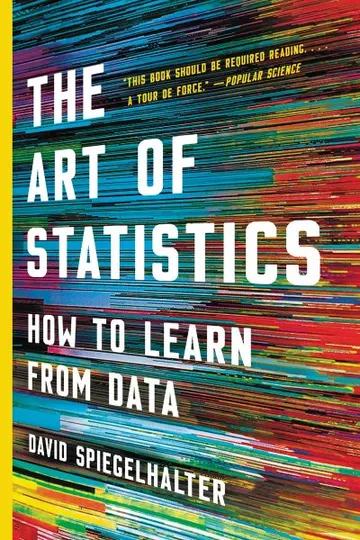
  1. The Art of Statistics (opens Bookshop.org)

    David Spiegelhalter · 2019

    Cambridge statistician David Spiegelhalter uses real cases, from Harold Shipman to hospital death rates, to show how to judge whether a measured difference is large enough to matter.

Don't miss a week.

We send the good news every morning, and it adds up to this. One letter a day, free forever.