The week in review · October 12 to 18, 2026

The week in review: Eight weeks of pills clear hepatitis C as well as twelve

In the week to October 18, 2026, Today Got Better followed 52 discoveries across all eight fields, plus 97 smaller wins. Here is what the week added up to.

Days
7
Discoveries
52
Fields
8
Good-news wins
97

Breakthrough of the week

Eight weeks of pills clear hepatitis C as well as twelve

Nearly one in 200 people in India is infected, and Aggarwal has spent years watching a cure that people do not finish [264].

Followed across 2 days: Oct 12, 2026 · Oct 15, 2026

The week, day by day

  1. Monday, Oct 12, 2026 Small adjustments did a lot today: a foot turned a few degrees, a heart handed a leaf's machinery, a tortoise census that finally modeled the animals hiding in the scrub. Read that morning
  2. Tuesday, Oct 13, 2026 Slow, unglamorous work paid off today: eye surveys in village clinics, wells drilled into dry rock, and a rover odometer that kept turning. Read that morning
  3. Wednesday, Oct 14, 2026 Today's findings share a habit of asking the narrower question: which gene drives this tumour, which blood vessel feeds this knee, which child missed the jab. Read that morning
  4. Thursday, Oct 15, 2026 A lot of today's progress came from using something that was already there: an old pill with a shorter schedule, a mosque speaker with a second job, a fossil in a museum drawer. Read that morning
  5. Friday, Oct 16, 2026 Things that looked finished turned out to be repairable today, from a bleached coral to a kidney that spent a year in a freezer. Read that morning
  6. Saturday, Oct 17, 2026 Today's good news comes from looking harder at what was already in front of us, from fingerprints in clay to the traffic on one Colorado interstate. Read that morning
  7. Sunday, Oct 18, 2026 Some of today's best news comes from things that touch or talk back: a hormone that tells the brain when to wake, a coral that lends its algae to a bleached neighbor. Read that morning

Story arcs

Findings that came back on more than one day, and where they ended up.

What each field explored

Natural Sciences

Solutions & Good News

The week's most wondrous

The good news that made us stop, from seven days of small wins.

  • Natural Sciences Lifting Weights Changes Your Fat Long Before You Lose Weight – at Least in Mice After seven sessions of stair-climbing with a weight on the tail, obese mice had less fat around their organs and smaller fat cells before any weight came off, and the fat-dismantling pathway ran more actively [18].
  • Natural Sciences An Earth-Sized Planet Could Survive With 2 Suns Just 16 Light-Years Away Simulations built on a century of velocity data say an Earth-sized planet could survive in the habitable zone of 70 Ophiuchi, two orange dwarfs only 16 light-years away [19].
  • Natural Sciences 'Swamp-like colors' on the moon: NASA report reveals strange sights from Artemis II mission The Artemis II crew reported yellow, green and brown patches around the Aristarchus Plateau, and Christina Koch likened one region to "a yellow snow-capped mountain" [3].
  • Natural Sciences A Little Fish in The Deep Sea Swallowed a Meal Way Bigger Than Itself. Scientists Caught It on Camera. A remotely operated vehicle filmed a black swallower at 1,259 meters with a stomach stretched nearly see-through, and what it ate is, in the chief scientist's words, a mystery that "may never be solved" [21].
  • Human Stories & Ideas A Distant Planet Emitted a Burst of Radio Waves. Why? The Webb telescope found the host of FRB 20240304B, a small star-forming galaxy 10.6 billion years back, making it the most distant fast radio burst source yet placed in a galaxy [135].
  • Solutions & Good News Statins May Protect People From Glaucoma or Blindness By Preventing or Slowing Nerve Cell Death Among 210,000 statin users matched against 210,000 non-users, those with glaucoma were 36 percent less likely to need incisional surgery at five years, though the study is observational and cannot prove cause [120].
  • Solutions & Good News Family Sells 650 Acres on East Texas Lake to Become State Park, Saying Land is 'Part of my soul' The Pollard family, who grew pecans there for 80 years, sold the longest remaining stretch of Lake Palestine shoreline for $1 million so it can become a state park, planned to open in phases from late 2027 [117].
  • Solutions & Good News 39 Tonnes of Leftover Food From Lalbaugcha Raja Was Turned Into Electricity for a Mumbai Hospital Festival leftovers went to biomethanation plants at city hospitals and came back as 3,645 cubic metres of biogas and 4,382 kWh of electricity [129].
  • Solutions & Good News India Has A New Plan to Tackle Waste in the Wild: What Will Change in Tiger Reserves For the first time, solid waste management is its own scored criterion across all 58 tiger reserves, covering waste from forest posts, tourism and rescue centres [124].
  • Social Sciences Road Pricing under Heterogeneity -- by Itai Ater, Brad Ross, Adi Shany, Shoshana Vasserman Using a two-year experiment with nearly 10,000 drivers, the authors model congestion pricing that would raise welfare as much as adding a lane to every highway while raising enough revenue to compensate the losers [70].
  • Technology & Innovation MineReader detector sniffs out explosives without the middleman A detector tested in Brisbane looks for the magnetic-resonance signature of the explosive RDX itself, which means plastic and wooden mines have no casing to hide behind [100].
  • Technology & Innovation Impossibly tiny Swiss motor looks like anything but EPFL's FiberMotor is a 1 to 3 millimeter flexible fiber, and four bundled together lifted a 46-gram chocolate bar and flexed a robotic finger [104].

The long view

The SuperAgers and their protected memory

Researchers at the University of Chicago's HAARC Center and TGen compared the genomes of SuperAgers, people who reach their 80s and 90s with memory as sharp as someone decades younger, to cognitively average older adults and found no genetic difference. The stakes are finding what, if not genetics, protects some older adults' memory so the protection might eventually be studied and shared rather than left to chance.

Latest · Oct 17, 2026 A Massachusetts General Hospital team led by Amar Sahay reported in Nature Neuroscience that activity of the enzyme PLA2G2F rises with age in the human brain and was highest in 'resilient' people whose thinking stayed intact despite amyloid-β deposits. Mice lacking the gene showed more inflammation and neuron degradation as they aged, while mice with extra Pla2g2f had better-connected neurons and scored higher on spatial memory tests.

What’s next: What in the body, brain or lifestyle protects SuperAgers' memory remains open, though Sardinia's Blue Zone and now the longevity hotspot of Rugao, China both point toward autonomy, low stress, daily movement and social engagement as recurring lifestyle correlates worth testing for a causal role.

Follow this tracker

From The Better Shelf

Book of the week

Paid link. If you buy a book through this link, Bookshop.org pays us a small commission and sends a share of the sale to independent bookstores.

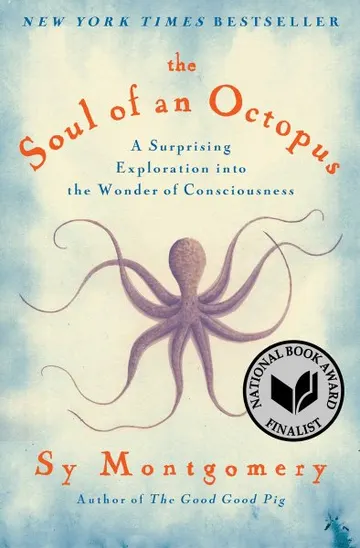
  1. The Soul of an Octopus (opens Bookshop.org)

    Sy Montgomery · 2015

    Naturalist Sy Montgomery befriends four octopuses at the New England Aquarium and reports on what they show about intelligence, personality and play.

Don't miss a week.

We send the good news every morning, and it adds up to this. One letter a day, free forever.