The Field Guide · No. 44
Finding the paper behind the headline
Most headlines are built on a real, findable paper, and locating it usually takes only a few minutes once you know to check the press release for a DOI or journal name, then search PubMed and PubMed Central.
Updated
A headline says a new study found something, and gives almost nothing to check it against: no journal, no author, sometimes not even a link. That gap is rarely because the paper is hidden. Most research behind a headline is public, free to find, and usually locatable within a few minutes once you know the handful of places to look: the press release itself, a DOI, PubMed, and PubMed Central.
Start with the press release, since a credible one usually names the journal or links straight to the paper. When the World Health Organization announced in April 2024 that vaccines had saved 154 million lives, its release named The Lancet and linked directly to the paper there. If a release gives a DOI instead, a string like 10.1016/S0140-6736(24)00850-X, typing doi.org/ in front of it resolves straight to the publisher's page for that exact paper, because a DOI is a permanent address for one specific piece of research.
Two problems come up often. First, a publisher's own page is sometimes paywalled, even when the same paper is freely available elsewhere. Search the paper's title or authors in PubMed, the National Library of Medicine's free index of biomedical research, which lists an abstract for nearly every paper and, when a free copy exists, links to it on PubMed Central. The vaccine study above, for instance, is openly readable in full on PubMed Central. Second, if a release names no journal at all, the work may be a preprint, posted before peer review on a server such as medRxiv (see preprint vs. peer review), findable the same way.
So before trusting a headline, spend the few minutes this takes: check the release for a DOI or journal name, resolve a DOI at doi.org, search PubMed if you only have a title or author, and look on PubMed Central before assuming you cannot read the paper. A claim that survives this check is worth far more than one that resists it: no journal, no author, no paper anyone can produce when asked.
What to remember
- A DOI is a permanent address for one specific paper; typing doi.org/ in front of it resolves straight to the publisher's page.
- PubMed is the National Library of Medicine's free index of biomedical research, and links to a free copy on PubMed Central when one exists.
- A press release naming no journal or author may point to an unreviewed preprint, findable the same way (see preprint vs. peer review).
From the record
PubMed is a free resource supporting the search and retrieval of biomedical and life sciences literature with the aim of improving health, both globally and personally...links to the full text are often present when available from other sources, such as the publisher's website or PubMed Central (PMC).
Asked often
What is a DOI, and how do I use one to find a paper?
A DOI, or digital object identifier, is a permanent code assigned to one specific piece of research, something like 10.1016/S0140-6736(24)00850-X. Typing doi.org/ followed by that code into a browser resolves directly to the publisher's page for that exact paper, which is faster and more reliable than searching by title alone.
The paper I found is behind a paywall. What now?
Search the title or the authors' names in PubMed, the National Library of Medicine's free index of biomedical literature. PubMed lists an abstract for nearly every paper in its index and, when a free version exists, links to the full text on PubMed Central. Many papers, especially ones funded by public health agencies, are openly available there even when the publisher's own page is not.
Further reading
Go deeper
Paid link. If you buy a book through this link, Bookshop.org pays us a small commission and sends a share of the sale to independent bookstores.
-
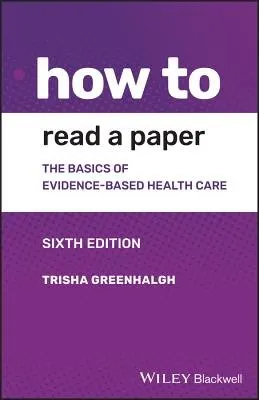
How to Read a Paper (opens Bookshop.org)
Trisha Greenhalgh · 2019
Trisha Greenhalgh starts with how to search the medical literature and find a paper, then how to judge it, in a book widely used in medical training.
Read the news better, every morning.
We send you the day's real progress in science, medicine and beyond, told plainly and sourced. Free, forever.
Free forever, no spam. One click to unsubscribe, and we never sell your email.