The Field Guide · No. 17
Who paid for the study, and why it matters
Studies funded by the company that sells the product tend to come out more favorably, a pattern strong enough that who paid for the research is part of how you should read it.
Updated
Before you weigh what a study found, it is worth asking a blunt question: who paid for it? Research is expensive, and a lot of it is funded by companies with a direct stake in the result, the drug maker, the food company, the device manufacturer. That does not automatically make the science wrong, but it does bend the odds, and the effect has been measured.
When researchers have compared industry-funded studies with independent ones on the same questions, they have repeatedly found that the industry-funded studies reach more favorable conclusions. A Cochrane review of the evidence concluded exactly this. The bias does not usually come from faked data. It hides in quieter choices: which comparison to use, which dose, which outcomes to report, and which results to publish and which to shelve.
Conflicts of interest are not only about money, either. A researcher's reputation, a long-held theory, or a patent can all pull in a direction. And the effect is not limited to drugs. Studies funded by the food and beverage industry, for example, have shown similar tilts toward conclusions that suit the sponsor. The point is not that funded scientists are dishonest. It is that funding shapes a thousand small decisions, and those add up.
So look for the disclosure. Reputable journals require authors to state who funded the work and what competing interests they have, usually near the end. A conflict of interest is not a reason to dismiss a study outright, but it is a reason to read it more carefully, to want independent replication, and to give more weight to research with no stake in the answer.
What to remember
- Studies funded by the maker of a product tend to reach more favorable conclusions than independent ones.
- The bias usually hides in design and reporting choices, not faked data.
- Check the funding and conflict-of-interest disclosure, and give more weight to independent replication.
From the record
Sponsorship of drug and device studies by the manufacturing company leads to more favorable efficacy results and conclusions than sponsorship by other sources.
Asked often
Does industry funding make a study wrong?
Not necessarily. Plenty of industry-funded research is sound. But on average, studies funded by the maker of a product reach more favorable conclusions than independent studies, so funding is a reason to read more carefully and to want independent confirmation.
Where do I find who funded a study?
Reputable journals require a funding statement and a conflict-of-interest or competing-interests disclosure, usually at the end of the paper. News coverage often omits it, which is itself a reason to check the original.
Further reading
Go deeper
Paid link. If you buy a book through this link, Bookshop.org pays us a small commission and sends a share of the sale to independent bookstores.
-
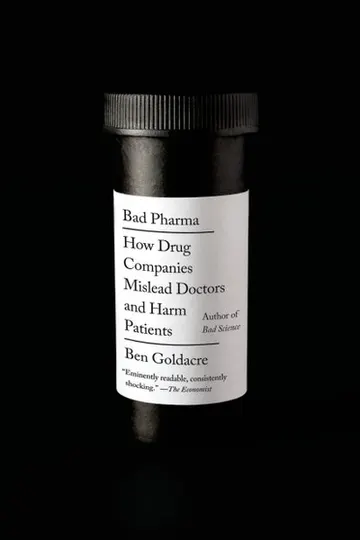
Bad Pharma (opens Bookshop.org)
Ben Goldacre · 2012
Physician Ben Goldacre shows how industry-sponsored trials are designed and reported in ways that favor the sponsor's product, and what regulators, journals and doctors could do about it.
Read the news better, every morning.
We send you the day's real progress in science, medicine and beyond, told plainly and sourced. Free, forever.
Free forever, no spam. One click to unsubscribe, and we never sell your email.