



July 10, 2026

Black holes too old to exist, and a grandson's gift of walking again

7 discoveries · 12 good-news notes · 947 articles read · a 10-minute read
Natural Sci.

An international team has found 31 of the oldest quasars ever detected, including the two earliest known, shining from a universe that was only about 670 million years old, less than 6 percent of its current age [38]. These aren't faint smudges.

Pictureda large astronomical observatory dome under a starry night sky · NASA (via rawpixel)

Read the full story
Life Sciences

Researchers led by Carlos Cruchaga at Washington University in St. Louis, in an NIH-funded study, analyzed blood from more than 1,200 people across several independent groups and found a set of 34 circular RNAs, tiny loops of genetic material, that track with Alzheimer's disease [196].

Pictureda researcher examining a blood sample vial in a lab · Biswarup Ganguly (Wikimedia Commons)

Read the full story
Psychology

A reporter went to the 150-year-old Boys' Club of New York looking for material on the crisis in boys' mental health and, according to the club's communications director, "kind of gave up, because it wasn't echoing what she had thought she would find" [207]. Instead she found about 2,500 boys, many from...

Pictureda group of teenage boys doing homework together at a community youth center · Helena Lopes (via stocksnap)

Read the full story
Social Sci.

A newly published dataset, compiled by Eric Schneider and colleagues, traces childhood stunting, being too short for your age due to malnutrition and illness, back more than a century, further than researchers have ever been able to measure it before [385]. The standout case is Japan: at the start of the 1900s...

Pictureda group of healthy schoolchildren in Japan · Helena Lopes (via stocksnap)

Read the full story
Technology

Norwegian robotics company 1X has built new hands for its NEO home robot with 25 degrees of freedom, 22 joints across the fingers and palm plus three at the wrist, all of them able to sense force, not just receive movement commands [539]. The trick is a low-geared tendon-drive system that lets contact forces pass...

Pictureda humanoid robot hand holding a small object · Sven Behnke (Wikimedia Commons)

Read the full story
Plant-Based

A survey of British adults found that fewer than 13 percent rated any common factory-farming practice, caging animals, killing newborn chicks, amputating body parts, as "acceptable," and US surveys found the same pattern holding steady across age, income, and political party [386]. Yet meat consumption keeps...

Picturedfree-range hens in an open barn · U.S. Department of Agriculture (via rawpixel)

Read the full story
Good News

Robin Kanattu Thomas grew up in Kannur, India, watching his grandfather survive a surgery cleanly, medically healthy enough to walk afterward, but never actually walk again, because proper rehabilitation simply wasn't available [779]. That gap stuck with him.

Read the full story

The feel-good story of the day

an elderly woman recovering in a hospital bed, smiling NASA (via rawpixel)
Pictured an elderly woman recovering in a hospital bed, smiling

Nine days in a bathtub, and the will that got her out

On June 1, 82-year-old Joan Rivet took one backward step in her North Carolina home and fell into her bathtub, pulling the shower curtain down with her. Her back was hurt too badly to climb out, and her phone was in another room. She would spend the next nine days there, alone, with only her cat Phoebe meowing just outside the door.

She survived by turning the faucet handle with her foot and splashing water toward her face to drink. She lost track of day and night, drifting in and out of consciousness, and she prayed through the worst of it: "There were times I was crying out and I said, 'Lord, help, help, help release the pain.'" What finally saved her was her brother Bill Lesko, five hours away in Georgia, who calls her every week and grew worried when she stopped answering. He asked the sheriff's office to check on her, and on June 10 deputies found her and got her to a hospital.

She had gone nine days without food, severely dehydrated, with bed sores from lying in one position the whole time. Today she's in rehab, rebuilding her strength, and somehow still smiling about it. "I'm warm, I'm dry. I had a shower this morning. Hallelujah," she said. "I'm still regaining my energy, still regaining confidence. Doing what I can do, and believing in myself."

Fresh today · July 10, 2026

The discoveries, in full

a large astronomical observatory dome under a starry night sky
Pictured a large astronomical observatory dome under a starry night sky · NASA (via rawpixel)
01/07 Natural Sci.

Astronomers found black holes that arrived too early for the universe to explain

An international team has found 31 of the oldest quasars ever detected, including the two earliest known, shining from a universe that was only about 670 million years old, less than 6 percent of its current age [38].

These aren't faint smudges. Each one is powered by a black hole billions of times the mass of the sun, already blazing with the light of roughly a trillion suns before galaxies had much time to build anything that large. "These monsters, weighing billions of times the mass of our sun, somehow already existed when the universe was in its infancy," said co-author Joseph Hennawi of UC Santa Barbara and Leiden University. "We don't yet have a good understanding of how they grew so massive, so fast" [38].

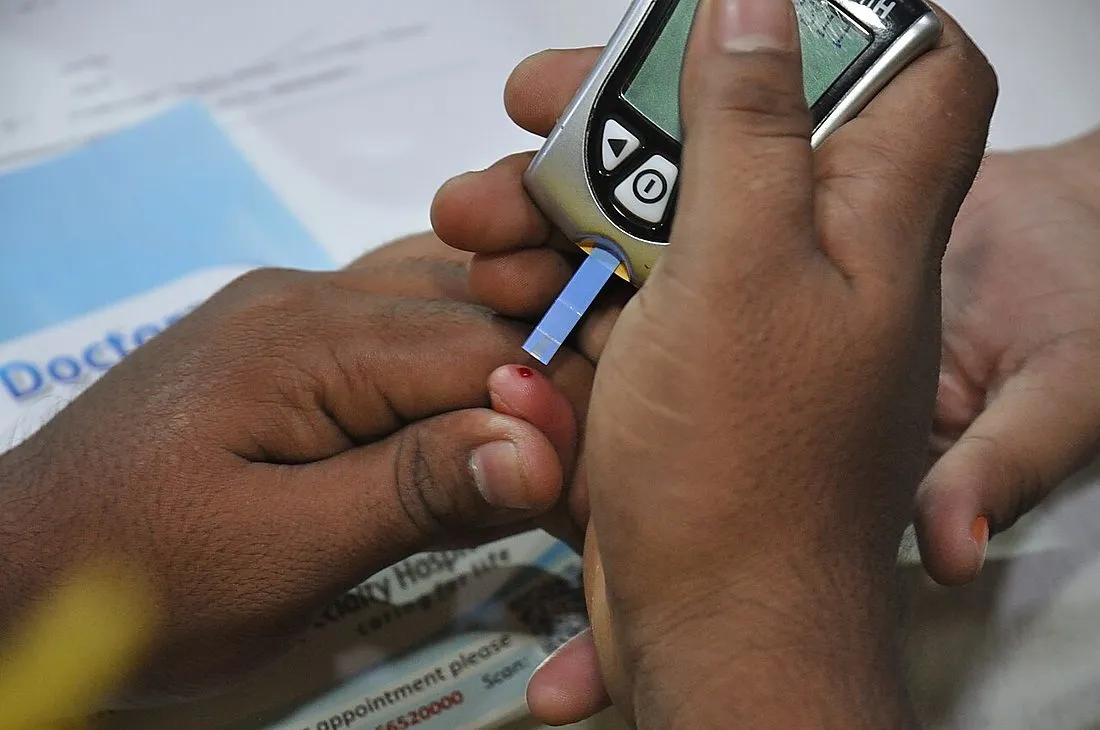
a researcher examining a blood sample vial in a lab
Pictured a researcher examining a blood sample vial in a lab · Biswarup Ganguly (Wikimedia Commons)
02/07 Life Sciences

A blood test may be able to flag Alzheimer's years before the first symptom

Researchers led by Carlos Cruchaga at Washington University in St. Louis, in an NIH-funded study, analyzed blood from more than 1,200 people across several independent groups and found a set of 34 circular RNAs, tiny loops of genetic material, that track with Alzheimer's disease [196].

What makes them different from today's leading blood test, which looks for the protein pTau217, is timing. The circRNA levels started drifting from normal two to four years before people actually developed symptoms, and the pattern held up in two separate validation groups. "Being able to identify patients on the verge of symptom onset would be invaluable," said NIH's Richard Hodes. "It could help us select the right patients for clinical trials and better determine which treatments are effective" [196].

a group of teenage boys doing homework together at a community youth center
Pictured a group of teenage boys doing homework together at a community youth center · Helena Lopes (via stocksnap)
03/07 Psychology

The science of belonging says the boy-crisis headlines missed the real story

A reporter went to the 150-year-old Boys' Club of New York looking for material on the crisis in boys' mental health and, according to the club's communications director, "kind of gave up, because it wasn't echoing what she had thought she would find" [207].

Instead she found about 2,500 boys, many from disadvantaged households, doing homework, swimming, and teasing each other, ordinary and unremarkable in the best way. NYU developmental psychologist Niobe Way, who has tracked kids' friendships for almost 40 years, has a theory for why: "Mental health is not the problem. It's a symptom of a social health problem." Her research finds no gender gap in the desire for close friendship, boys want it just as much as anyone [207]. A separate study out of Michigan State backs up why belonging works the way it does. Psychologist Hyewon Yang found that friends really are somewhat alike in personality, but that similarity does nothing to predict how satisfied people are with the friendship. What actually matters is whether your friends generally have positive traits, and how you perceive them [275].

What each field noticed (2)
a group of healthy schoolchildren in Japan
Pictured a group of healthy schoolchildren in Japan · Helena Lopes (via stocksnap)
04/07 Social Sci.

A country that once had 70 percent of its children stunted now has almost none

A newly published dataset, compiled by Eric Schneider and colleagues, traces childhood stunting, being too short for your age due to malnutrition and illness, back more than a century, further than researchers have ever been able to measure it before [385].

The standout case is Japan: at the start of the 1900s, more than 70 percent of Japanese children were stunted. Today, very few are. It's not a fluke or a one-off; the same data shows dramatic declines across many countries that are now considered high-income.

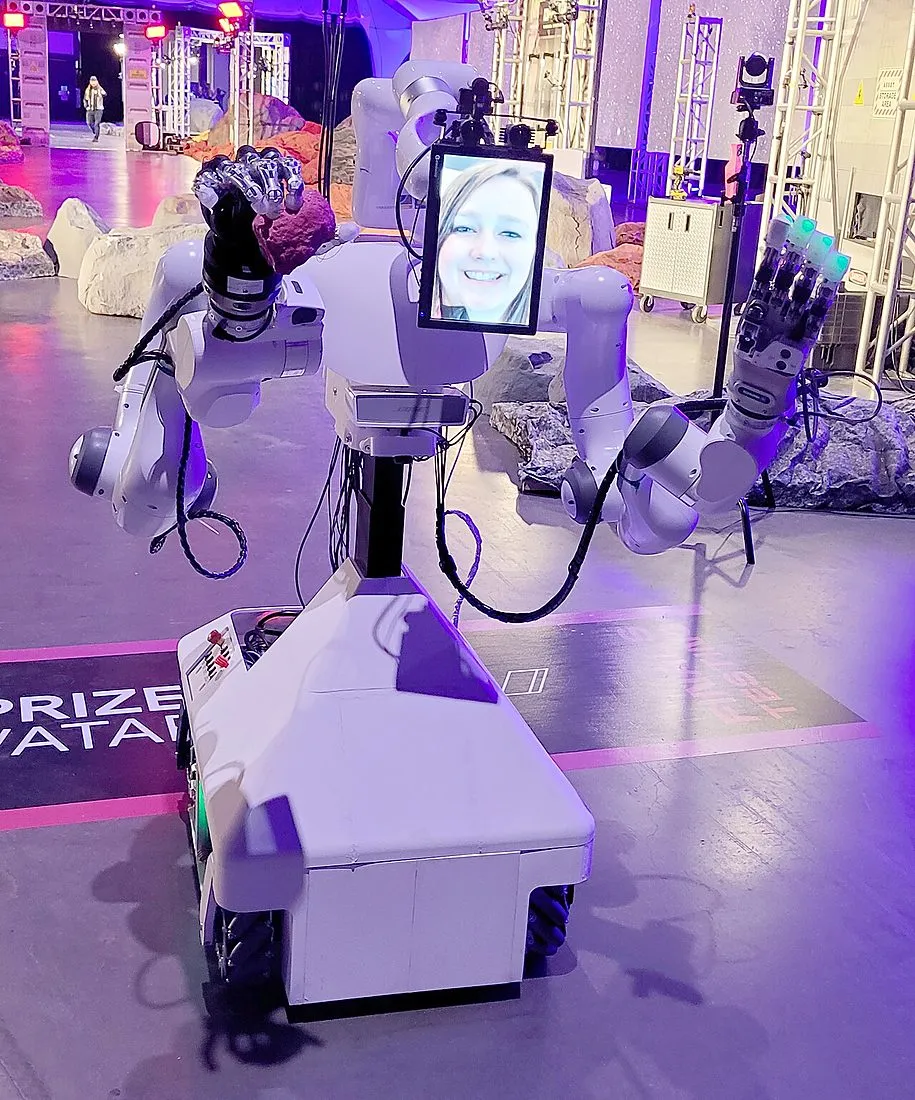
a humanoid robot hand holding a small object
Pictured a humanoid robot hand holding a small object · Sven Behnke (Wikimedia Commons)
05/07 Technology

A robot hand that can feel a LEGO brick as it clicks into place

Norwegian robotics company 1X has built new hands for its NEO home robot with 25 degrees of freedom, 22 joints across the fingers and palm plus three at the wrist, all of them able to sense force, not just receive movement commands [539].

The trick is a low-geared tendon-drive system that lets contact forces pass back through the mechanism, so the robot can feel how hard something is pushing against its fingers without relying only on external sensors. In demonstrations, NEO assembled LEGO and caught balls. "With these hands, NEO crosses a critical threshold," said 1X founder and CEO Bernt Børnich. "The robot can now do the things humans do with their hands, every day" [539].

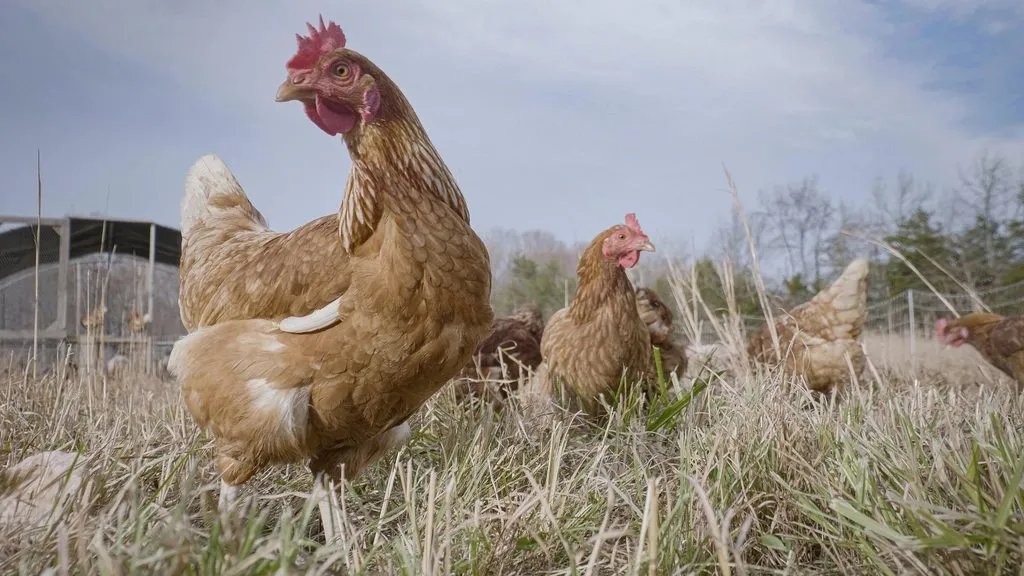
free-range hens in an open barn
Pictured free-range hens in an open barn · U.S. Department of Agriculture (via rawpixel)
06/07 Plant-Based

Nearly everyone opposes factory farming, and food policy is finally starting to notice

A survey of British adults found that fewer than 13 percent rated any common factory-farming practice, caging animals, killing newborn chicks, amputating body parts, as "acceptable," and US surveys found the same pattern holding steady across age, income, and political party [386].

Yet meat consumption keeps climbing globally, and 85 percent of farmed animals in the UK, 99 percent in the US, are raised on factory farms. This month, that gap started closing from the policy side: the UK government's Farming Roadmap 2050 explicitly encourages farmers to shift from high-emission livestock into crops like lentils and pulses, citing rising demand for plant-based food [641]. Meanwhile in Canada, a new scorecard shows some companies proving the shift is achievable: McDonald's Canada, A&W, Subway, and Boston Pizza have all hit 100 percent cage-free egg sourcing, some ahead of schedule [604].

Today Got Better
07/07 Good News

A grandfather who couldn't walk after surgery inspired a robotic suit that helps others walk again

Robin Kanattu Thomas grew up in Kannur, India, watching his grandfather survive a surgery cleanly, medically healthy enough to walk afterward, but never actually walk again, because proper rehabilitation simply wasn't available [779].

That gap stuck with him. Now 30, Robin and three co-founders, Alex M Sunny, Jithin Vidya Ajith, and Vishnu Sankar, run Astrek Innovations in Kochi, building robotic exoskeletons for rehab. One of their machines helped Mohan, a 69-year-old retired engineer from Ernakulam who couldn't move either leg after spine surgery. The suit straps around the lower body, reads the wearer's intended movement, and triggers the walking motion itself. "It activates something I was not able to do on my own," Mohan said. "Slowly, slowly, I was able to move my legs" [779].

Fresh today · July 10, 2026

Good news you might have missed

Firefighters Refused To Give Up Searching After A Little Girl's Accident. Their Efforts Helped Save Her Hand After 5-year-old Olive Cook-Taylor was injured on a playground roundabout in England, firefighters stayed behind after the ambulance left, searched the site, packed the recovered parts of her hand on ice, and rushed them to the hospital, giving surgeons what they needed to reattach her fingertips [759]. Sunny Skyz
What went right this week: the good news that matters Estonia now tops the Environmental Performance Index of 177 nations for its "dramatic reduction" in emissions, and forest cover in New England has rebounded to about 60 percent after farmland abandonment let nature quietly take back the land [725]. Positive News
What went right this week: Europe breathes easier, plus more Some 800 million people worldwide have gained access to electricity since 2010, according to the World Health Organization, real light and power reaching homes that didn't have it a decade ago [730]. Positive News
A new survey of 3,000 girls just blew up 3 modern girlhood myths A Girl Scouts survey of 3,000 girls found that 65 percent would rather be creative than stare at a screen and 59 percent would rather go outside and play, quietly overturning the "iPad kid" stereotype [821]. Upworthy
New Culture Says California Approval for Cow-Free Casein Took 'Longer Than Expected' As It Gets New Patent A California startup just patented a mozzarella made from precision-fermented, animal-free casein, real dairy protein with no cow involved, ahead of its planned launch in pizza restaurants [595]. Green Queen
This Mom Turned Her Son's Autism Journey Into Hope for 38,000 Families Neha Tandon turned the Instagram account she started to track her son Maahir's autism milestones into a community of 38.5K followers, many of them parents who now find reassurance there during their hardest moments [769]. The Better India
California canal solar project reduces evaporation and generates power Solar panels built directly over two California irrigation canals cut water evaporation by up to 70 percent and slashed aquatic weed growth by up to 85 percent, while generating power at the same time [804]. The Optimist Daily
Germany drills 1640 feet underground, finds geothermal heat potential beneath coal region As a coal plant near Weisweiler prepares to shut down by 2029, exploratory drilling found promising geothermal heat resources right underneath it, a clean-heat replacement rising from the same ground [540]. Interesting Engineering
The Lab Mistake That Might Revolutionize Computing Researchers stumbled onto an ordinary, imperfect transistor that behaves like a single brain neuron, a possible path toward AI hardware that doesn't need the roughly one-million-times-more energy today's chips burn compared to a real brain [532]. IEEE Spectrum
Heavy video gaming is not linked to cognitive harm in teens, but gaming addiction is A study of 3,854 teenagers found that hours spent gaming alone weren't linked to cognitive harm, and were even tied to some benefits; it was compulsive, addictive gaming specifically that predicted lower cognitive performance [279]. PsyPost
Asexuality Research Has Reached New Heights. What Are We Learning? What used to be listed as a disorder in psychiatry's diagnostic manual is now understood as simply one point on the spectrum of human sexuality, with an online community of 153,884 members finding language for an experience that used to have none [326]. Scientific American
This Illinois Tower Was Built Exclusively for Swiss Goats A retired Illinois couple built the world's tallest goat tower out of leftover bricks, inspired by a magazine photo, and it's now a beloved local attraction where a herd of goats happily climbs a ramp several stories into the air [878]. Atlas Obscura

Everything we read today

Natural Sciences 195 articles
Latest from Live Science
PLOS Biology
PLOS One
Proceedings of the National Academy of Sciences: Proceedings of the National Academy of Sciences: Table of Contents
Life Sciences & Medicine 50 articles
eLife: latest articles
Psychology & Behavioral Science 100 articles
PsyPost Psychology News
Social Sciences 133 articles
Recent VoxEU Content
The Conversation Articles
Technology & Innovation 110 articles
Ars Technica - All content
Futurism
Plant-Based & Vegan 105 articles
Solutions & Good News 154 articles
Good News Network
Sunny Skyz
The Better India : Latest Posts
Human Stories & Ideas 100 articles
The Marginalian
The long view · not today's news, the story behind it

Today's discoveries didn't come from nowhere. Here's the older, ongoing story they belong to, a moment from this day in history, and a question to test what stuck.

The story so far

On this day in science

1893 One of the first open-heart surgeries Surgeon Daniel Hale Williams repaired the torn sac around a stabbing victim's heart in Chicago, one of the earliest successful heart operations. The patient recovered and lived for years afterward. More from the Almanac →

Before you go: today's quiz

The daily quiz

Who were the first two humans to walk on the Moon, on 20 July 1969?

Reveal the answer

Armstrong and Aldrin

Neil Armstrong and Buzz Aldrin stepped onto the Moon on 20 July 1969, the first humans to walk on another world, while Michael Collins orbited above.

See the day →

Get this every morning.

Liked today's? Wake up to tomorrow's, in one short letter.

The full letter, every morning, free for good.

Same free letter, plus the reason it stays that way: no ads, no investors, no agenda but the good news itself.

A single gift of any amount. No account, never a recurring charge.