

July 9, 2026

A single neuron rivals an AI network, and ovaries don't retire

7 discoveries · 15 good-news notes · 262 articles read · a 15-minute read
Natural Sci.

The hippocampus, the seahorse-shaped structure where memories form, does not begin life as an empty vessel waiting to be filled. It begins stuffed.
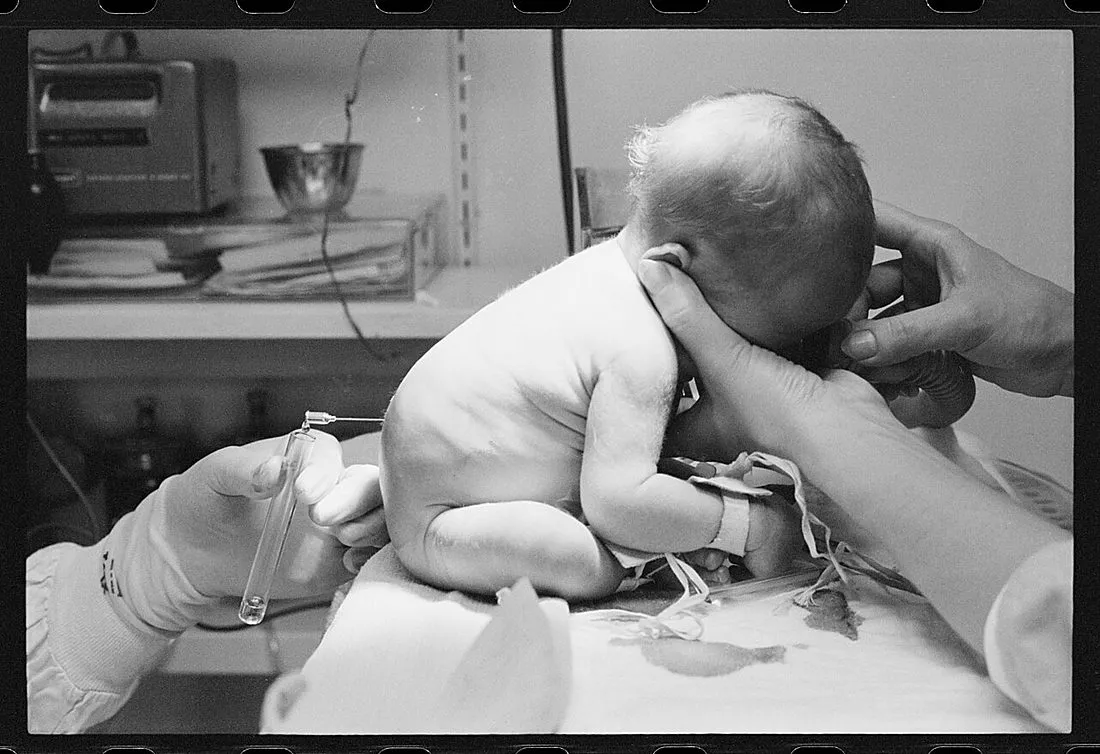
Picturednewborn baby being held by a parent · Charlotte Brooks (Wikimedia Commons)

Read the full story
Natural Sci.

The dominant theory of why brains evolved to be large holds that social complexity is the engine: tracking relationships, alliances, and the intentions of others demands more computing power, and over generations, more social species developed bigger brains. The theory fits primates, dolphins, wolves, and bats well.

Picturedoctopus in the ocean · Unknown (via rawpixel)

Read the full story
Life Sciences

The standard explanation for human intelligence has always been a counting argument: roughly 100 billion neurons, each a relatively simple on-off switch, connected into a network of staggering complexity. A study from Hebrew University upends that view at the cellular level [95].

Read the full story
Life Sciences

A randomized controlled trial from UCSF, published in Schizophrenia Bulletin, tested a ketogenic diet in patients with schizophrenia and bipolar disorder against a diet-as-usual control [92]. The compliance rate surprised almost everyone: 83 percent of participants maintained ketosis through the one-month primary...

Pictureda doctor speaking with a patient in a clinical setting · The African Union Mission in Somalia (via rawpixel)

Read the full story
TechnologyLife Sciences

The da Vinci system, which dominates robotic surgery today, costs millions of dollars per installation and demands a room designed around it. A humanoid robot that walks into an existing operating suite, accepts standard surgical instruments, and weighs 27 kilograms could, in principle, bring high-quality surgical...

Pictureda surgeon in a modern hospital operating room · Matthew Henry (via stocksnap)

Read the full story
Life Sciences

After menopause, the conventional wisdom has been that the ovaries go silent: follicles depleted, reproductive purpose complete, the organ fades. A Northwestern University study in mice says otherwise [196].

Picturedscientists working in a biology research laboratory · Unknown (via rawpixel)

Read the full story
Natural Sci.

More than two-thirds of Earth's surface was built at mid-ocean ridges, where tectonic plates pull apart, magma floods the gap, and new seafloor hardens into crust. This process has been building 65,000 kilometers of underwater mountain ranges for billions of years.

Picturedan ocean research vessel at sea · Unknown (via rawpixel)

Read the full story

The feel-good story of the day

volunteer medical team performing surgery in a Vietnamese hospital U.S. Army photo by Pfc. Kadence Connors (Wikimedia Commons)
Pictured volunteer medical team performing surgery in a Vietnamese hospital

Thirty-four summers, one promise kept

Since 1993, a team of Japanese volunteer surgeons has returned every summer to a small hospital in Vinh Long Province, in the Mekong Delta of southern Vietnam, setting up a makeshift clinic in a hallway and spending nine days repairing cleft lips and palates for families who could not otherwise afford the care. The Japan Cleft Palate Foundation has now performed more than 3,000 of these free operations over 34 consecutive years, without exception.

Professor Nagato Natsume, the foundation's executive director, has made the trip so many times that he tells reporters the same thing every year: "This is my second hometown. Every time I come here, I feel like I've come home." This spring, 58 volunteers, doctors, dentists, nurses, and support staff from across Japan, spent nine days in Vinh Long. On the first morning of consultations, nearly 50 families crowded into the hallway clinic hoping their children would be selected.

Among those helped was a three-month-old boy whose mother, Le Thi Trang, had been urged by family members to end the pregnancy when prenatal scans revealed the condition. She refused. "I wanted to give birth no matter what," she said afterward, through tears. "I was worried because we couldn't afford the treatment. I'm deeply thankful that these Japanese doctors came and performed surgery free of charge." Natsume, asked what brings the team back year after year, gave the same answer he has always given: "We want to provide support so that more children can grow up feeling glad they were born." He has been saying that for 34 summers. He still means it.

Fresh today · July 9, 2026

The discoveries, in full

newborn baby being held by a parent
Pictured newborn baby being held by a parent · Charlotte Brooks (Wikimedia Commons)
01/07 Natural Sci.

The infant brain starts full, not blank

The hippocampus, the seahorse-shaped structure where memories form, does not begin life as an empty vessel waiting to be filled. It begins stuffed.

A mouse study published in Nature Communications found that right after birth, hippocampal networks are densely wired and hyperconnected, with neurons that fire from a single incoming signal [9]. That is the opposite of how mature circuits work, where neurons typically require multiple inputs before they fire. As the brain develops, those haphazard connections are aggressively pruned into something sparser and more precise. The pruning starts soon after birth and continues into adolescence. Study co-author Peter Jonas, a neuroscientist at the Institute of Science and Technology Austria, was surprised by both the timing and the force of those early connections: "You might think that early in development, you have poor synapses and weak synapses, but we found the opposite." The researchers call this the tabula plena, a full slate, rather than the tabula rasa, the blank slate neuroscience had long assumed.

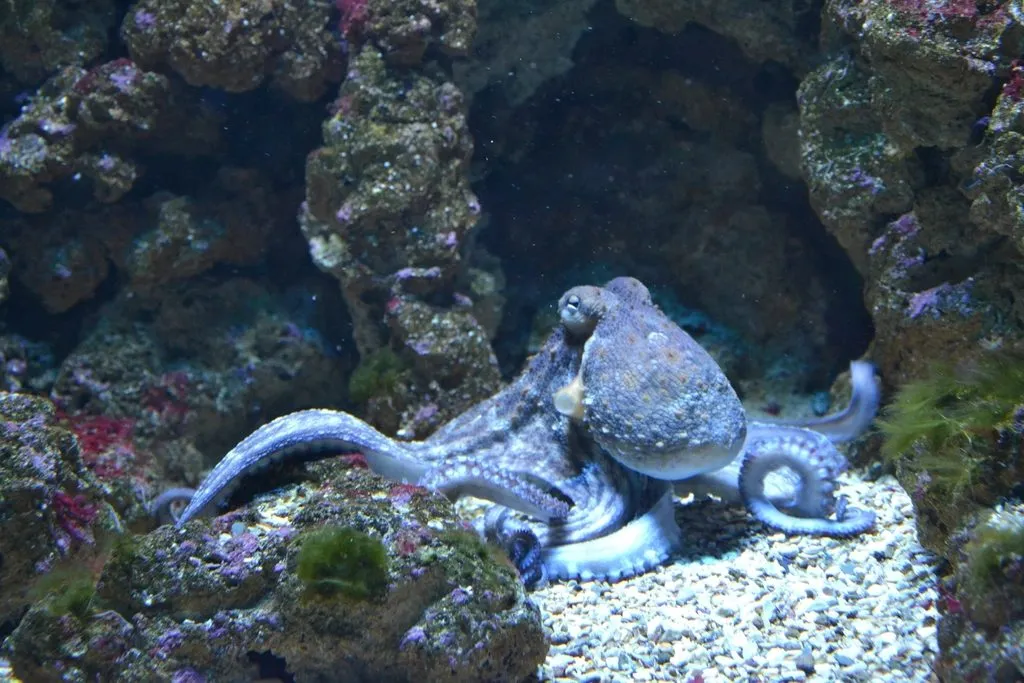
octopus in the ocean
Pictured octopus in the ocean · Unknown (via rawpixel)
02/07 Natural Sci.

Octopuses got smart without socializing

The dominant theory of why brains evolved to be large holds that social complexity is the engine: tracking relationships, alliances, and the intentions of others demands more computing power, and over generations, more social species developed bigger brains.

The theory fits primates, dolphins, wolves, and bats well. It does not fit octopuses at all [78]. Cephalopods, which include octopuses, squids, and cuttlefish, have large brains relative to their bodies and display genuine behavioral sophistication. Most are also solitary, often cannibalistic, and die shortly after reproducing, with essentially no parenting or long-term social structure. A new paper in iScience, co-authored by anthropologist Kiran Basava and economist Michael Muthukrishna of the London School of Economics, proposes instead that brains evolved to store and process information acquired through learning, whether social or solo. The cultural brain hypothesis holds that what matters is not the size of your group but the demands placed on you to acquire, store, and use learned information. Octopuses, which adapt rapidly through individual trial and error, are the test case that social-brain theory cannot explain and this alternative can.

A single human brain cell computes like an entire neural network
Unknown (via rawpixel)
03/07 Life Sciences

A single human brain cell computes like an entire neural network

The standard explanation for human intelligence has always been a counting argument: roughly 100 billion neurons, each a relatively simple on-off switch, connected into a network of staggering complexity.

A study from Hebrew University upends that view at the cellular level [95]. Researchers developed a method in which an artificial neural network is tasked with perfectly replicating the input-output behavior of a single human cortical neuron. The more computational layers the AI needs to mimic the biological cell, the more complex that cell is. For a human cortical neuron, the answer came back startling: the equivalent of an entire multi-layered deep neural network. Other mammals' neurons were measurably simpler by the same test. The physical explanation points to the dendritic tree, the branching arms through which neurons receive incoming signals. Human cortical dendrites are denser, more richly branched, and electrically distinct in ways that let individual cells perform operations previously assigned to whole circuits. In direct tests, a single human cortical neuron could discriminate between two different complex images independently, a feat the team verified experimentally [95].

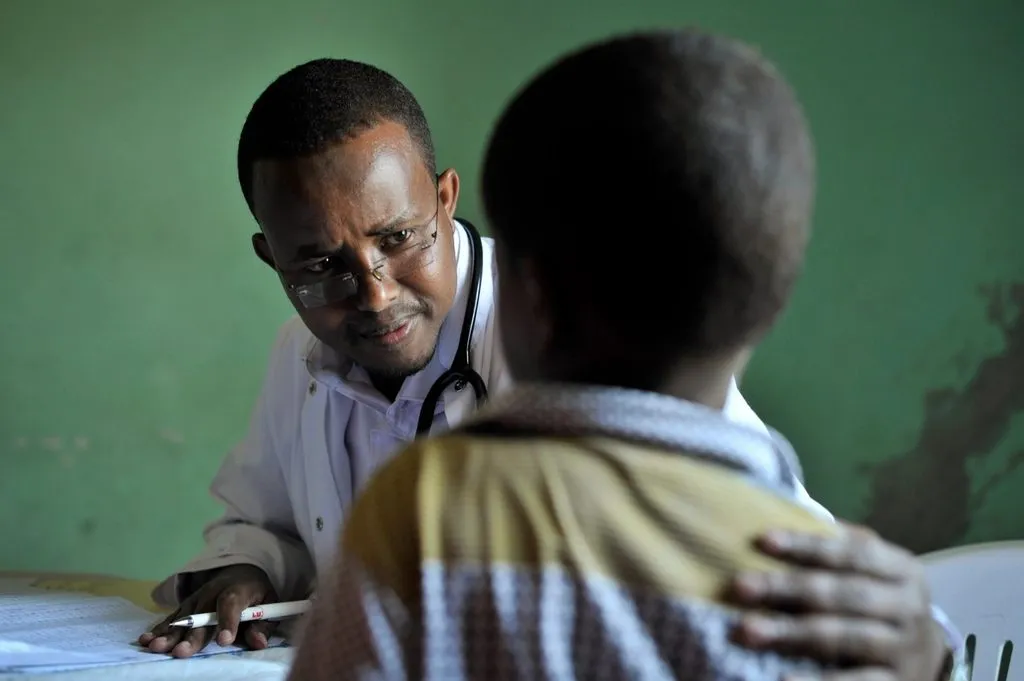
a doctor speaking with a patient in a clinical setting
Pictured a doctor speaking with a patient in a clinical setting · The African Union Mission in Somalia (via rawpixel)
04/07 Life Sciences

A ketogenic diet reduced schizophrenia and bipolar symptoms in a controlled trial

A randomized controlled trial from UCSF, published in Schizophrenia Bulletin, tested a ketogenic diet in patients with schizophrenia and bipolar disorder against a diet-as-usual control [92].

The compliance rate surprised almost everyone: 83 percent of participants maintained ketosis through the one-month primary phase, rising to 94 percent in a voluntary four-month extension, with no severe side effects reported. When researchers statistically controlled for weight loss, the psychiatric improvements held, which matters because it means the diet's effects on the brain are not simply a byproduct of losing weight. Participants who completed the four-month extension showed sustained reductions in clinical depression scores and core schizophrenia symptoms, alongside measurable gains in daily cognitive performance. Higher blood ketone levels correlated directly with sharper drops in blood glucose and in depression. The working hypothesis is metabolic: antipsychotic medications often disrupt the brain's ability to use glucose, starving neural circuits. Ketones, produced when the body runs on fat instead of carbohydrates, offer a different fuel source that bypasses those disrupted pathways and may restore energy to circuits standard medications cannot reach.

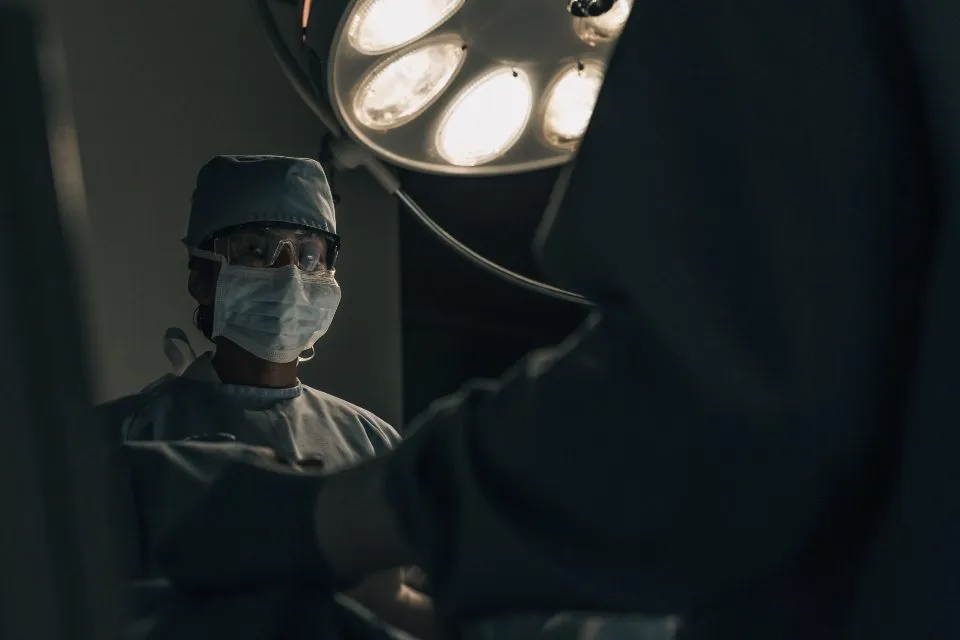
a surgeon in a modern hospital operating room
Pictured a surgeon in a modern hospital operating room · Matthew Henry (via stocksnap)
05/07 Technology Life Sciences

Humanoid robots completed their first surgeries

What each field noticed (2)
Interesting Engineering

World's first surgery using teleoperated humanoid robots conducted by US team

The robots used in the UCSD study, called Surgie, stand five feet tall and weigh about 27 kilograms, a fraction of the size of conventional robotic surgical systems that can weigh hundreds of kilograms and require purpose-built operating rooms. Surgeons who teleoperated them found the human-like controls more intuitive than the fixed-arm systems they usually work with. The team completed a gallbladder removal with a surgeon assisting a humanoid robot, then a second procedure with two robots working together, both on large nonprimate animals [182].

Read the story
Nature

In vivo feasibility study of humanoid robots in surgery

The peer-reviewed study in Nature ran the robots through systematic evaluation across benchtop characterization, dry-laboratory user studies with participants at various experience levels, and live porcine trials. The authors were measured about what the results show: they quantified technical feasibility and task performance and were explicit that precision, force sensing in soft tissue, and clinical safety are challenges that remain unsolved and must be addressed before any move toward human patients [13].

Read the story
scientists working in a biology research laboratory
Pictured scientists working in a biology research laboratory · Unknown (via rawpixel)
06/07 Life Sciences

Ovaries don't retire; they transform

After menopause, the conventional wisdom has been that the ovaries go silent: follicles depleted, reproductive purpose complete, the organ fades. A Northwestern University study in mice says otherwise [196].

Researchers tracked ovarian tissue from reproductive youth through post-reproductive old age and found that once the follicle reserve was exhausted, the organ did not switch off. Its molecular identity changed entirely. Immune cells, including T cells and macrophages, flooded the tissue. Giant multinucleated cells appeared. Transcriptomic analysis showed the organ's gene expression looking less like a reproductive gland and more like an active inflammatory immune tissue, one producing signals that travel beyond the ovary itself. The researchers wrote that post-reproductive ovaries "completely lost their reproductive cellular identity and instead transitioned to an immune-like inflammatory organ." Those circulating signals may contribute to the low-grade systemic inflammation that is increasingly linked to aging and age-related disease across multiple organ systems.

an ocean research vessel at sea
Pictured an ocean research vessel at sea · Unknown (via rawpixel)
07/07 Natural Sci.

Scientists watched the seafloor being born for the first time

More than two-thirds of Earth's surface was built at mid-ocean ridges, where tectonic plates pull apart, magma floods the gap, and new seafloor hardens into crust. This process has been building 65,000 kilometers of underwater mountain ranges for billions of years.

No one had ever recorded it happening in real time until April 2024 [80]. Marine geophysicist Jean-Yves Royer and colleagues from the French National Center of Scientific Research spent years constructing an underwater observatory at the Southeast Indian Ridge, between Australia and Antarctica, with five hydrophones positioned specifically to catch one of these events. In late April 2024, the ridge split open. In less than two hours, an estimated 150 million cubic meters of magma tore through the crust as vast sheet-like intrusions called dikes, triggering earthquakes, reawakening dormant faults, and draining the magma reservoir below. The seafloor above it collapsed. The team measured several meters of displacement in both directions. Royer called it "a once-in-forty-year event." The results appear in Nature.

Fresh today · July 9, 2026

Good news you might have missed

Tears Can Be Used to Detect Dopamine Levels A postage-stamp-sized graphene sensor, cheap to make from laser-patterned plastic film, detected dopamine in artificial tears at the exact low concentrations seen in Parkinson's patients, with near-perfect specificity even amid the complex protein and salt matrix of real human tears [93]. Non-invasive and manufacturable at low cost, it opens a path to catching dopamine loss years before the first tremor appears. Neuroscience News
Four nuclear reactors hit a big milestone in the US Four microreactor companies, three of which were founded in 2023, achieved nuclear criticality on or before July 4 under the DOE's Reactor Pilot Program, proving they can sustain a chain reaction [190]. The speed is notable in an industry better known for decades-long delays; generating electricity for the grid is still years away, but four different startups hitting the mark in the same program is a real change in how nuclear development works. MIT Technology Review
Canada Successfully Exploring for 'White' Hydrogen Gas, a Clean Power Source Beneath Existing Mines Geologists in Saskatchewan drilled 1.2 miles into ancient Precambrian bedrock specifically targeting geological hydrogen and found it: a 28 percent concentration, mostly hydrogen and nitrogen with none of the toxic hydrogen sulphide, with free gas flowing to the surface on the very first targeted well ever drilled for this resource in Canada [223]. At one Ontario gold mining site, existing boreholes alone could produce enough hydrogen to generate power for more than 400 homes per year. Good News Network
For 34 Summers, Japanese Surgeons Have Returned to Rural Vietnam to Give Children Free Life-Changing Surgeries Since 1993, the Japan Cleft Palate Foundation has sent teams to Vinh Long Province in the Mekong Delta every summer, completing more than 3,000 free cleft surgeries over 34 consecutive years for families who could not otherwise afford the care [230]. This spring's 58-person team helped a three-month-old boy whose mother had been urged to end the pregnancy; she chose to continue, and said through tears that she was grateful the Japanese doctors came. Sunny Skyz
Spain's 'Firefighting' Donkeys Have Helped Keep Doñana National Park Free of Wildfires for Nearly a Decade Eighteen rescued donkeys, led by a former shelter resident named Galileo who reportedly sniffs like a dog and has tried to bark, graze fire-prone scrubland around one of Europe's most protected wetland parks for up to seven hours a day, eating the dry grass and tough shrubs that fuel dangerous summer fires [229]. Since the program launched, Doñana National Park has gone nine years without a single recorded forest fire. Sunny Skyz
The bill that brings green hydrogen into California's clean energy grid California's SB 1350, signed by Governor Newsom and passed unanimously in both chambers, qualified green hydrogen electricity as a renewable source under the state's Renewables Portfolio Standard, giving hydrogen power plants the financial credits that make clean, dispatchable overnight energy commercially viable [243]. The Lancaster Clean Energy Center in Southern California, the country's largest planned green hydrogen facility, is set to open in 2028. The Optimist Daily
GABA neurons in the sublaterodorsal tegmental nucleus suppress wakefulness in healthy and narcoleptic mice Researchers using optogenetics found a specific population of GABA neurons that acts as the brain's wakefulness suppressor, and discovered that silencing these neurons in narcoleptic mice rescued them from both sleep attacks and cataplexy, the muscle weakness episodes that are the most disabling symptom of the condition [40]. Narcolepsy currently has no cure, and this is a precise, newly identified therapeutic target. PLOS Biology
'After My Grandfather Couldn't Walk Again, I Started Building Robotic Suits for People Like Him' Robin Kanattu Thomas, 30, of Kochi, founded Astrek Innovations after his grandfather lost the ability to walk following surgery, not because of the surgery but because quality rehabilitation technology was unavailable and unaffordable in India [234]. His company's robotic exoskeleton now helps patients like Mohan, a 69-year-old retired engineer who regained leg movement after spinal injury, at a fraction of the cost of importing equivalent devices from abroad. The Better India
New research suggests brain health can be measurably improved at any age The BrainHealth Project followed 3,966 adults aged 19 to 94 across more than 60 countries using accessible online training and coaching tools and found measurable improvements in cognitive, emotional, and social functioning at every age tested [131]. The improvements held over several years, not just immediately after training, and the largest gains went to those who engaged most consistently. PsyPost
Drinking two to three cups of coffee daily linked to better mental health An analysis of 461,586 UK Biobank participants followed for an average of 13 years found that two to three cups of coffee per day correlated with lower rates of mood and stress disorders, with the protective association disappearing at five or more cups daily [134]. The pattern held for both ground and instant coffee and was similar in fast and slow caffeine metabolizers, suggesting the mechanism may not be caffeine alone. PsyPost
A Streetside Painting Salvaged for its Frame Returned After Honest Man Realized its Enormous Value A man visiting Sevilla picked up what he assumed was discarded garbage from a garden wall, wanting only its golden frame, then discovered with AI help that it was an original Joaquin Sorolla worth up to 150,000 euros, and called the police immediately [226]. He later described returning it as simply "fulfilling his obligation." Good News Network
Inside the Race to Electrify Semi Trailers for Long Haul Freight A self-powered trailer kit from Nivalis Energy, combining a 50kW electric axle, a full-rooftop solar array, and grid charging during loading stops, entered commercial road testing with a German freight operator in May, projected to save 7,000 liters of diesel and about 19 tonnes of CO2 per trailer per year on a typical long-haul route [179]. IEEE Spectrum
The climate case against leather A meta-analysis in ACS Sustainable Chemistry & Engineering found that bovine leather's carbon footprint is 70 percent larger than previous estimates, emitting more than 12 times as much per pound as vegan leathers made from plant or fungal materials [137]. A leather tote bag carries roughly the emissions equivalent of 35 American beef burgers; a men's leather wallet, about four. Vox Future Perfect
New quantum breakthrough achieves first-known computations of fusion material Scientists at Oak Ridge National Laboratory, Cleveland Clinic, and IBM used quantum-centric supercomputing to calculate nine molecular configurations of FLiBe, the molten salt needed to breed and extract tritium in future fusion reactors, in the first known quantum computation applied to this material [187]. The results reveal how tritium interacts with the molten salt at the atomic level, directly useful for optimizing reactor designs that will need to generate their own fuel. Interesting Engineering
Harvard scientists turn a silicon chip into a DNA writing machine A Harvard team published results in Nature Electronics showing a silicon chip that writes 64 different DNA sequences simultaneously using a water-based enzymatic process instead of the hazardous organic solvents that standard DNA synthesis requires [3]. The previous record for enzymatic parallel synthesis was about a dozen sequences at once. ScienceDaily

Everything we read today

Natural Sciences 90 articles
PLOS One
Quanta Magazine
Life Sciences & Medicine 33 articles
Psychology & Behavioral Science 13 articles
Social Sciences 19 articles
Future Perfect | Vox
Technology & Innovation 48 articles
Plant-Based & Vegan 17 articles
Solutions & Good News 35 articles
Human Stories & Ideas 7 articles
The long view · not today's news, the story behind it

Today's discoveries didn't come from nowhere. Here's the older, ongoing story they belong to, a moment from this day in history, and a question to test what stuck.

The story so far

On this day in science

1955 Scientists sound the alarm on nuclear war Bertrand Russell and Albert Einstein released a manifesto signed by leading scientists, urging the world to resolve conflicts peacefully in the nuclear age. Its plea to remember our shared humanity launched a lasting peace movement. More from the Almanac →

Before you go: today's quiz

The daily quiz

A treatment made of just water, salt and sugar has saved tens of millions of children. What is it?

Reveal the answer

Oral rehydration therapy

Oral rehydration therapy treats the dehydration caused by diarrhoea. The glucose lets the gut absorb water and salt even during severe illness. It may have saved more than 70 million children.

See the Lifesaver →

Get this every morning.

Liked today's? Wake up to tomorrow's, in one short letter.

The full letter, every morning, free for good.

Same free letter, plus the reason it stays that way: no ads, no investors, no agenda but the good news itself.

A single gift of any amount. No account, never a recurring charge.