

July 8, 2026

Star-shaped brain cells guard your memories, and creatine fights cancer

7 discoveries · 15 good-news notes · 268 articles read · a 14-minute read
Natural Sci.

Creatine is what gym-goers take to push through one more rep. It is not, or wasn't, what oncologists think about.

Read the full story
Life Sciences

About half your brain by cell count is astrocytes: star-shaped cells that were long dismissed as passive structural support for neurons. They are not passive.

Picturedolder woman looking at old family photographs · Unknown (via rawpixel)

Read the full story
Technology

Researchers at the University of Cambridge used artificial intelligence to scan genetic data from thousands of viruses in the sarbecovirus family, which includes SARS, COVID-19, and a range of bat coronaviruses that haven't yet jumped to humans [210]. The AI's job was to find the features evolution has left largely...

Picturedvaccine researcher in a Cambridge University laboratory · U.S. Department of Energy (via rawpixel)

Read the full story
Natural Sci.

Quantum entanglement, the phenomenon where particles share a fate regardless of distance, has always required extreme small scales and careful isolation. Researchers at TU Wien changed that picture.

Read the full story
Social Sci.

During a restoration project at the Granary Burying Ground, Boston's third-oldest cemetery, conservationist Kelly Thomas was reviewing photographs of headstones when she noticed something unusual: one stone had only a single name [9]. In 18th-century America, a one-name marker almost always meant the person had...

PicturedGranary Burying Ground historic cemetery in Boston · Wikimedia Commons (Wikimedia Commons)

Read the full story
Good News

Most Alzheimer's research attacks the toxic proteins directly. A team at Monash University's Institute of Pharmaceutical Sciences asked a different question: what if the brain's own clearing system could be repaired instead [246]?

Read the full story
Life Sciences

Researchers at Columbia University ran a pooled analysis tracking 95 adults who delayed their bedtimes by 90 minutes every night for six weeks, mirroring the common pattern of millions of working adults [82]. The average actual sleep shortened by 80 minutes per night.

Read the full story

The feel-good story of the day

neighbors helping someone escape from a house fire at night NASA (via rawpixel)
Pictured neighbors helping someone escape from a house fire at night

Two strangers ran into a burning building for someone they barely knew

Just before 11:30 on a Thursday night, smoke began pouring from the Wigston, Leicestershire home of 87-year-old Phyllis Day. Day has Alzheimer's. She had removed her hearing aids before bed. The smoke alarms were going off and she couldn't hear them.

Neighbors spotted the fire from outside and began trying to force their way in. Day's daughter Suzanne Wright, watching through her mother's doorbell camera from a distance, used the two-way intercom to guide them through the house. Then 28-year-old Pav Sarpal and 44-year-old Stephan Smart went in.

"It was like you were physically getting choked by the smoke," Sarpal recalled. He came downstairs twice just to breathe, then went back up. Smart said the only thought in his head was reaching whoever was upstairs. They found Day asleep in her bed, woke her, and got her down the stairs. "She looked at me like I was going to rob her or something," Smart said. She made it out in time.

Wright told the BBC that her mother would have had "only a couple of minutes at most." Then she said the part worth sitting with: "When people are that amazing, people who barely know each other, the world isn't all bad."

Fresh today · July 8, 2026

The discoveries, in full

The gym supplement that helps the immune system fight cancer
NASA (via rawpixel)
01/07 Natural Sci.

The gym supplement that helps the immune system fight cancer

Creatine is what gym-goers take to push through one more rep. It is not, or wasn't, what oncologists think about.

A UCLA study published in iScience changes that framing [8]. The finding centers on dendritic cells, the specialized immune cells that act as generals in the body's fight against cancer: they detect tumors, then train the killer T cells that destroy them. Without creatine, the UCLA team found, dendritic cells survive less effectively, become less active, and are far worse at preparing T cells to recognize and attack tumors. The creatine transporter gene, which carries creatine into cells, was much more active in tumor-infiltrating dendritic cells than in healthy tissue. The cells are specifically hungry for creatine right where the fight matters most. This builds on earlier work from the same UCLA lab showing creatine also boosts the T cells themselves. "Creatine doesn't just help the T cells fighting cancer," said senior author Lili Yang. "It also energizes the entire infrastructure that supports and guides them."

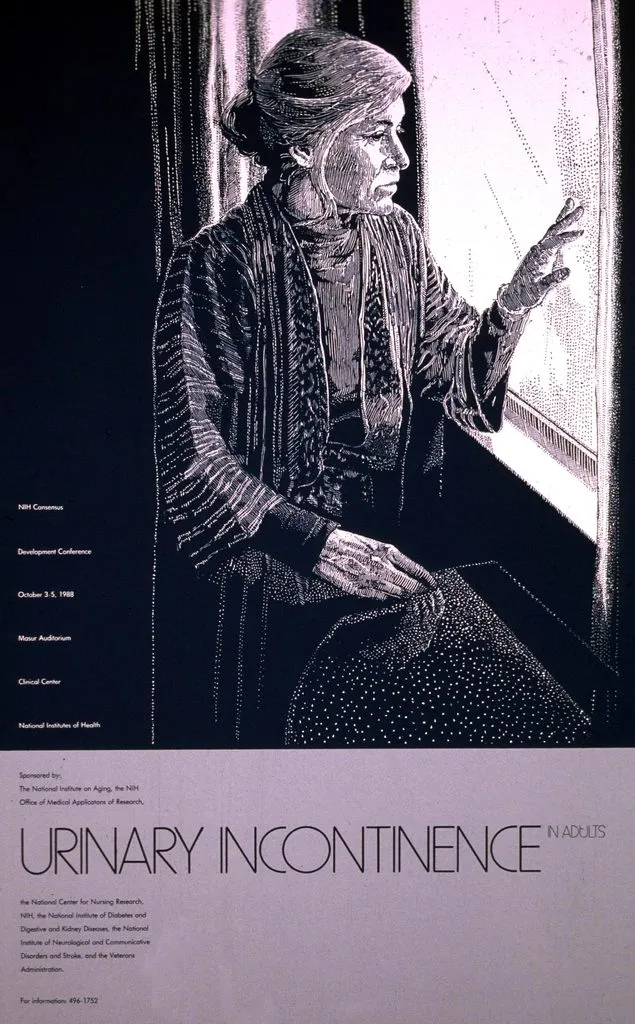
older woman looking at old family photographs
Pictured older woman looking at old family photographs · Unknown (via rawpixel)
02/07 Life Sciences

The brain cells that decide which memories survive

About half your brain by cell count is astrocytes: star-shaped cells that were long dismissed as passive structural support for neurons. They are not passive.

A new study from the Institute of Basic Science found that astrocytes are the active gatekeepers of which long-term memories survive [83]. The team identified a protein called ankyrin-2 (Ank2) as the molecular switch. Astrocytes with working Ank2 grow branches that reach out and physically embrace "engram neurons," the clusters of cells that store specific memories, maintaining the synaptic strengthening that holds a memory in place. The researchers then engineered mice without Ank2 in their astrocytes. Those mice formed memories completely normally. Tested two weeks later, the memories were gone. Short-term recall was perfectly intact. Long-term recall had collapsed entirely. Without Ank2, astrocytes developed stunted branches and could no longer maintain contact with the engram neurons they were supposed to hold.

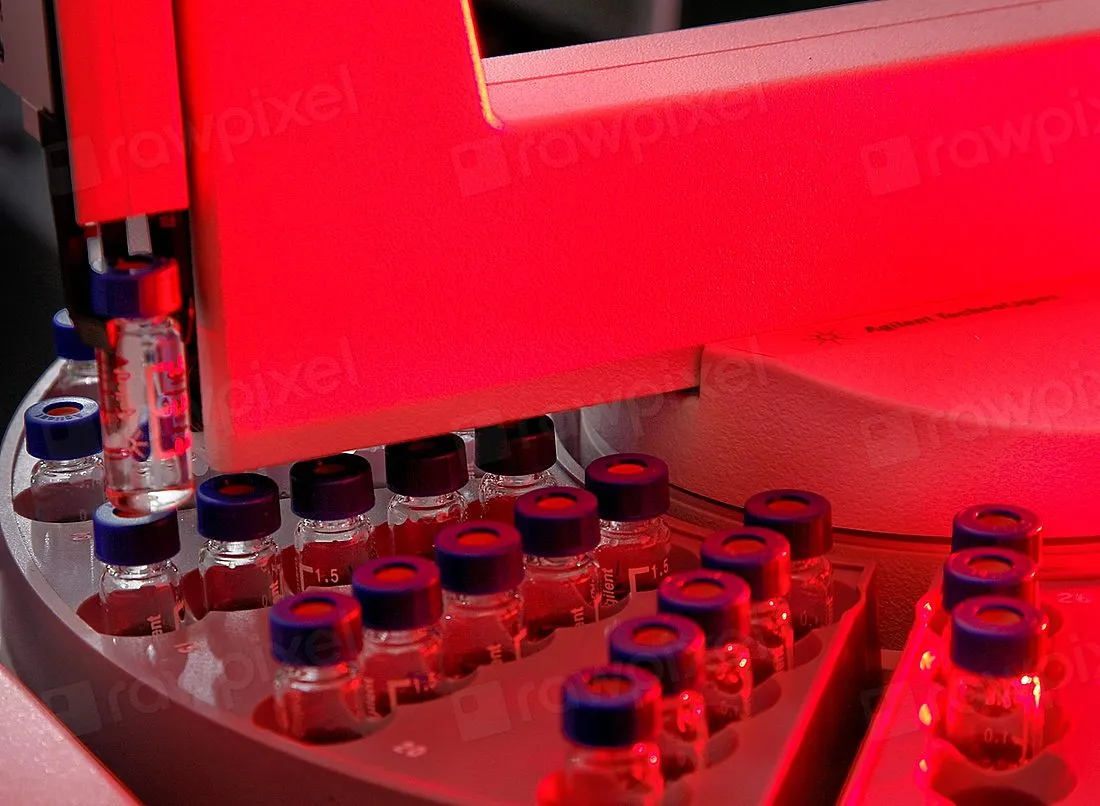
vaccine researcher in a Cambridge University laboratory
Pictured vaccine researcher in a Cambridge University laboratory · U.S. Department of Energy (via rawpixel)
03/07 Technology

The AI-designed vaccine built for coronaviruses we haven't met yet

Researchers at the University of Cambridge used artificial intelligence to scan genetic data from thousands of viruses in the sarbecovirus family, which includes SARS, COVID-19, and a range of bat coronaviruses that haven't yet jumped to humans [210].

The AI's job was to find the features evolution has left largely untouched across all of them: the parts a virus is unlikely to mutate without losing fitness. Those conserved targets became the basis of a new vaccine designed to protect against the entire family, including strains that don't exist yet. The vaccine uses DNA rather than mRNA, making it stable without refrigeration. It is also delivered without a needle; a high-pressure stream of liquid pushes it through the skin. It has now been tested in people for the first time.

Quantum weirdness found inside a crystal you can hold in your hand
NASA (via rawpixel)
04/07 Natural Sci.

Quantum weirdness found inside a crystal you can hold in your hand

Quantum entanglement, the phenomenon where particles share a fate regardless of distance, has always required extreme small scales and careful isolation. Researchers at TU Wien changed that picture.

By studying a centimeter-sized crystal made from a type of material called a strange metal, they detected a high degree of quantum entanglement woven through the whole material, using a mathematical tool from quantum information called quantum Fisher information [7]. They weren't trying to put the crystal into superposition as a whole. They asked whether the particles inside were collectively acting in a coordinated quantum way. They were. Lead researcher Silke Bühler-Paschen compared it to an anthill: no individual ant carries the colony's response, but when the colony acts, it acts as one. Strange metals have been physics' open wound since the 1980s, conducting electricity in a way that defied every known theoretical model [27]. Physicists have had to invoke quantum soups and even black holes to try to explain it. The TU Wien result suggests the strangeness isn't a glitch; it's a signature of deep collective quantum order.

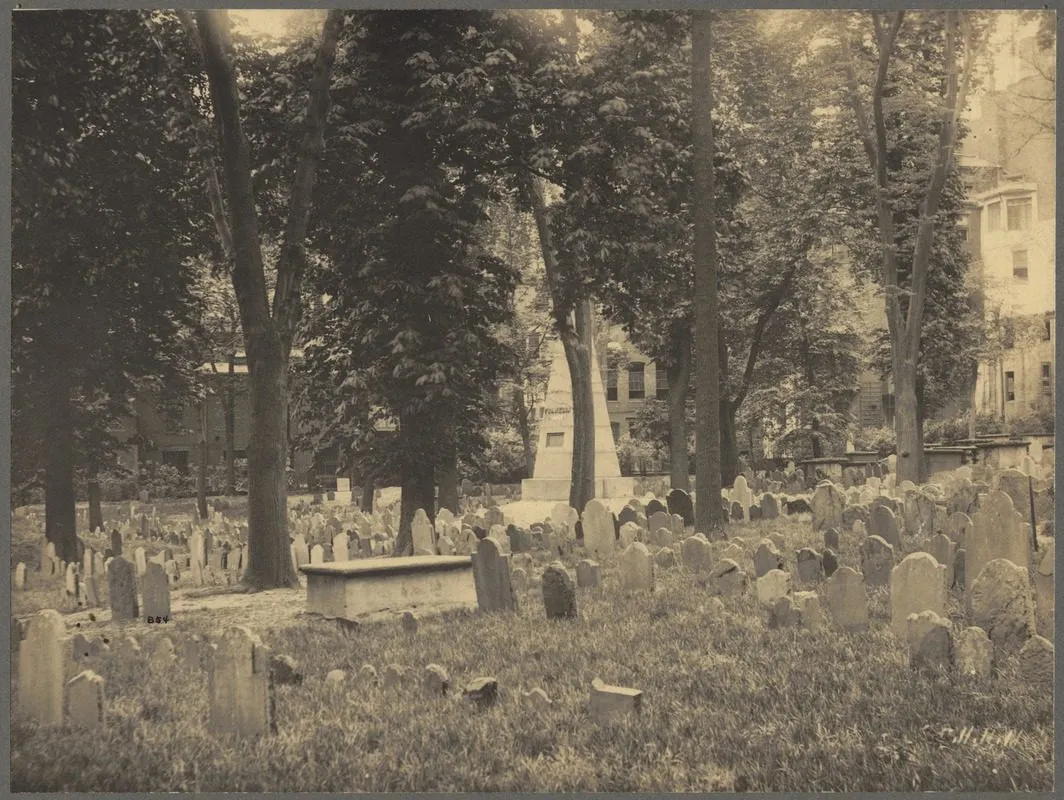
Granary Burying Ground historic cemetery in Boston
Pictured Granary Burying Ground historic cemetery in Boston · Wikimedia Commons (Wikimedia Commons)
05/07 Social Sci.

A gravestone that had been there for nearly three hundred years

During a restoration project at the Granary Burying Ground, Boston's third-oldest cemetery, conservationist Kelly Thomas was reviewing photographs of headstones when she noticed something unusual: one stone had only a single name [9].

In 18th-century America, a one-name marker almost always meant the person had been enslaved or had only recently gained freedom. Research in historical records revealed the story. The man was born Sebastian, enslaved, and died free at age 70 on February 28, 1729, having chosen the name Boston. Mayor Michelle Wu called the discovery "likely one of the oldest gravestones of a free Black person in America" in a July 4 speech. The stone sits in the same cemetery as the graves of Samuel Adams, Paul Revere, and Crispus Attucks. It bears the death's head symbol common in New England at the time, a stylized skull flanked by wings, associated with spiritual resurrection. Historical records show Boston and his wife Jane Lake had children together in 1701.

Today Got Better
06/07 Good News

The copper compound that fixes Alzheimer's by repairing the brain's own clearing system

Most Alzheimer's research attacks the toxic proteins directly. A team at Monash University's Institute of Pharmaceutical Sciences asked a different question: what if the brain's own clearing system could be repaired instead [246]?

The brain actively pumps out its own waste. Molecular pumps called P-glycoprotein line the blood-brain barrier and push amyloid-beta proteins out into the bloodstream, where they can be cleared. In Alzheimer's, those pumps progressively weaken, proteins accumulate, and cognitive damage follows. The Monash team treated an Alzheimer's mouse model with a copper compound called Cu(ATSM) for 56 days. P-gp pump abundance rose 24.1 percent. Amyloid-beta in the brain dropped 42 percent. Spatial learning improved by nearly 44 percent. Lead author Dr. Jae Pyun called it "the first study to show that Cu(ATSM) can increase the abundance of P-gp clearance pumps in an Alzheimer's model."

Eighty minutes of missed sleep is enough to start changing your body
Unknown (via rawpixel)
07/07 Life Sciences

Eighty minutes of missed sleep is enough to start changing your body

Researchers at Columbia University ran a pooled analysis tracking 95 adults who delayed their bedtimes by 90 minutes every night for six weeks, mirroring the common pattern of millions of working adults [82].

The average actual sleep shortened by 80 minutes per night. Over those six weeks, participants gained an average of one full pound and spent 17 more minutes per day being entirely sedentary. Men and postmenopausal women showed the sharpest effects, averaging nearly 30 extra inactive minutes daily. The researchers checked whether people were simply sitting more because they had more waking hours. Even after accounting for the extra time awake, participants still chose to be less active than before. The sedentary behavior followed the sleep loss independently of the extra time available.

Fresh today · July 8, 2026

Good news you might have missed

Woman Rower Breaks Men's Record for Fastest Solo Voyage from California to Hawaii Kelsey Pflendler rowed 2,400 miles of open Pacific Ocean alone in 43 days, becoming the first American woman to complete the crossing solo and breaking the previous men's record of 52 days [231]. She arrived in Honolulu on her birthday to a crowd of over 100 people, having raised $30,000 for a charity supporting Colorado River rafting guides' mental health. Good News Network
Peruvian university ordered to permanently offer vegan meals in historic court ruling Lima's Constitutional Court ruled that the National University of San Marcos's complete absence of plant-based food violated students' rights to equality, freedom of conscience, and free development of personality, ordering the university to permanently provide vegan options [227]. Legal experts say the precedent could require plant-based access in Peruvian schools, hospitals, military facilities, and prisons. Vegan Food & Living
AI Reveals Hidden Gray Matter Lesions in Multiple Sclerosis A new AI framework called MMCLE uncovered 15 to 20 previously invisible cortical lesions per MS patient in a clinical trial database, exposing more than 11,000 hidden lesions in total from ordinary legacy MRI scans that clinics already own [78]. Because gray matter lesions drive cognitive decline in MS, being able to see them changes both what future drugs target and how decades of past clinical trial data are now interpreted. Neuroscience News
Mosa Meat Gets $1M Loan from Dutch Govt to Expand Cultivated Beef Beyond Europe The Dutch government's Invest International fund has backed cultivated meat pioneer Mosa Meat with a $1 million loan to navigate regulatory processes and launch in Singapore, the UK, the US, Canada, Australia, and New Zealand [211]. Mosa Meat, which unveiled the world's first cultivated burger, currently commercializes cultivated beef fat combined with plant-based ingredients for hybrid products with genuine beef flavor. Green Queen
Quirky Campaign Leaves Nice Surprises on Cars of Anyone Who Took Cabs Home from the Bar The Montana Bar Fairies get up at 5 AM on weekend mornings to leave $5 coffee gift cards under the windshields of cars left overnight at bars, rewarding the people who chose not to drive drunk [230]. A TikTok of two volunteers finding eight parked cars in Polson, Montana racked up 2.5 million views, and the campaign is now spreading to communities across the country. Good News Network
UK Government Moves To Introduce Anti-Deforestation Rules The UK has announced plans to require businesses importing wood, cocoa, coffee, palm oil, rubber, soy, or cattle to verify their supply chains don't contribute to illegal deforestation, the first such legislation since Brexit [217]. Nature Minister Mary Creagh called tackling global deforestation "one of the most effective ways we can address climate change and protect some of the world's most unique and precious wildlife." Plant Based News
Ugandan Coffee Growers Shrug Off Drought Thanks to Regenerative Agriculture A coalition including the IUCN, Nespresso, and Uganda's largest licensed coffee exporter set up 30 demonstration farms in the Masaka region to teach smallholder farmers regenerative techniques like mulching and drought-resistant planting [232]. Farmers report stronger yields, healthier trees, and better income stability; Nakalisa Mary Fatuma says that since applying the new methods, "my coffee is stronger and more promising, and so is my family." Good News Network
California Just Declared War on Mystery Menu Ingredients California's new Allergen Disclosure for Dining Experiences Act requires chain restaurants with 20 or more locations to clearly disclose all nine major food allergens, four of which are animal-derived: milk, eggs, fish, and shellfish [220]. Experts expect national chains to adopt the same menus across all their locations rather than maintain separate California versions, which would benefit allergy families and plant-based eaters nationwide. VegNews.com
The Euclid Space Telescope Has Found 31 New Ancient Quasars, Including the Most Ancient One Ever Found Euclid has discovered 31 quasars from the universe's first 770 million years, more than doubling the known count at those extreme distances; the two most distant were shining with the light of trillions of suns just 670 million years after the Big Bang [74]. Euclid found more ancient quasars in its first 1.5 years of operation than astronomers had found in the entire decade before it. Universe Today
New weight loss pill beats oral Ozempic in major trial Orforglipron, a new daily pill, outperformed oral semaglutide on both weight loss and blood sugar control in a 52-week trial of 1,698 adults across six countries [2]. Unlike oral semaglutide, it needs no refrigeration and no empty stomach before taking it; it's also cheaper to manufacture, which could significantly expand access in lower-income countries where injectable GLP-1 drugs remain out of reach. ScienceDaily
25,000 Rajasthan Girls Are Learning to Throw a Punch, Manage a Budget & Know Their Rights The Rani Laxmi Bai Kendra program, run inside government colleges across Rajasthan, walks young women through a four-week curriculum blending self-defense, legal literacy, financial skills, and cybersecurity training [242]. Over 25,000 girls have participated; graduates describe learning to navigate banks, government offices, and harassment situations "entirely on my own terms." The Better India
A Streetside Painting Salvaged for its Frame Returned After Honest Man Realized its Enormous Value Andrés Hurtado of Murcia found what he assumed was trash leaning against a wall in Sevilla, took it for the frame, discovered through AI that the small beachscape was an original Joaquin Sorolla worth up to €150,000, and immediately called police to arrange its return [228]. The painting had been accidentally left by its owners while loading their car in a hurry; they had been searching for it frantically across a 300-mile radius. Good News Network
Nearly 20% of new moms have anxiety or depression, but a promising psychedelic treatment is on the horizon A compound called luvesilocin, which works like the active ingredient in psilocybin mushrooms, showed rapid improvement in postpartum depression symptoms in an FDA Phase 2 study across 35 sites and 84 participants [156]. Prior psilocybin research has observed, in some cases, near-complete remission following a single dose; luvesilocin is designed to bring that potential specifically to the hormonal and neurological context of the postpartum period. The Conversation
As Cities Flood, East Kolkata Wetlands Show How Nature Can Protect Urban India The East Kolkata Wetlands, a 12,500-hectare Ramsar site on the city's eastern edge, absorbs excess monsoon floodwater, naturally treats Kolkata's sewage without energy-intensive infrastructure, and supports more than 250 sewage-fed fisheries that sustain thousands of families [244]. As Indian cities face increasingly intense rainfall events, the wetlands are a proof of concept that traditional ecological knowledge and modern climate resilience often point to the same answer. The Better India
National Park Foundation's Annual Photo Contest Showcases Beauty of US Public Lands: See the Winners Nearly 9,000 photographs competed in the National Park Foundation's 19th annual Share the Experience contest; first place went to Jonatas Neiva's sunrise photograph of the Spruce Mountain Fire Lookout Tower in Medicine Bow National Forest in Wyoming, the mountain reservoir lit gold behind it [233]. Neiva, a naturalized U.S. citizen, said each photograph he shares is an attempt to turn awe into "appreciation, and appreciation into stewardship." Nice News

Everything we read today

Natural Sciences 76 articles
PLOS One
Life Sciences & Medicine 29 articles
Psychology & Behavioral Science 33 articles
Psyche | Know Your Self
Social Sciences 20 articles
Technology & Innovation 52 articles
Plant-Based & Vegan 17 articles
Solutions & Good News 29 articles
Human Stories & Ideas 12 articles
The long view · not today's news, the story behind it

Today's discoveries didn't come from nowhere. Here's the older, ongoing story they belong to, a moment from this day in history, and a question to test what stuck.

The story so far

On this day in science

2011 The final Space Shuttle mission launches Space Shuttle Atlantis lifted off on STS-135, the last flight of NASA's 30-year Space Shuttle program. The fleet had built the International Space Station and launched the Hubble telescope. More from the Almanac →

Before you go: today's quiz

The daily quiz

Roughly how many lives did the WHO estimate vaccines saved over the past 50 years?

Reveal the answer

154 million

The figure is about 154 million lives from 1974 to 2024, the equivalent of six lives every minute, with about 101 million of them infants.

See the Lifesaver →

Get this every morning.

Liked today's? Wake up to tomorrow's, in one short letter.

The full letter, every morning, free for good.

Same free letter, plus the reason it stays that way: no ads, no investors, no agenda but the good news itself.

A single gift of any amount. No account, never a recurring charge.