

June 15, 2026

The brain treats loneliness like hunger, and a brutal cancer finally yields a cure

8 discoveries · 0 good-news notes · 833 articles read

The common thread

The clearest thread through today's coverage is that the body manages its needs, from company to sleep to the right molecular key in a cancer cell, with far more precision than we had any reason to expect.

Natural Sci.Psychology

Watch a mouse reunite with her sister after five days alone and you see something unmistakable. She squeaks at frequencies too high for humans to hear.
Read the full story
PsychologyTechnology

A study published in the Journal of Clinical Psychiatry found that one dose of psilocybin, paired with psychological support, rapidly reduced chronic suicidal thoughts in adults with severe depression, and the relief persisted for months [298]. That last part is what makes it unusual.

Read the full story
Social Sci.Technology

Two separate pieces tell variations of the same story. Works in Progress profiles multiple myeloma, a cancer that originates in bone marrow and is among the most painful diseases there is: a cure has been found, but it was discovered abroad, and American patients are waiting behind a regulatory system that doesn't...

Read the full story
Natural Sci.Life Sciences

A large international team led by Harvard Medical School and Princeton University published the first complete connectome of a fruit fly's brain and its equivalent of a spinal cord, every neuron, every synapse, charted [155]. It's the first time any animal's complete nervous system has been mapped end to end.

Read the full story
Good NewsSocial Sci.

Scientists announced that the world's mangrove forests, which had been losing ground for decades, have staged a remarkable global recovery [690]. Researchers called it "a global turning point" for one of the most carbon-rich and biodiverse ecosystems on Earth.

Read the full story
Life Sciences

An NIH-funded study found that researchers could trigger the restorative cellular processes normally reserved for sleep in specific regions of an awake brain [214]. Sleep doesn't restore the whole brain at once; it does targeted maintenance in particular circuits, clearing waste, repairing connections, restoring...

Read the full story
Social Sci.

Just beyond central Vancouver, the Squamish Nation is building Senakw, one of the largest and most unusual housing developments in the world, and making substantial money doing it [451]. The site is on Indigenous land that the city could not develop.

Read the full story
Technology

Researchers at the University of Cambridge used a machine learning model to design a new vaccine from scratch, one that targets an entire family of human coronaviruses rather than any single strain [492]. It is the first vaccine designed entirely by AI to enter human clinical trials.

Read the full story

The feel-good story of the day

They kept coming back

For nearly two decades, Jimmy Barela cycled through what California's mental health system had to offer: crises, brief hospitalizations, quick discharges, and then nothing until the next episode [705]. His mother Janina Estrada spent Thanksgivings driving through the streets of Orange, California in the rain, looking for him. He refused help. He disappeared. He lived on the street.

Orange County's Full Service Partnership program had a different philosophy. Case workers didn't take refusal as a final answer. They came back next week, and the week after, and the month after that. Not to compel or institutionalize, but to build a relationship so patient and persistent that accepting help eventually felt less daunting than staying alone. They called it relentless outreach.

Jimmy Barela eventually said yes. He has been housed and stable for years now. Janina Estrada no longer drives the streets on Thanksgiving.

The program isn't inexpensive. It requires people willing to absorb years of rejection without losing the belief that the door might open. What it shows is that some outcomes that look impossible are really just outcomes that take longer than we're usually willing to wait.

The discoveries, in full

Natural Sci. Psychology

Loneliness is a hunger, and the brain knows it

Watch a mouse reunite with her sister after five days alone and you see something unmistakable. She squeaks at frequencies too high for humans to hear.

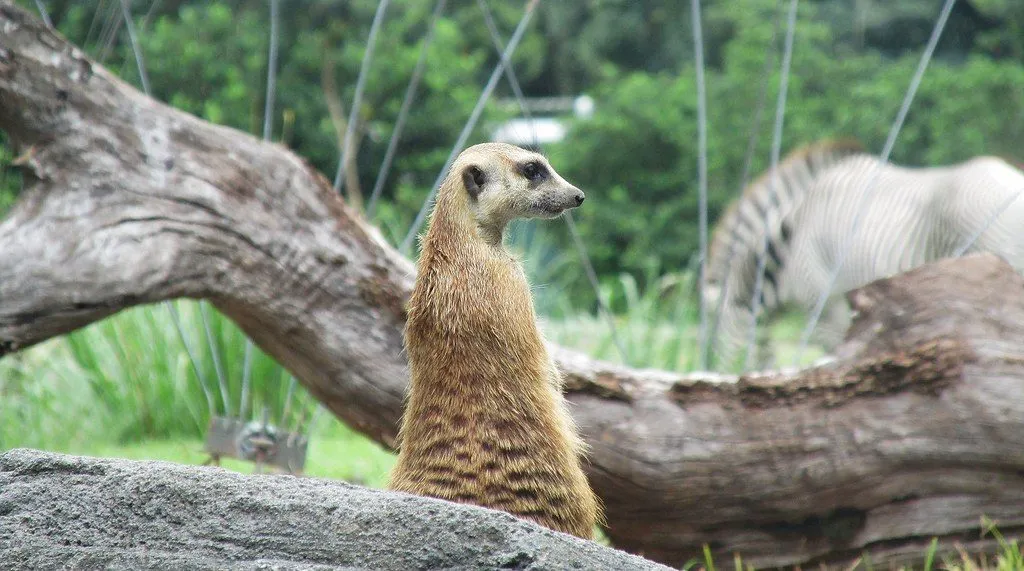
She follows her sister around the cage, crawls underneath her as if trying to get a hug. She looks exactly like someone reuniting with family after a long time apart [3]. Researchers studying this behavior, across species from birds to monkeys to cockroaches, have converged on a striking conclusion: social connection isn't a preference or a personality trait. It's a homeostatic drive, like hunger or thirst, with a neural setpoint for how much company each creature needs. When the need isn't met, the brain pushes the animal to fix it, just the way it pushes a hungry one toward food [3]. Neuroscientists at the Salk Institute and elsewhere are now hunting for what they call the "cellular substrate of loneliness," the specific neurons that register social deprivation and fire the drive to reconnect [43]. The amount that's enough differs by species and by individual. Wild meerkats separated from their group scan constantly and look visibly distressed [3]. In the cultural register, a Psyche essay traces how this same biological need became a source of shame in America, driving some people toward AI companions rather than asking other humans for what they need [311].

What each field noticed
Knowable Magazine

Natural Sci.

: The animal behavior is remarkably specific. An isolated mouse doesn't just seek proximity; she seeks physical warmth and contact. The biological drive appears ancient and conserved across enormous evolutionary distances, which is why you see the same pattern in cockroaches and in people.

Live Science

Natural Sci.

: Neuroscientists are at the very beginning of mapping the actual circuitry. The "cellular substrate of loneliness" hasn't been found yet, which means treatments for chronic loneliness are still far ahead.

Psyche

Psychology

: American culture's emphasis on self-reliance has turned a basic biological need into something people feel ashamed of, which is a strange thing to do to a drive as fundamental as hunger. The piece follows people who turned to AI companions rather than admit they needed the human kind.

Psychology Technology

A single dose, months of relief from suicidal thoughts

A study published in the Journal of Clinical Psychiatry found that one dose of psilocybin, paired with psychological support, rapidly reduced chronic suicidal thoughts in adults with severe depression, and the relief persisted for months [298].

That last part is what makes it unusual. Most psychiatric drugs take weeks to begin working and don't specifically target suicidal ideation at all. In a separate case that same week, a woman with Alzheimer's disease showed a striking reversal of cognitive symptoms after using psilocybin, prompting researchers to look more carefully at what the compound does to a brain that has been losing ground [532].

What each field noticed
PsyPost

Psychology

: The focus is on speed and duration. The relief appeared quickly and held for months. In a field where clinicians often struggle to keep severely depressed patients safe between medication adjustments, that combination is genuinely notable.

New Atlas

Technology

: The Alzheimer's case is far more preliminary, a data point rather than a result. The article is careful to frame it as something that opens a question: what is psilocybin actually doing to a degenerating brain, and could it be something useful?

Social Sci. Technology

Cancer's last walls are starting to come down

Two separate pieces tell variations of the same story. Works in Progress profiles multiple myeloma, a cancer that originates in bone marrow and is among the most painful diseases there is: a cure has been found, but it was discovered abroad, and American patients are waiting behind a regulatory system that doesn't always move fast enough [453].

SingularityHub reports that the "undruggable" cancers, tumors driven by proteins so slippery that decades of drug design couldn't get a grip, are now beginning to crack open. AI is finding molecular shapes no human researcher had thought to try, and drugs built around those shapes are entering trials for pancreatic and lung cancers that previously had almost nothing to offer patients [554].

What each field noticed
Works in Progress

Social Sci.

: The piece is less about the biology than the system. A cure exists. Patients elsewhere have access to it. American patients don't yet, and the article follows the cost of that delay in real human terms, not as an abstraction.

SingularityHub

Technology

: The AI story is about crossing a capability threshold. The molecules that fuel the most deadly cancers were labeled undruggable because their surfaces were too smooth for drugs to bind to. A new generation of computational approaches found handholds the previous methods couldn't see.

Natural Sci. Life Sciences

The first complete wiring diagram of any nervous system

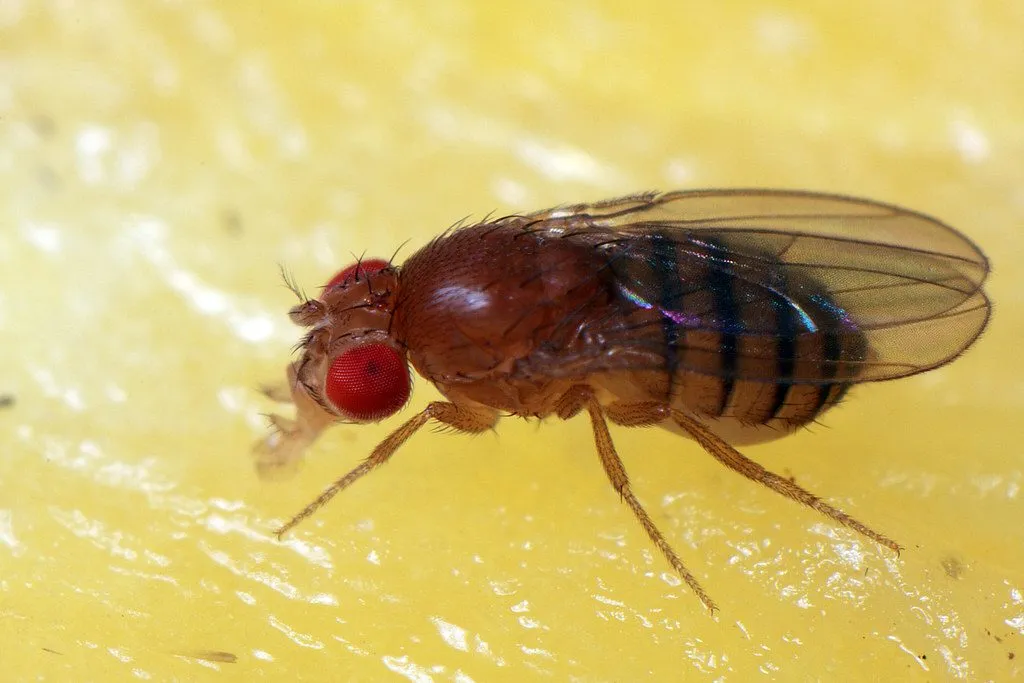
A large international team led by Harvard Medical School and Princeton University published the first complete connectome of a fruit fly's brain and its equivalent of a spinal cord, every neuron, every synapse, charted [155].

It's the first time any animal's complete nervous system has been mapped end to end. A fruit fly has about 140,000 neurons. The human brain has 86 billion. But the principles governing how circuits wire themselves, and what they compute, were never going to be discovered any other way. In a related paper the same week, researchers identified a single brain hub that coordinates sensory predictions across the entire body, providing the first complete circuit-level map of how a nervous system distinguishes sensations it caused from sensations the world caused [224].

What each field noticed
Phys.org

Natural Sci.

: The achievement is in the scale and completeness. No gap, no estimated region, no approximation. The full diagram, which took a coordinated effort across multiple institutions, is now a public research tool.

Neuroscience News

Life Sciences

: The sensory prediction study asks a different question: how does a nervous system keep from confusing itself? The corollary discharge system it maps is the mechanism every animal uses to avoid being startled by its own heartbeat or footsteps. Knowing its full circuit architecture changes what we can ask about it.

Good News Social Sci.

Mangroves are back, and dinner scraps are building oyster reefs

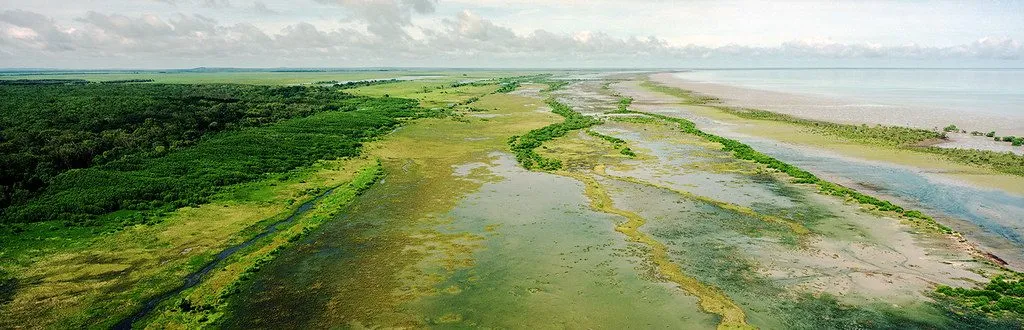
Scientists announced that the world's mangrove forests, which had been losing ground for decades, have staged a remarkable global recovery [690]. Researchers called it "a global turning point" for one of the most carbon-rich and biodiverse ecosystems on Earth.

In the same week's coverage, a quieter story out of Orange County, California: a program called Shells for Shorelines is collecting oyster shells from local restaurants and using them to rebuild reef habitat that was lost over the past century [748]. The shells from one night's dinner become the foundation for the next decade's ecosystem. A Noema essay lands alongside both stories with an argument that shifts the frame: nature's heritage, the migration routes held in the bodies of bighorn sheep, the behavioral patterns encoded in a forest, belongs to the animals, not to us, and conservation should start from there [359].

What each field noticed
Positive News

Good News

: The mangrove data is measured and confirmed, not aspirational. The forests are growing. The same issue also covers a new France-sized marine reserve, which means this was a good week for oceans by any standard.

The Optimist Daily

Good News

: The Shells for Shorelines program is small and replicable. Any city with a seafood restaurant culture and a degraded nearshore habitat could run a version of it.

Noema

Social Sci.

: The philosophical frame changes what recovery means. If the bighorn sheep carry the memory of ancient migration routes in their behavior, then relocating them preserves something beyond headcount. Heritage is the word, and it belongs to them.

Life Sciences

Scientists trigger the brain's restorative sleep effect while the animal is still awake

An NIH-funded study found that researchers could trigger the restorative cellular processes normally reserved for sleep in specific regions of an awake brain [214]. Sleep doesn't restore the whole brain at once; it does targeted maintenance in particular circuits, clearing waste, repairing connections, restoring normal function.

The study found a mechanism that could be activated in isolated brain regions without putting the whole animal under. It's an animal study, but the mechanism is specific enough to suggest a path toward clinical applications.

What each field noticed
NIH

Life Sciences

: The emphasis is on the therapeutic potential for brain injuries, where specific regions need recovery but the patient can't always achieve adequate sleep. The finding opens the question of whether local sleep-like restoration could be deliberately targeted at damaged areas.

Social Sci.

The Squamish Nation solved something Vancouver couldn't

Just beyond central Vancouver, the Squamish Nation is building Senakw, one of the largest and most unusual housing developments in the world, and making substantial money doing it [451].

The site is on Indigenous land that the city could not develop. By exercising their own authority over that land rather than waiting for municipal approval, the Squamish were free of Vancouver's building codes, zoning restrictions, and the regulatory layers that have kept density artificially low across the city for decades. They built denser, faster, and more profitably than any conventional developer has managed. The article argues this isn't just an Indigenous success story but a template for solving the housing shortage in cities that have tried and failed every other way.

What each field noticed
Works in Progress

Social Sci.

: The key insight is about sovereignty, not construction technique. The Squamish didn't find a better way to pour concrete. They found a legal position where the rules that make housing expensive elsewhere simply didn't apply. The result is a case study in what urban density could look like without the political barriers that prevent it everywhere else.

Technology

The first vaccine designed by AI just entered human trials

Researchers at the University of Cambridge used a machine learning model to design a new vaccine from scratch, one that targets an entire family of human coronaviruses rather than any single strain [492].

It is the first vaccine designed entirely by AI to enter human clinical trials. The model didn't refine an existing approach; it explored molecular territory that human researchers hadn't mapped, and found a candidate structure neither group would have looked for by hand.

What each field noticed
Futurism

Technology

: The milestone is capability: AI has now crossed from assisting human researchers to independently designing novel biologics. Entering trials is the beginning of a long process, not a result. But no AI-designed vaccine had reached this stage before.

Everything we read today

Natural Sciences 210 articles
Latest from Live Science
PLOS Biology
PLOS One
Proceedings of the National Academy of Sciences: Proceedings of the National Academy of Sciences: Table of Contents
Life Sciences & Medicine 58 articles
eLife: latest articles
STAT
Psychology & Behavioral Science 67 articles
PsyPost Psychology News
Social Sciences 119 articles
National Bureau of Economic Research Working Papers
The Conversation Articles
Technology & Innovation 106 articles
Ars Technica - All content
Plant-Based & Vegan 98 articles
Solutions & Good News 98 articles
Good News Network
The Better India : Latest Posts
Human Stories & Ideas 77 articles
The Marginalian

Get this every morning.

One short, warm email with the day's real progress. Free, forever.