The Field Guide · No. 40
Surrogate endpoints: when the stand-in and the real outcome diverge
A surrogate endpoint is a stand-in measure, like a lab value or scan result, used in place of a real outcome such as death, and moving the stand-in does not guarantee the real outcome moves with it.
Updated
A surrogate endpoint is a stand-in. Instead of measuring the outcome a patient actually cares about, dying, having a heart attack, losing function, a trial measures something easier or faster to track and assumes it moves in step: a lab value, a scan result, a symptom score. The hope is that if the surrogate improves, the real outcome will too. Often it does. Sometimes it does not, and the gap between the two is where some of medicine's worst mistakes have happened.
Regulators formalize this with a specific definition: a surrogate endpoint is used in a trial as a substitute for a direct measure of how a patient feels, functions, or survives, and it is only expected, not proven, to predict the real benefit. Some surrogates are well validated by decades of evidence. Others are candidates, chosen because they are convenient or cheap to measure or let a trial finish in months instead of years, long before anyone has confirmed that moving the surrogate actually helps patients.
Two real trials show what happens when that gap opens up. In the Cardiac Arrhythmia Suppression Trial, the surrogate was an abnormal heartbeat pattern after a heart attack, and drugs that suppressed it were assumed to prevent sudden death. Instead, encainide and flecainide caused 63 deaths among 755 treated patients, compared with 26 deaths among 743 on placebo, and the trial was stopped early. Cholesterol offers a second lesson: in a 15,067-patient trial, the drug torcetrapib raised protective HDL cholesterol by 72 percent, yet patients taking it died at a higher rate than those on placebo, a hazard ratio of 1.58. The surrogate moved the right way while patients got worse.
So when a headline reports that a drug improved some biological marker, ask what that marker is standing in for, and whether any trial has shown that moving it actually changes how long or how well people live. A surrogate backed by decades of confirming trials is a reasonable basis for a claim. A new or convenient one is not, and the only way to tell the difference is to look for a trial that measured death or disability directly, not just the stand-in.
What to remember
- A surrogate endpoint stands in for a real outcome like death or disability, and is only expected, not proven, to predict it.
- In the CAST trial, drugs that suppressed an abnormal heart rhythm (the surrogate) caused more deaths than placebo, not fewer.
- In a 15,067-patient trial, torcetrapib raised protective HDL cholesterol by 72% yet increased the risk of death, hazard ratio 1.58.
From the record
An endpoint that is used in clinical trials as a substitute for a direct measure of how a patient feels, functions, or survives...is expected to predict that clinical benefit or harm based on epidemiologic, therapeutic, pathophysiologic, or other scientific evidence.
Asked often
Why do trials use surrogate endpoints instead of just measuring death or disability?
Because outcomes like death can take years to accumulate enough events to measure reliably, while a lab value or scan result can often be read in months. A surrogate backed by prior trials confirming it tracks the real outcome can make research faster without sacrificing accuracy. The risk is treating an unvalidated surrogate as if it carries that same guarantee.
Has a surrogate endpoint ever pointed the wrong way in a real trial?
Yes, more than once. In the Cardiac Arrhythmia Suppression Trial, drugs that suppressed abnormal heartbeats after a heart attack, the surrogate, caused 63 deaths among 755 treated patients versus 26 among 743 on placebo. In a 15,067-patient trial of the drug torcetrapib, raising HDL cholesterol by 72 percent came with a higher risk of death than placebo, a hazard ratio of 1.58.
Further reading
Go deeper
Paid link. If you buy a book through this link, Bookshop.org pays us a small commission and sends a share of the sale to independent bookstores.
-
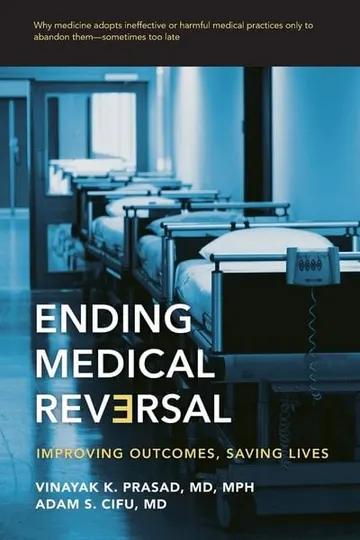
Ending Medical Reversal (opens Bookshop.org)
Vinayak K. Prasad and Adam S. Cifu · 2015
Oncologist Vinayak Prasad and physician Adam Cifu show how treatments approved on lab-value stand-ins were later found not to help patients live longer or better.
Read the news better, every morning.
We send you the day's real progress in science, medicine and beyond, told plainly and sourced. Free, forever.
Free forever, no spam. One click to unsubscribe, and we never sell your email.