The Field Guide · No. 30
Pre-registration: locking in the plan before the data arrive
Pre-registration means a study's hypothesis, methods, and analysis plan are filed publicly before any data are collected, closing off room to change the question afterward.
Updated
Pre-registration means a study's hypothesis, methods, and planned analysis are written down and filed publicly before the researchers collect or look at their data. The point is to close off a quiet but powerful source of bias: the freedom to try several outcomes, subgroups, or analyses after seeing the results and then report only the ones that turned out significant, while the plan filed in advance draws a clear line between what was tested first and what was found afterward.
A widely cited illustration comes from large, publicly funded heart and lung trials in the United States. Comparing trials completed before and after the year 2000, when prospective registration in a public database became standard practice for this kind of trial, researchers found that the share reporting a significant benefit for the treatment being tested fell sharply, from the majority of earlier trials to a small minority of later ones.
Two traps follow. First, a study that reports a striking result without having pre-registered its hypothesis leaves open the possibility that the reported outcome was chosen, consciously or not, after the researchers had already seen which one looked best. Second, pre-registration does not guarantee a study is well designed or its result is correct. It only guarantees that the plan cannot have been quietly reshaped by the data.
When a study makes a strong claim, look for a pre-registration record, such as a registry entry or a published protocol, filed before the study began, and check whether the outcome being celebrated matches the one that was originally planned. A result that matches its pre-registered plan deserves more confidence than one that emerged from an analysis assembled after the data were already in hand. Pair a striking finding with a look at its registration date relative to when data collection began.
What to remember
- Pre-registration files a study's hypothesis and analysis plan publicly before data collection begins.
- Large NHLBI-funded heart trials saw far fewer significant results once prospective registration became standard after 2000.
- A pre-registered result deserves more confidence, but registration alone does not make a study's design or result correct.
From the record
17 of 30 studies (57%) published prior to 2000 showed a significant benefit of intervention on the primary outcome in comparison to only 2 among the 25 (8%) trials published after 2000
Asked often
What changed in large clinical trials after prospective registration became standard?
A study of large NHLBI-funded heart and lung trials found that 57 percent of those published before 2000 reported a significant benefit on their main outcome, compared with only 8 percent of those published after 2000, once prospective registration had become the norm. The authors linked the shift to registration closing off room to redefine the primary outcome after seeing the data.
Does pre-registration guarantee a study's result is correct?
No. It only guarantees that the hypothesis and analysis plan were fixed before the data were seen, closing off one specific source of bias. A pre-registered study can still be poorly designed or underpowered, so registration is one signal to check, not a substitute for judging the whole study.
Further reading
Go deeper
Paid link. If you buy a book through this link, Bookshop.org pays us a small commission and sends a share of the sale to independent bookstores.
-
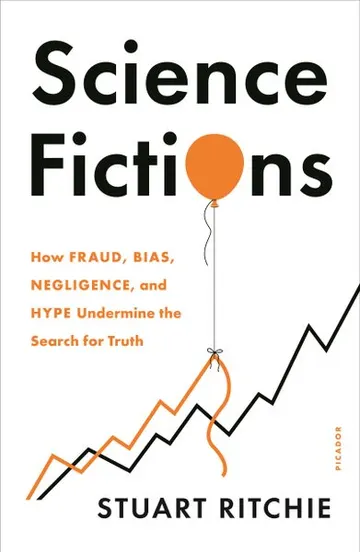
Science Fictions (opens Bookshop.org)
Stuart Ritchie · 2020
Stuart Ritchie explains p-hacking and flexible analysis, and makes the case for registering hypotheses and methods in advance so that researchers cannot change the question afterward.
Read the news better, every morning.
We send you the day's real progress in science, medicine and beyond, told plainly and sourced. Free, forever.
Free forever, no spam. One click to unsubscribe, and we never sell your email.