





The daily edition · July 13, 2026

A frog's gut bacteria erases tumors, and teens are safer than ever

8 discoveries · 14 good-news notes · 151 articles read · a 10-minute read

Your morning brief

Start here. The whole hopeful picture.

a 10-minute read

The feel-good story of the day

an older man powerlifting NASA (via rawpixel)
Pictured an older man powerlifting

A bypass survivor who became a national champion at 73

D V Shankar Rao spent his career as a bank officer in Bhadrachalam, Telangana, turning down promotions more than once because they would have meant leaving the community he served. In 2012, at 60, years of smoking and an unhealthy diet caught up with him: he needed coronary artery bypass surgery. Most people would have taken that as a signal to slow down.

Rao didn't. He kept walking and practicing yoga for over a decade, and in February 2025, after a friend spent months nudging him, he finally walked into a local gym. His coach, G V Rami Reddy, built him a careful, medically supervised program. Within six months, Rao was a National Masters Classic Powerlifting Champion, with gold medals in squat, bench press, and deadlift, plus the overall title.

"I felt regenerated. I felt like I had been given a new life," he says of the years since his surgery. He still trains at the gym in Bhadrachalam, under the same coach, watched by younger athletes who pause to see what a 73-year-old can lift.

The common thread · How today's discoveries connect Open editor's note
Fresh today · July 13, 2026

The discoveries, in full

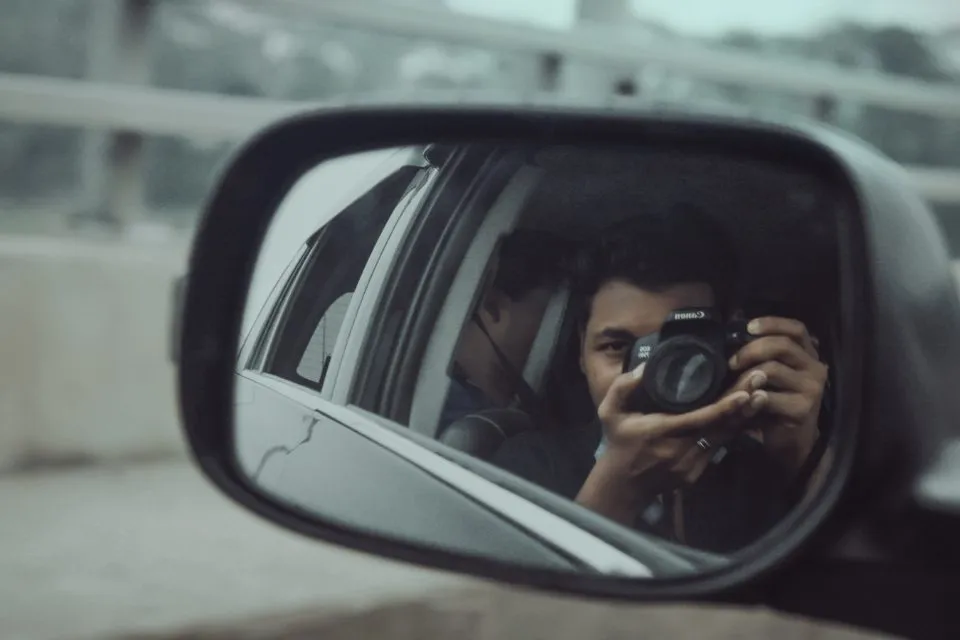
a person driving a car
Pictured a person driving a car · Tarikul Raana (via stocksnap)
01/08 Natural Sci.

Your brain can learn to actually multitask, not just switch fast

Georgetown researchers had volunteers sort morphed images of cars into two categories, more than 30,000 times each, over five to ten weeks, using a smartphone game [2].

Early on, the task lit up the prefrontal cortex, the brain's effortful, conscious-decision hub. After all that practice, brain scans showed something remarkable: the skill had moved out of the prefrontal cortex and into specialized circuits that could run largely on their own, freeing the "thinking" part of the brain to do something else at the same time. "There is actually a way to remodel your brain architecture and use other parts of your brain," said senior author Maximilian Riesenhuber [2].

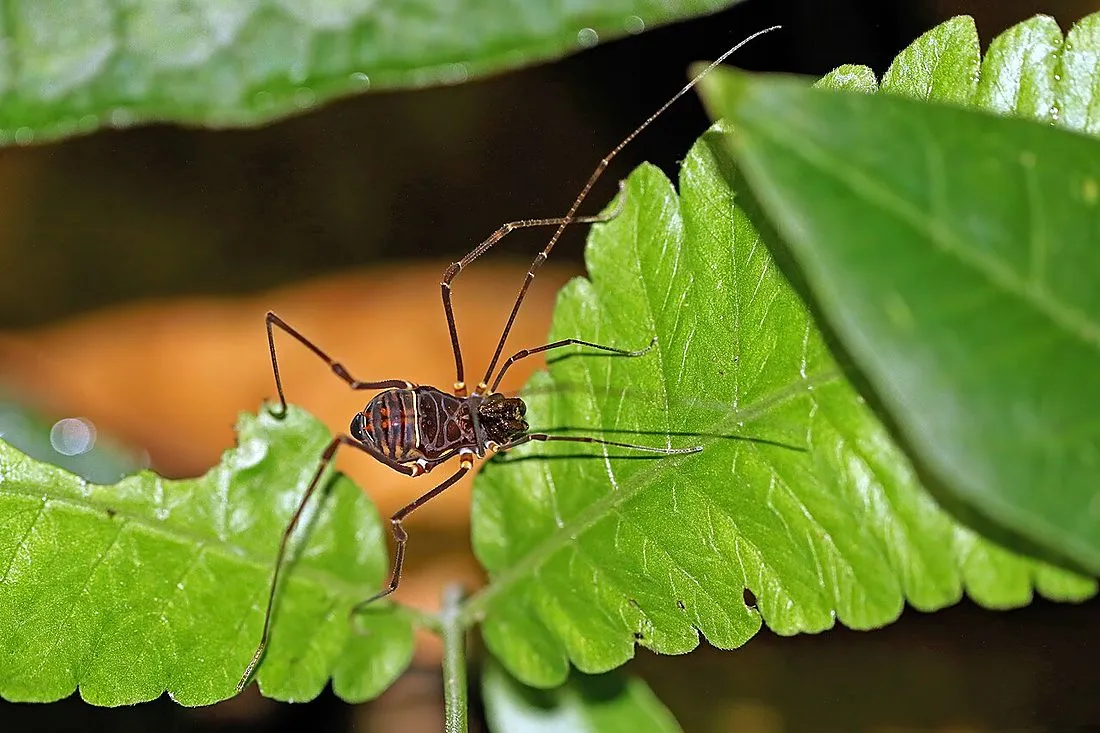
a harvestman arachnid
Pictured a harvestman arachnid · Charles J. Sharp (Wikimedia Commons)
02/08 Natural Sci.

Citizen scientists just doubled what we know about fatherhood's origins

Harvestmen, the long-legged, spider-like arachnids most people call daddy longlegs, hold more than half of every independently evolved example of paternal care known among arthropods [3].

A team led by Glauco Machado at the University of São Paulo combined nearly 30 years of fieldwork with photos submitted by ordinary nature-lovers on iNaturalist, and in the process more than doubled the documented cases of egg-guarding behavior. The pattern that emerged was messier than expected: maternal care always evolved from species with no care at all, but paternal care took two separate routes, sometimes arising directly, sometimes evolving out of maternal guarding after males started favoring females who were already tending eggs [3].

Today Got Better
03/08 Psychology

The more hot yoga you do, the less severe your depression gets

Researchers led by Daniel Copeland of MIT and Massachusetts General Hospital reanalyzed a randomized trial of eighty adults with moderate to severe depression, half assigned to eight weeks of ninety-minute heated yoga classes at 105 degrees Fahrenheit, half to a waitlist [52].

The new analysis found a genuine dose-response relationship: the more classes a person attended, the more their depression eased, the same kind of curve pharmacologists look for when they're trying to prove a drug actually works.

a group of teenagers
Pictured a group of teenagers · Unknown (via rawpixel)
04/08 Social Sci.

American teenagers today are dramatically safer than the ones we're nostalgic for

The teen birth rate hit a record high of 61.8 per 1,000 girls aged 15 to 19 in 1991; by 2025 it had fallen 81 percent, about half a million fewer teen births every year [79].

It isn't an isolated number. Teen drinking, smoking, fighting, and drug use have all collapsed since the 1990s peak, juvenile arrests are down from their 1996 high of nearly 2.7 million, and a teenager today is roughly a third less likely to die than one was in 1990.

a rocket launch at a coastal launch site
Pictured a rocket launch at a coastal launch site · SpaceX (via stocksnap)
05/08 Technology

China caught a rocket booster with a net, and stuck the landing

On July 10th, China's Long March-10B lifted off from the Hainan International Commercial Aerospace Launch Center, and about six minutes after launch, its first-stage booster was secured by a specially designed vessel using a net and cable recovery system waiting off the coast [41].

It's the first time any country has recovered a booster this way, the first maritime rocket recovery for China, and only the fifth orbital-class rocket system ever recovered after a propulsive landing, joining a short list that includes SpaceX's Falcon 9 and Rocket Lab's Electron.

a Japanese tree frog
Pictured a Japanese tree frog · artinstitutechicago (via rawpixel)
06/08 Good News

A bacterium from a frog's gut wiped out tumors with a single dose

A team led by Professor Eijiro Miyako at Japan's Advanced Institute of Science and Technology screened 45 bacterial strains pulled from the intestines of tree frogs, fire belly newts, and grass lizards, looking for anything with anti-tumor activity [130].

One strain, isolated from a Japanese tree frog and named Ewingella americana, achieved a 100% tumor elimination rate in mice with colorectal cancer after a single intravenous dose, beating standard treatments including a checkpoint inhibitor and a chemotherapy drug, while engaging the animal's own immune system to finish the job.

an older woman exercising outdoors
Pictured an older woman exercising outdoors · Shixart1985 (Wikimedia Commons)
07/08 Good News

A single injection reversed osteoarthritis in weeks, not years

A University of Colorado Boulder team led by Stephanie Bryant built two therapies in just two years: a regenerative injection that delivers an already-FDA-approved drug into a joint in sustained bursts over months, and a biomaterial repair kit, injected arthroscopically, that recruits the body's own cells to patch holes in damaged cartilage [127].

In animals with arthritic joints, the injection brought joints back to a healthy state within four to eight weeks; where the team patched cartilage or bone defects directly, they saw what Bryant called "full regeneration and repair."

LIGO Hanford Observatory
Pictured LIGO Hanford Observatory · Nkij (Wikimedia Commons)
08/08 Human Stories

Astronomers are catching black holes that were built from earlier black holes

In 2015, LIGO made the first-ever direct detection of a gravitational wave, from two black holes of about 36 and 29 solar masses spiraling together [149]. Eleven years later, as of June 2026, that count stands at 390 confirmed detections.

Some of the black holes being found are heavier than a single dying star should be able to produce on its own, and the leading explanation is that they are "second generation": black holes that already merged once before, then merged again.

Fresh today · July 13, 2026

Good news you might have missed

Roman 'Genius' Spirit Statue Buried 1,600 Years Ago Found by Hadrian's Wall An archaeologist at Vindolanda Fort spotted an oddly shaped flagstone and uncovered a 1.5-foot sandstone relief of a protective "genius" spirit, deliberately buried under a 4th-century barracks floor sixteen centuries ago, cornucopia and all [128]. Good News Network
My Dad Just Walked the Equivalent of Earth's Circumference, It Took Him 14 Years and 49 Pairs of New Balance Russell Mumper set out in 2012 to walk 24,901 miles, and on June 25 he crossed his own finish line in the driveway, after 5,900 walks, roughly 55 million steps, and 49 worn-out pairs of sneakers [129]. Good News Network
With 100% Youth-Led Nonprofit, Teen Is Breaking Down Mental Health Stigmas for Teens of Color Sarah Shelke started Mind4Youth as an Instagram account at 14; it's now active in 171 chapters across more than 70 countries, handing out free therapy sessions and self-care kits to teens who'd otherwise never reach them [132]. Nice News
The City That Chose Beauty Over Billboards In 2015 Grenoble tore down 326 advertising billboards and columns and planted trees in their place, becoming the first city in Europe to ban outdoor advertising entirely [133]. Reasons to be Cheerful
A Lonely 4-Year-Old's Daily Wave Brought an Entire Neighborhood Together Four-year-old Roman Butzlaff just wanted to say hi to passersby in Concord, North Carolina; a year later, a dozen once-strangers show up to his soccer games and his birthday party [134]. Sunny Skyz
The first gallery built exclusively to represent women artists Jean-Baptiste Bettencourt watched his artist mother quietly set aside her own work to support his father's career, so he built a gallery that gets women artists' work in front of buyers, not just into group shows [143]. The Optimist Daily
Greece launches nanosatellite system to catch wildfires early Ordinary satellites can't spot a wildfire until it's the size of a cruise ship; Greece's new four-satellite constellation catches one at 13 feet across, with hourly updates and no coverage gaps [144]. The Optimist Daily
Make Hospital Food Healthier: Trump Administration Endorses Plant Proteins Over Processed Meat A new federal pledge is asking US hospitals to cut ultra-processed and processed meat from patient meals and prioritize plant proteins instead [116]. Green Queen
Novel Foods Expert Network Raises $650,000 to Fast-Track Regulatory Approvals in UK & Europe A UK network connecting cultivated-meat and precision-fermentation startups with regulators just landed $650,000 to speed up the slow, expensive process of getting new proteins approved [115]. Green Queen
Better diets are linked to sharper focus in teens with attention disorders In a small Australian study, teens with ADHD who ate closer to a Mediterranean pattern, more omega-3s, more antioxidants, showed real improvements in attention [48]. PsyPost
The real mystery behind Moana: After 1,700 years, why did Polynesians suddenly sail east? New climate evidence may finally explain the Pacific's "long pause," the 1,700 years between the Lapita settling Samoa and Tonga and their descendants suddenly launching double-hulled canoes toward Hawaii, New Zealand, and Rapa Nui [86]. Ars Technica
Vantablack: World's Blackest Paint Could Solve A Major Problem For Astronomy Coat a satellite in Vantablack 310 and it reflects just 2 percent of sunlight back to Earth, potentially quiet enough to stop the growing swarm of satellites from washing out astronomers' view of the night sky [36]. ScienceAlert
How One Video Helped Delhi Street Children Get Books, Rations & Hope From 8 Indian States A video about Krishna Kumar's free evening classroom for begging children on a Delhi sidewalk reached 1.3 million people, and strangers across eight states sent ration kits, school supplies, and tents in response [136]. The Better India
PhD Student Transforms Balcony at Kerala Uni into Stunning, 'Healing' Vertical Garden Reshma PR turned a first-floor balcony into a 50-square-foot indoor garden that measurably strips formaldehyde from the air, then gave it to stressed students as a place to sit and breathe [142]. The Better India

Everything we read today

Natural Sciences 41 articles
Life Sciences & Medicine 6 articles
Psychology & Behavioral Science 30 articles
Social Sciences 8 articles
Technology & Innovation 29 articles
Plant-Based & Vegan 11 articles
Solutions & Good News 23 articles
Human Stories & Ideas 3 articles
The long view · not today's news, the story behind it

Today's discoveries didn't come from nowhere. Here's the older, ongoing story they belong to, a moment from this day in history, and a question to test what stuck.

The story so far

On this day in science

1919 The first two-way flight across the Atlantic by air The British airship R34 landed in England, completing the first return journey across the Atlantic by air after 182 hours aloft. It proved that ocean crossings by air could work in both directions. More from the Almanac →

Before you go: today's quiz

The daily quiz

Filtering and chlorinating city water caused a huge fall in deaths in early 1900s America. About what share of the urban mortality decline did it explain?

Reveal the answer

About 43 percent

Economists Cutler and Miller calculated clean water was responsible for about 43 percent of the total fall in death rates across 13 US cities from 1900 to 1936.

See the Lifesaver →

Get this every morning.

Liked today's? Wake up to tomorrow's, in one short letter.

The full letter, every morning, free for good.

Same free letter, plus the reason it stays that way: no ads, no investors, no agenda but the good news itself.

A single gift of any amount. No account, never a recurring charge.