


July 4, 2026

Hobbit humans dined on dragon scraps, and smell wires us to mice

7 discoveries · 13 good-news notes · 178 articles read
Natural Sci.

For two decades, scientists assumed Homo floresiensis, the meter-tall humans who lived on the Indonesian island of Flores until about 50,000 years ago, were capable hunters who cooked their prey over fire. A new study says no.

Read the full story
Natural Sci.

The Scythians rode the Eurasian steppe from Siberia to the Black Sea for nearly a thousand years, left no written language, and inspired ancient Greek accounts of warrior women who may have become the myth of the Amazons. A new study sequenced DNA from 85 Iron Age Scythians, 38 elite and 47 non-elite, across 20...

Read the full story
Natural Sci.Life Sciences

Two complementary research teams at Northwestern University, one studying mice, one studying humans, came at olfaction from opposite ends and found themselves describing the same machine. In the mouse study, researchers built a robotic multi-camera system to track free-roaming mice and noticed that when a mouse...

Read the full story
Natural Sci.Technology

The Neil Gehrels Swift Observatory launched in 2004, built to study gamma-ray bursts, the brightest explosions in the universe. Over two decades it catalogued 1,800 of them and made discoveries about supernovas, comets, black holes, and planets.

Read the full story
Life Sciences

The participants in the RECOVER trial were not ordinary depression patients. Each had already tried at least four treatments that failed.

Read the full story
Natural Sci.Technology

On June 30, 2026, the Vera C. Rubin Observatory on a mountaintop in Chile officially began its Legacy Survey of Space and Time.

Read the full story
Natural Sci.

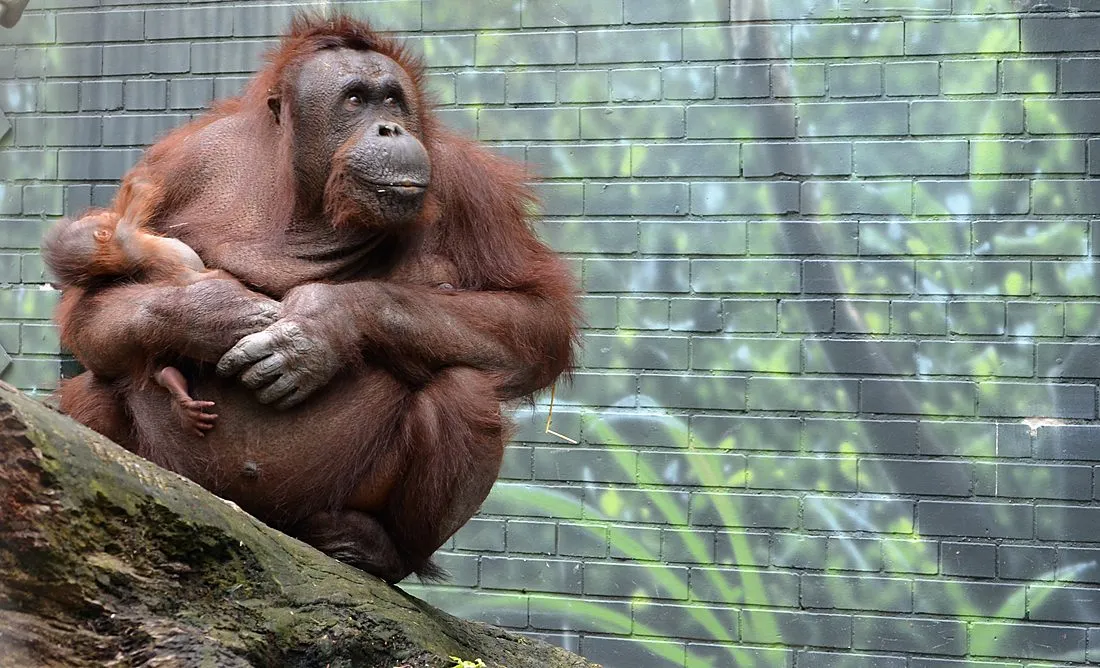
Orangutans are among the most solitary of the great apes. A mother raises one infant alone for six to seven years, rarely encountering other adults.

Read the full story

The feel-good story of the day

acoustic guitar musician stage performance blondinrikard (via Openverse)

Born on the Fourth: Bill Withers Overcame a Stutter to Write "Lean on Me"

Bill Withers was born on July 4, 1938, in Slab Fork, West Virginia, a coal-mining town of a few hundred people. He grew up with a stutter so severe that he avoided speaking at school. At 18, he enlisted in the Navy, and over nine years of service he overcame it, not through therapy but through the daily necessity of talking.

When he left the Navy, Withers moved to Los Angeles and worked in aircraft parts factories while teaching himself guitar and writing songs at night. He was 32 when he released Just as I Am. "Ain't No Sunshine" followed, then "Lean on Me," then "Use Me" and "Just the Two of Us." He won three Grammys and eventually entered the Rock and Roll Hall of Fame. After "Ain't No Sunshine" became a hit, he kept his factory job for months because he thought the music business was too fickle to trust.

He retired from recording in the mid-1980s while still commercially successful and lived quietly in Los Angeles until his death in 2020. The songs stayed. "Lean on Me" has been sung at funerals and inaugurations, at bedsides and in schoolyards, by children who have never heard of Sussex Records. On this 250th birthday of the country where he was born into hard circumstances and found his voice anyway, he seems worth remembering.

The discoveries, in full

Natural Sci.

The Hobbits Ate What the Komodo Dragons Left Behind

For two decades, scientists assumed Homo floresiensis, the meter-tall humans who lived on the Indonesian island of Flores until about 50,000 years ago, were capable hunters who cooked their prey over fire.
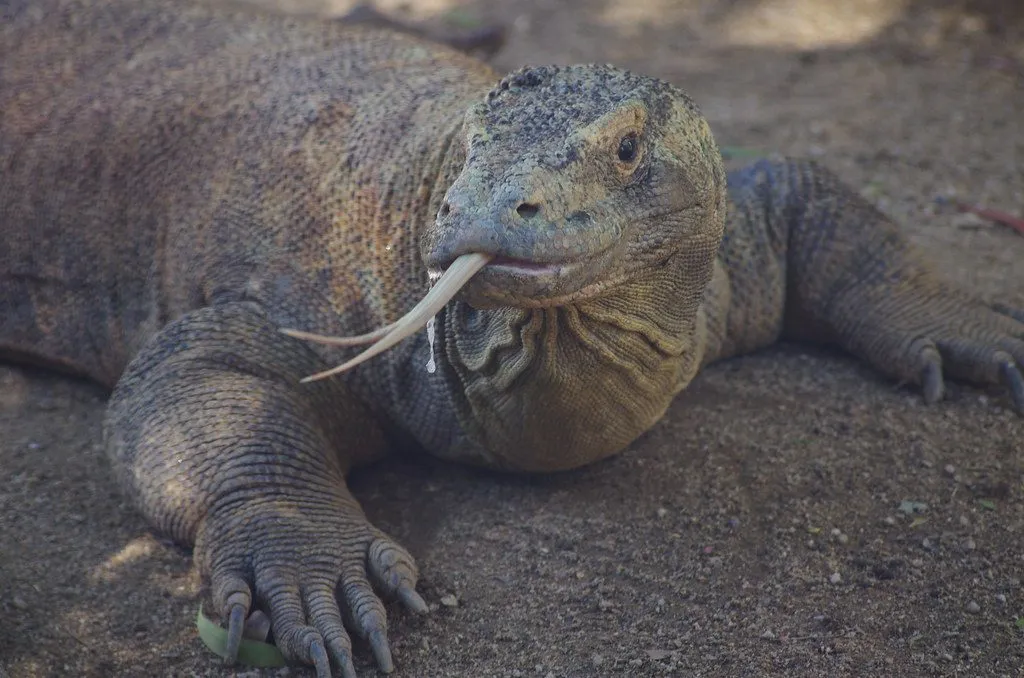
A new study says no. Researchers fed a dead goat to a captive Komodo dragon at Zoo Atlanta, then documented every tooth mark on the 72 remaining bones [1]. They compared those patterns to more than 3,000 Stegodon bone fragments found at Liang Bua cave, where hobbit remains and stone tools had been recovered. The Komodo dragon's bite marks clustered on the meaty haunches, exactly where any predator would eat first. The cut marks from hobbit stone tools clustered on skulls and thoracic vertebrae, the last scraps anyone would take if they had first pick [5]. Of more than 3,000 Stegodon bones associated with the hobbits, only one showed any exposure to fire. The hobbits, it appears, arrived after the Komodo dragon finished eating, scraped raw meat from the bones, and moved on.

What each field noticed (2)
Live Science

Diminutive species 'the Hobbit' did not hunt or control fire

Live Science focused on what this means for hobbit cognition. The finding undercuts the assumption that Homo floresiensis hunted big game and used fire, both behaviors linked to advanced cognition. Researcher Elizabeth Veatch of the Smithsonian noted that the field has clung to the idea that reaching an island and surviving there must have required some advanced intelligence, regardless of brain size [1].

Read the story
New Scientist

'Hobbit' hominins scavenged meat left over by Komodo dragons

New Scientist highlighted the experimental ingenuity. Because Stegodon is extinct, the team couldn't feed one to a Komodo dragon, so they used a goat as a proxy. The researchers then compared those fresh marks to ancient fossil patterns across roughly 10,000 bones, also checking for fire exposure. Nearly none of the hobbit-associated bones showed burning [5].

Read the story
Natural Sci.

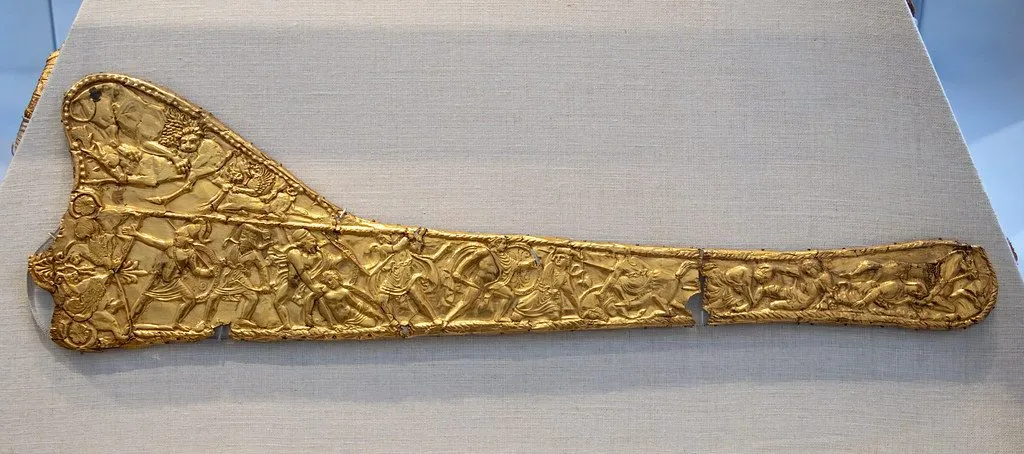
The Scythians Had an Aristocratic Bloodline That Spanned the Eurasian Steppe

The Scythians rode the Eurasian steppe from Siberia to the Black Sea for nearly a thousand years, left no written language, and inspired ancient Greek accounts of warrior women who may have become the myth of the Amazons.

A new study sequenced DNA from 85 Iron Age Scythians, 38 elite and 47 non-elite, across 20 archaeological sites spanning 700 years, and found that elite individuals were 11 times more likely to be genetically related to other elites than to the non-elites buried nearby [2]. Brothers turned up at sites hundreds of kilometers apart. Grandfathers and grandsons appeared in different cemeteries, all richly furnished with gold weapons and animal-themed jewelry. The study also resolved a decades-long debate about the "Golden Man" of Issyk, Kazakhstan, buried around 400 to 300 BCE with more than 4,000 gold ornaments, a gold-embroidered headdress, and a silver bowl bearing an undeciphered inscription. The DNA says: almost certainly male [17].

What each field noticed (2)
Live Science

Elite families ruled nomadic Scythian society 2,500 years ago

Live Science focused on the social implications. Hereditary inequality arose among the Scythians around 900 BCE. The elite relatives weren't simply clustered in the same cemetery; they were spread across vast territories in what researchers call possible "centralization zones," suggesting that dynastic families controlled the steppe from particular anchored locations, even while remaining nominally nomadic [2].

Read the story
Natural Sci. Life Sciences

Mice and Humans Smell the World Through the Same Ancient Brain Wiring

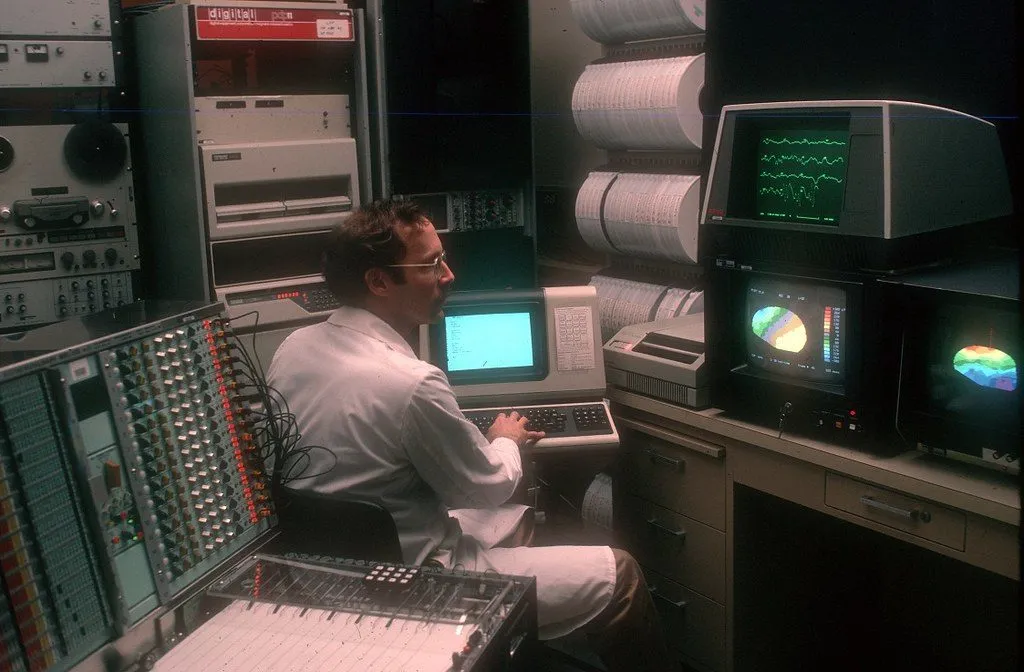
Two complementary research teams at Northwestern University, one studying mice, one studying humans, came at olfaction from opposite ends and found themselves describing the same machine.

In the mouse study, researchers built a robotic multi-camera system to track free-roaming mice and noticed that when a mouse picks up a piece of food, it occasionally pauses and takes a single deliberate sniff, the way you lean into a cantaloupe at the grocery store. When researchers chemically blocked the mouse's sense of smell, the behavior continued. When they silenced the motor cortex, the brain region responsible for intentional action, it stopped entirely [18]. In the human study, researchers placed recording arrays inside the olfactory bulbs of conscious volunteers and found that a single deliberate human inhalation triggers theta oscillations at 2 to 8 Hz, the exact frequency range at which mice physically sniff. Humans breathe roughly ten times slower than mice, yet the brain generates this internal rhythm independently of breathing rate, packaging odor data into windows identical to a mouse's sniff tempo [38].

What each field noticed (2)
Phys.org

Mammals use the same underlying system — preserved through evolution

Phys.org framed this as evolutionary evidence. The fact that mice and humans arrive at the same neural solution for smell through completely different anatomical structures, and do so at the same frequency, suggests these systems were locked in before the mammal lineage split. The single volitional sniff is a conserved design principle [18].

Neuroscience News

Humans and Mice Share Identical Brain Wiring for Smell

Neuroscience News emphasized the clinical implications. Disruptions in how people sample their environment through smell appear early in autism, Alzheimer's disease, and Parkinson's disease. Now that the baseline mammalian wiring is mapped, and confirmed to be shared with mice, mouse models become much more reliable for studying early pathological changes in human neurodegenerative disease [38].

Read the story
Natural Sci. Technology

A Tiny Satellite Just Launched to Rescue a Falling Space Telescope

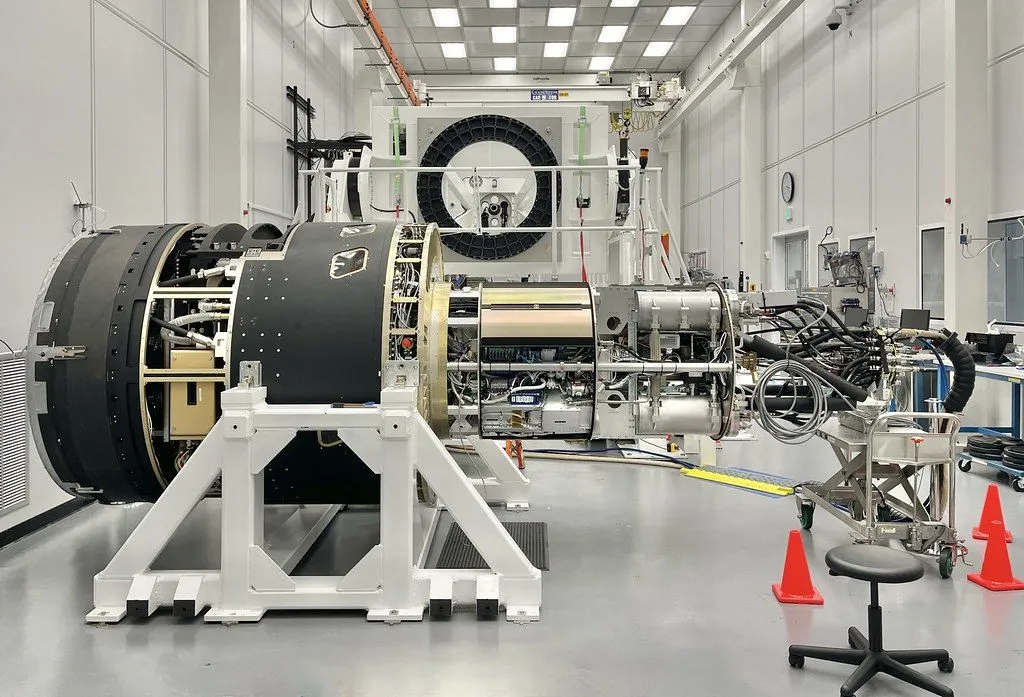
The Neil Gehrels Swift Observatory launched in 2004, built to study gamma-ray bursts, the brightest explosions in the universe. Over two decades it catalogued 1,800 of them and made discoveries about supernovas, comets, black holes, and planets.

Now it's falling. Solar flares have repeatedly puffed Earth's outer atmosphere, increasing drag, and Swift's orbit has decayed from its original 600 kilometers to about 375 kilometers. Without intervention, reentry and burnup within months [7]. On July 3, a satellite called LINK, built by Arizona startup Katalyst Space Technologies, launched aboard the last scheduled flight of Northrop Grumman's Pegasus XL rocket, dropped from the belly of a modified L-1011 jetliner over the Pacific Ocean. LINK is less than two meters tall, flanked by enormous solar panels. After weeks of approach, it will grab Swift with three robotic arms and push it slowly back to 600 kilometers over roughly two months. If it works, Swift gets a decade more [81].

What each field noticed (2)
Ars Technica

Rocket Report

Ars Technica reported the launch history: this was the Pegasus XL's final scheduled flight, ending an era for air-launched small satellites that had run since the 1990s. Two earlier attempts at Kwajalein Atoll were scrubbed for weather and a vehicle issue before the mission succeeded [81].

Read the story
Life Sciences

A Vagus Nerve Implant Is Helping 70% of Depression's Hardest Cases

The participants in the RECOVER trial were not ordinary depression patients. Each had already tried at least four treatments that failed.

The average person enrolled had tried 13, and had spent more than half of their lives sick with depression [26]. The trial enrolled 493 people. All received surgically implanted vagus nerve stimulators, small pacemaker-like devices tucked under the skin of the chest that send brief low-level electrical pulses to the left vagus nerve in the neck, which connects the brainstem to the heart, lungs, and digestive system. For the first 12 months, only half the devices were switched on, giving the trial a controlled comparison. The results over two years: about 69% of people with active stimulation had a meaningful improvement on at least one measure at 12 months. Of those who responded, more than 80% maintained or improved their benefits at 24 months, across depressive symptoms, quality of life, and daily functioning.

What each field noticed (1)
Natural Sci. Technology

The Vera C. Rubin Observatory Begins Its Ten-Year Movie of the Universe

On June 30, 2026, the Vera C. Rubin Observatory on a mountaintop in Chile officially began its Legacy Survey of Space and Time.

Every night for the next decade, its car-sized 3,200-megapixel camera will photograph the southern sky in 30-second exposures, compare each image to an archive, and issue public alerts within two minutes if anything changed. The observatory expects to detect between 7 and 8 million changes per night: flashing supernovas, streaking asteroids, colliding galaxies. The data will be publicly available almost in real time, to anyone who wants it. Chief scientist Tony Tyson: "In a sense, we're taking a digital color motion picture of the universe." Over ten years, the survey is designed to map dark matter and dark energy with unprecedented precision [4]. The same week, astronomer Vasily Belokurov won the 2026 Kavli Prize in Astrophysics for showing what large-scale sky surveys can already reveal: our galaxy, the Milky Way, experienced a massive merger billions of years ago that scattered its earliest stars into chaotic orbits still visible today. The Milky Way is already beginning to distort again, pulled by the gravitational weight of the Large Magellanic Cloud [123].

What each field noticed (2)
SingularityHub

The Milky Way Was Rewired by a Cataclysmic Collision

SingularityHub offered the deeper context from Belokurov's Kavli Prize: we now have fossil evidence, in the motions and chemical signatures of individual ancient stars, that the Milky Way was built by chaos. The galaxy we see as fixed and eternal assembled itself through violence and is heading toward another collision with Andromeda in roughly 4.5 billion years [123].

Read the story
Natural Sci.

Orangutan Mothers Deliberately Arrange Playdates for Their Young

Orangutans are among the most solitary of the great apes. A mother raises one infant alone for six to seven years, rarely encountering other adults.

Yet across 30,000 hours of observations of 31 wild Bornean orangutan mother-offspring pairs over 15 years at the Max Planck Institute, researchers found a consistent pattern: mothers with similarly aged young spent a disproportionate amount of time together, and the youngsters played [8]. The distance the mothers traveled increased in the days before and after these meetups, as they made deliberate excursions into neighboring territories. This extra traveling came at a direct cost: less foraging for the mother. And the meetups happened regardless of fruit availability in the area, ruling out the simpler explanation that mothers converge on food and happen to meet. Play was more likely when the mothers were closely related.

What each field noticed (1)
New Scientist

Orangutan mothers seem to plan playdates for their offspring

New Scientist noted the careful framing around intentionality: it is nearly impossible to prove from behavioral data alone that an animal is making a plan, but the pattern, extra travel, foraging cost, independence from food, and targeting of mothers with similarly aged young, is exactly what you'd predict if social choice were happening. Researcher Zarin Machanda of Tufts observed that orangutan males do have to fight as adults, so they have to practice the relevant skills somewhere [8].

Read the story

Good news you might have missed

XL20 Crosses Blood-Brain Barrier to Shield ALS Neurons After a decade of mapping the TDP-43 protein that drives nearly all ALS cases, University of Arizona researchers engineered a small molecule called XL20 that crosses the blood-brain barrier, binds the specific toxic region of TDP-43 without disrupting healthy protein function, extended survival and preserved motor neurons in animal models, and reversed ongoing damage in human motor neurons grown from spinal cord cells in the lab [37]. Neuroscience News
A device that revives eyeballs from dead donors could make eye transplants possible A sealed perfusion device called ECaBox keeps surgically removed eyes viable for 10 hours or more and restored their ability to respond to light within 15 minutes of being connected, raising the possibility of functional whole-eye transplants; earlier attempts produced transplanted eyes that could not see [108]. MIT Technology Review
Yet More Scrolls Burned by Vesuvius Are Decoded by AI Using CT scans and machine learning from the Vesuvius Challenge, researchers have now recovered texts from the Herculaneum library buried by the 79 CE eruption, including Book 8 of Philodemus's On Gods and philosophical writing by a Stoic author previously unknown to history [151]. Good News Network
A single dose of psilocybin reduces reward-seeking behavior by altering inhibitory brain cells One dose of psilocybin reduced impulsive reward-seeking in rats by activating parvalbumin interneurons wrapped in perineuronal nets in the dorsomedial prefrontal cortex, and the effect outlasted the drug by weeks, offering a concrete cellular mechanism for why psilocybin might help with addiction [51]. PsyPost
Fifth Company Ends Partnership With Milan Fashion Week Over Fur Tech company Lutech became the fifth major sponsor, following DHL, Visa, Wella, and mineral water brand Acqua Fiuggi, to cut ties with Milan Fashion Week over its continued use of fur, after a 47-day global campaign by the Coalition to Abolish the Fur Trade [134]. Plant Based News
New prison food rules: what the revised prison food policy means for imprisoned vegans England and Wales introduced a new Prison Food Policy Framework in February 2026 that formally recognizes ethical veganism as a protected belief under the Equality Act 2010, requires prisons to proactively provide vegan meals rather than waiting for complaints, and establishes consultation rights for imprisoned vegans [137]. The Vegan Society
Simply Add Water to Diesel Fuel to Cut Engine Pollution by 67% A review of global research found that mixing tiny suspended water droplets into diesel fuel, stabilized with surfactants and remaining stable for up to 60 days, reduces nitrogen oxide emissions by around 67% and cuts particulate matter significantly, with no loss in fuel efficiency and no engine redesign required [150]. Good News Network
Do falling birth rates boost per capita income? A major paper by Acemoglu, Autor, Beirne, and Scott finds lower birth rates are associated with higher GDP per working-age adult and higher wage growth across US commuting zones, driven largely by labor-saving technological innovation that kicks in when younger workers become scarce [76]. Marginal Revolution
How a 17-YO Helped 750 Domestic Workers Claim Government Benefits They Didn't Know About Troubled at 15 that his family's domestic worker had no health insurance, Ayaan Wadhwa in Mumbai spent a summer researching government welfare schemes for unorganized workers, translated the information into Hindi and Marathi, and ran workshops in housing societies until 750 workers had registered for accident insurance, housing grants, and pensions through India's e-Shram card [159]. The Better India
The Majestic 'Gloucester Tree' Reopens to Climbers in Australia After 3 Years of Repair After engineering and arborist work on its structure, the 250-year-old Gloucester Tree in Pemberton, Western Australia, a giant Karri eucalyptus where foresters once climbed 200 feet of iron pegs to watch for wildfires since 1947, has reopened to visitors with a new platform at 100 feet [149]. Good News Network
This Unfathomably Huge Fungal Network Keeps Earth Cool and Green Using machine learning trained on thousands of soil samples worldwide, scientists estimated that arbuscular mycorrhizal fungi form a subterranean network stretching 110 quadrillion kilometers, nearly a billion times the distance from Earth to the Sun, shuttling 4 billion metric tons of carbon per year, roughly 11% of humanity's total annual CO2 emissions [136]. Sentient
Taylor Swift and Travis Kelce Donate $26 Million to Charities in Honor of Their Wedding In the week of their wedding, Swift and Kelce donated $26 million to more than a dozen nonprofits including City Harvest, the ASPCA, Dolly Parton's Imagination Library, and regional food banks in Nashville, Kansas City, New York, and Los Angeles [148]. Good News Network
Artificial intelligence accurately charts sleep stages without intrusive brain sensors An AI trained on just three wearable measurements, blood oxygen levels, heart rate fluctuations, and abdominal breathing, can track sleep stages second by second with clinical accuracy, potentially replacing the wired overnight clinic setups that generate months-long waiting lists [44]. PsyPost

Everything we read today

Natural Sciences 32 articles
Life Sciences & Medicine 11 articles
Psychology & Behavioral Science 28 articles
Psyche | Know Your Self
Social Sciences 9 articles
Technology & Innovation 43 articles
Plant-Based & Vegan 23 articles
The Vegan Society - One world. Many lives. Our choice.
Solutions & Good News 28 articles
Human Stories & Ideas 4 articles

Get this every morning.

Liked today's? Wake up to tomorrow's, in one short letter.

It's free for everyone, always. If it makes your mornings better, you can help keep it that way.

Monthly

One-time