

July 3, 2026

A woman with Alzheimer's speaks again, and Southeast Asia nears the end of malaria

8 discoveries · 15 good-news notes · 269 articles read
TechnologyPsychology

A Japanese-American woman in her eighties had spent five years losing language to Alzheimer's, one syllable at a time. She could not walk on her own, and often did not know her family.
Read the full story
Natural Sci.

The LIGO, Virgo and KAGRA collaboration released its fifth catalog of gravitational waves and it is a big one. 161 new black hole collisions detected between April 2024 and January 2025, bringing the running total to 390 [8].

Read the full story
Technology

For a long time, vision, touch and hearing had beautiful maps in the brain. Smell did not.

Read the full story
Life Sciences

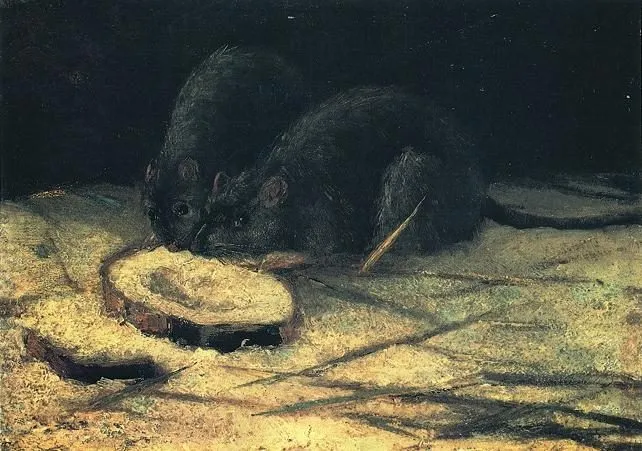
A now-classic 2011 experiment put a free rat in a cage with a bar of chocolate and another rat trapped in a small clear cylinder. The free rat learned how to release its cagemate, and would do so before touching the chocolate.

Read the full story
Good News

A team at the Beijing Institute of Process Engineering and Shenzhen University built a solar-driven desalination device that used 47.5 percent less energy than the current standard, and delivered 5.3 gallons of drinking water a day for a full year of testing [228]. The trick was structural.

Read the full story
Good News

Delegates met in Laos in June to talk about the last stretch of ridding the region of malaria [229]. Transmission in Vietnam, Cambodia and Laos has fallen 67 percent since 2010, and case counts are now down into the low hundreds.

Read the full story
Good News

Over the last three years Ford quietly brought back more than 350 senior engineers, some former staff, some from suppliers, all with grey in their beards [258]. The company had installed 9,000 AI cameras across its plants for quality control and built automated tools for vehicle design.

Read the full story
Good News

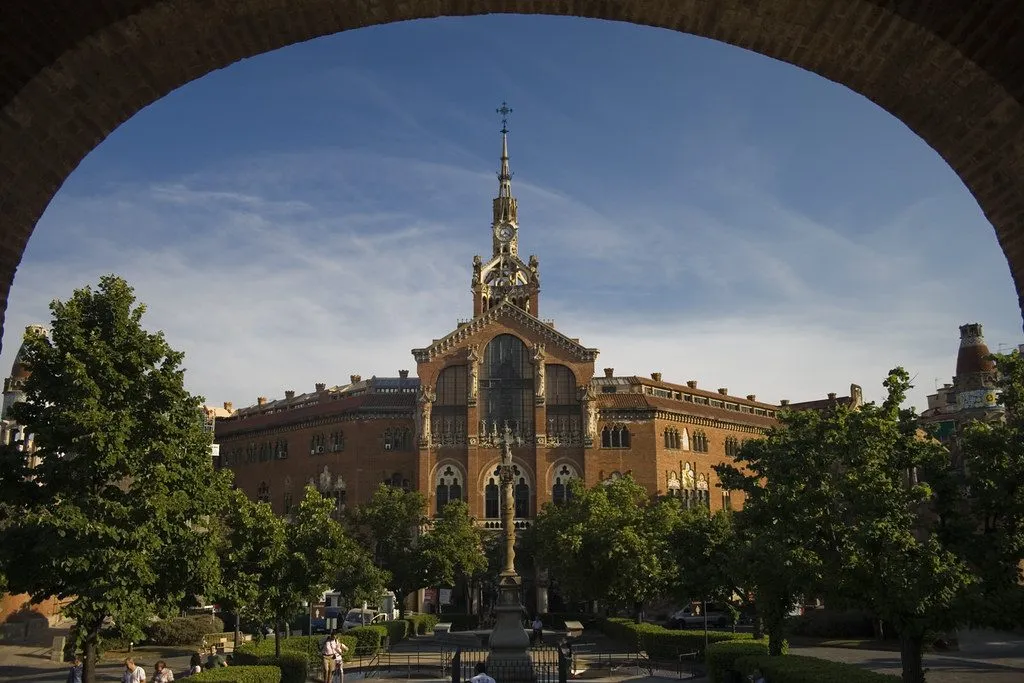
In 1896, a Catalan banker named Pau Gil i Serra died and left his fortune to build a hospital in Barcelona [253]. The architect Lluís Domènech i Montaner had studied physics and natural sciences before turning to buildings, and he had visited 240 hospitals around the world.

Read the full story

The feel-good story of the day

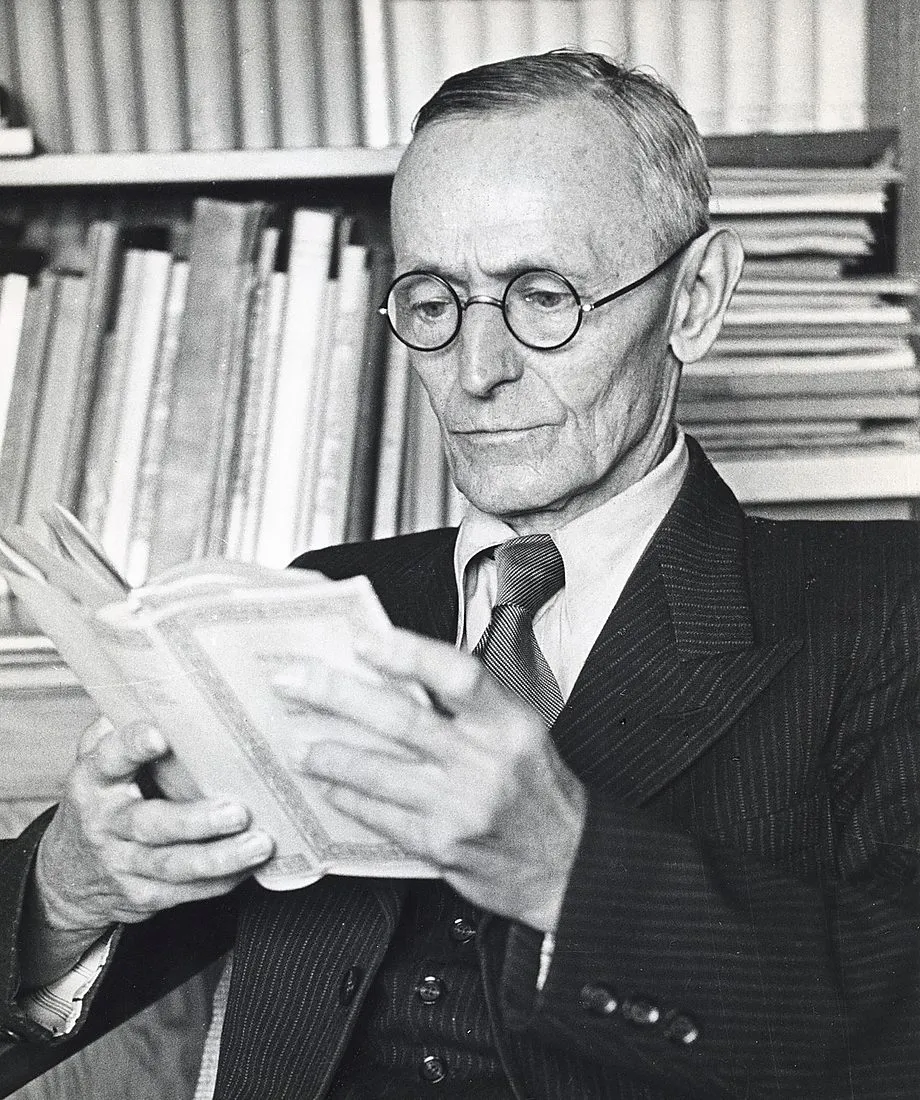
Hermann Hesse Wikimedia Commons / Hermann Hesse

The man who believed we suffer our way toward ourselves

Hermann Hesse was born on July 2, 1877, the day before this one, in the small German town of Calw. He would grow up to write Siddhartha, Steppenwolf and The Glass Bead Game, and to win the Nobel Prize in 1946. But what he really did was spend a long life arguing, gently and stubbornly, that a person's job is to become themselves, no matter how uncomfortable the becoming.

In 1919, he wrote a letter to a dispirited young German who had asked him what to do with his life. Hesse told him to stop imitating other people's voices and mistaking other people's faces for his own. He said suffering was not a thing to be avoided but a thing to be lived through with attention, because it was the raw material of a real self. "The ability to suffer well," he wrote, "is more than half of life. Indeed, it is all life."

He was not a saint. He struggled with depression and doubt his whole life, and he wrote about it plainly. That is what makes him worth remembering the morning after his birthday. He did not sell an easy answer. He told anyone who would listen that the hardest work of being alive was refusing to become someone else, and that this refusal was the closest thing we had to a calling. A century later, his books are still in print in more than sixty languages, and readers are still writing letters like the ones he received, asking the same old question and finding, in his careful, warm reply, permission to keep going.

The discoveries, in full

Technology Psychology

Psilocybin, a woman in her eighties, and a rare morning of full sentences

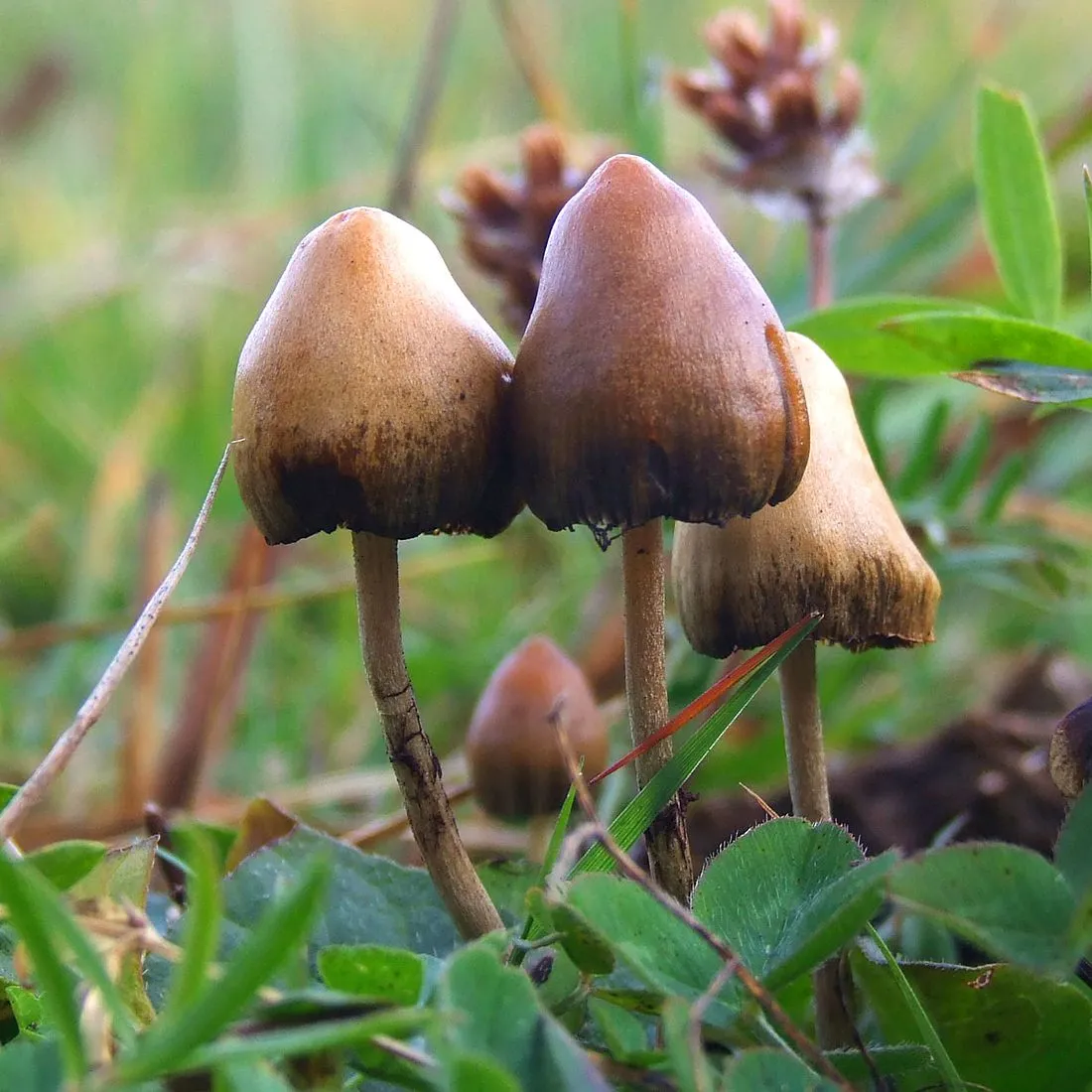
A Japanese-American woman in her eighties had spent five years losing language to Alzheimer's, one syllable at a time. She could not walk on her own, and often did not know her family.

Under medical supervision in Brazil, she was given a large dose of psilocybin. Three days later she was recounting memories and speaking in full sentences [201]. A week in, she was recognising family, asking where they were, pointing out cars that looked out of place. The team is careful about the story. It is one patient, no scans, no biomarkers, no cognitive tests, purely observational. They think psilocybin may have briefly opened a channel through the plaques and let dormant networks fire again [201]. In a separate Danish study of chronic cluster headache patients, psilocybin improved sleep quality in proportion to how many attacks it prevented [108].

What each field noticed (2)
SingularityHub

Woman With Alzheimer's Shows Striking Improvement After Taking Magic Mushrooms

The Hub frames this as the kind of single case that pushes a whole research programme forward. Alzheimer's affects roughly 40 million people worldwide, and treatments so far barely nudge the trajectory [201]. A trial testing whether psilocybin protects the aging brain is already running. The piece leans on cognitive reserve, the idea that some networks are still there, waiting, if you can wake them.

Read the story
Natural Sci.

161 new black hole collisions, and a signal that might come from before the stars

The LIGO, Virgo and KAGRA collaboration released its fifth catalog of gravitational waves and it is a big one. 161 new black hole collisions detected between April 2024 and January 2025, bringing the running total to 390 [8].

Among them: the clearest signal ever recorded, the most precise sky location for a merger to date, and the first measurement of three vibrational modes ringing off a black hole after it formed. The network is now catching three to four events every week [8]. And one of last November's signals is very strange. It looks like a merger involving something smaller than the sun. Stars cannot make a black hole that small. University of Miami physicists argue the best explanation is a primordial black hole, born in the first fraction of a second after the Big Bang, and possibly a piece of the dark matter puzzle [2].

What each field noticed (2)
Technology

The nose has a map, and we finally know how to read it

For a long time, vision, touch and hearing had beautiful maps in the brain. Smell did not.

The 1,100 or so olfactory receptors in a mouse nose seemed to scatter almost randomly across the tissue, and nobody could find the order. A team at Harvard Medical School has now found it. Each receptor has a home. It sits at a specific average position along the top-to-bottom axis of the nasal cavity, cleanly banded, like streets in a grid city [194]. A gene program of about 250 genes lays down the pattern, with retinoic acid acting as the painter's brush, telling each neuron where it is and which receptor to switch on [194].

What each field noticed (1)
New Atlas

A hidden map in your nose may hold the secret to smell

Sandeep Datta's group showed that when they changed the retinoic acid levels, the receptor map slid up or down the nose like a ruler across a page [194]. It is the kind of result that only feels obvious after you see it. New Atlas notes the practical reason to care: there are currently no effective treatments for loss of smell, and you cannot fix a system whose basic architecture you do not understand.

Read the story
Life Sciences

Rats will free a friend before they eat the chocolate

A now-classic 2011 experiment put a free rat in a cage with a bar of chocolate and another rat trapped in a small clear cylinder. The free rat learned how to release its cagemate, and would do so before touching the chocolate.

Then it shared the chocolate [67]. A new systematic audit tried to rule out easy explanations. Reflex? No. The helping only happens with rats they know, not strangers. Selfishness? No. The behaviour is directed at the other rat, not at getting a reward. The team broke empathy into five measurable dimensions and rats scored moderately to high on four of them. The one they don't do well: reading the other rat's specific mental state beyond immediate distress [67].

What each field noticed (1)
Neuroscience News

Rats Display Genuine Empathy

Neuroscience News is careful with the word empathy. Rats have a version of it, and it is not identical to ours. What they have is real, targeted, flexible, other-directed. What they seem to lack is the deep model of what is going on inside the other's head [67].

Read the story
Good News

Sunlight, seawater, and drinking water cheaper than the plastic bottle it comes in

A team at the Beijing Institute of Process Engineering and Shenzhen University built a solar-driven desalination device that used 47.5 percent less energy than the current standard, and delivered 5.3 gallons of drinking water a day for a full year of testing [228].

The trick was structural. Instead of the ultrafine solar-absorbing powders that used to clump like flour, they threaded billions of nanoparticle spheres onto polymer strands, like beads on a string. The result: 90.2 percent of incoming sunlight captured, spheres bouncing heat into each other, and enough evaporation to irrigate a 50-square-foot vegetable patch of bok choi, beans and corn all year round [228]. At scale, the researchers calculate the water would cost less per litre than bottled water.

What each field noticed (1)
Good News

Southeast Asia's malaria has fallen by two thirds, and the finish line is in sight

Delegates met in Laos in June to talk about the last stretch of ridding the region of malaria [229]. Transmission in Vietnam, Cambodia and Laos has fallen 67 percent since 2010, and case counts are now down into the low hundreds.

Lao Prime Minister Sonexay Siphandone told the summit his country is committed to elimination by 2030 [229]. To be certified malaria-free by the WHO, a country has to keep transmission broken for three straight years. Egypt got there recently. Cape Verde before that.

What each field noticed (1)
Good News Network

Southeast Asia Nears Malaria Elimination, Down Two-Thirds Since 2010

GNN credits three unglamorous things: better surveillance so cases are found sooner, wider access to diagnosis and treatment, and years of cooperation across borders that mosquitoes do not respect [229]. The harder countries are Myanmar and Thailand, both with big remote borders where health workers struggle to reach. The piece is honest that this last stretch is the most expensive part, and the easiest to under-fund when a case count looks like a rounding error.

Read the story
Good News

Ford rehires 350 veteran engineers, because the software could not remember what they knew

Over the last three years Ford quietly brought back more than 350 senior engineers, some former staff, some from suppliers, all with grey in their beards [258]. The company had installed 9,000 AI cameras across its plants for quality control and built automated tools for vehicle design.

It also lost hundreds of millions of dollars to recalls and warranty costs because the AI did not know what those engineers knew. "Artificial intelligence is a fantastic tool," Ford's Charles Poon told the Guardian, "but it's only as good as the information you use to train it." The rehires flagged failure points long before parts hit the plant floor. Ford says the move saved the company a billion dollars in 2026 [258].

What each field noticed (1)
Good News

A hundred-year-old Barcelona hospital built on the idea that beauty is medicine

In 1896, a Catalan banker named Pau Gil i Serra died and left his fortune to build a hospital in Barcelona [253]. The architect Lluís Domènech i Montaner had studied physics and natural sciences before turning to buildings, and he had visited 240 hospitals around the world.

What he built, the Hospital de Sant Pau, is a 16-pavilion "garden city of health" with stained glass, hand-painted mosaics, orange trees and lavender in the courtyards, and underground tunnels so supplies could move without disturbing the calm above. Domènech believed the space around a patient shaped how the patient healed. Light, colour, fresh air, a garden. Not decoration, not luxury, part of the cure [253].

What each field noticed (1)
Upworthy

What if hospitals were breathtakingly beautiful?

Upworthy sets Sant Pau against every buzzing fluorescent waiting room we have all sat in. The building operated as a working hospital until 2009. Domènech wrote that the structure, construction and decoration were "so linked that they form a single concept," a line worth taping above every clinic architect's desk [253].

Read the story

Good news you might have missed

New calculator reveals whether you should really worry about statin side effects Oxford built a free calculator, tested on 5.6 million people's records, that shows more than 98 percent of statin-eligible patients are at low risk for serious muscle side effects. Most of the fear turns out to be misplaced [1]. ScienceDaily
Hubble telescope spots 'impossible' light from a galaxy that shouldn't have been visible A tiny galaxy called MXDFz4.4, 100 times smaller than the Milky Way and forming stars ten times faster, is punching visible channels of ionising light through the cosmic fog of the early universe. It should not be doable, and it is [11]. Live Science
The hantavirus outbreak is over, WHO declares The Andes virus cluster that began on a cruise ship in April is done. 13 cases, careful contact tracing of 650 people across 33 countries, and no further cases since May 25. The feared global spread never came [12]. Live Science
Southeast Asia Nears Malaria Elimination Malaria cases across Vietnam, Cambodia and Laos are down 67 percent since 2010. Laos is aiming for zero by 2030 [229]. Good News Network
800 million people have gained access to electricity since 2010 Roughly 800 million more people can now flick a light switch than could 15 years ago. The global access rate sits at 92 percent, uneven, but real [233]. Positive News, from the WHO report
Europe pollution falls 3 to 5 percent annually Sulphur and nitrogen oxide emissions across Europe are dropping 3 to 5 percent every year, and transport sector CO2 fell from 1.10 to 1.05 billion tonnes between 2019 and 2024 as electric cars took hold [233]. Positive News
US Giving Grew 3 percent in 2025, Crossing the $600B Mark for the First Time Americans gave $617 billion to charity last year, the first time on record it crossed six hundred billion. Bequests alone jumped 16.6 percent to $62 billion [232]. Nice News
US nuclear battery meets July 4 goal as Unity reactor hits criticality in 150 days Houston startup Deployable Energy took its one-megawatt microreactor from concept to first controlled chain reaction at Idaho National Lab in 150 days [186]. Interesting Engineering
99 percent pure lithium extraction became possible with US scientists' new electrochemical method Chicago researchers pulled 99 percent pure lithium from a solution where sodium outnumbered lithium 1,000 to 1, using a cobalt-oxide filter that treats lithium ions like cars finding parking spaces. Cleaner batteries start here [178]. Interesting Engineering
Engineer Uses Aquaponics On Terrace to Harvest 500 Kg Veggies a Month Shashank Dubey quit a corporate job in Delhi, went home to Vadodara, and now grows 2,500 varieties of plants and enough vegetables to feed his family and neighbours, using 80 percent less water than a traditional farm [236]. The Better India
Green Boots identified after 30 years on Everest DNA has finally identified the climber in the small limestone cave at 8,500 metres on Everest's northeast ridge. He was Indian soldier Lance Naik Dorje Morup, who died in the 1996 storm. His family will have him home [248]. The Better India
Bath's newest bakery is already selling out daily and it's secretly 100 percent vegan Morso Bakery opened on Saville Row in Bath, sold out every day of its soft launch, and hasn't told most of its customers that the cinnamon buns and almond croissants they love are entirely plant-based [226]. Vegan Food & Living
3-Year-old Rescued After 6 Days Beneath Rubble in Venezuela Rescue teams from Brazil, Chile, Colombia, Ecuador, El Salvador, Mexico and Jordan flew into Caracas after two magnitude-7 earthquakes. A Jordanian team pulled a three-year-old named Klieber Moran out alive on day six [230]. Good News Network
In a Tribal Village in Manipur, Children Learn in Their Own Language Under Trees Instead of Classrooms At Khaangchu Education Centre in a remote Rongmei village, children learn maths by measuring shadows and are taught in their own language. Two young teachers, Ananya Mukherjee and Kabithui Rongmei, built the school after Kabithui watched his own village's classrooms fail him as a child [240]. The Better India
German Soccer Fan Moved to Tears After Discovering the America He Never Expected A German fan named Sebastian arrived in Boston for the World Cup half-expecting to be robbed. A stranger named Bob gave him a lift back to his hotel. He extended his trip. "Americans are not rude, Germans are not rude. If we are together, we can achieve great things" [235]. Sunny Skyz

Everything we read today

Natural Sciences 64 articles
PLOS One
Life Sciences & Medicine 37 articles
Psychiatric Times articles
Psychology & Behavioral Science 33 articles
Social Sciences 21 articles
Technology & Innovation 46 articles
Plant-Based & Vegan 25 articles
Solutions & Good News 35 articles
Reasons to be Cheerful
Human Stories & Ideas 8 articles

Get this every morning.

Liked today's? Wake up to tomorrow's, in one short letter.

It's free for everyone, always. If it makes your mornings better, you can help keep it that way.

Monthly

One-time