




July 6, 2026

A magnetar is born, and Alzheimer's reveals a new cell killer

7 discoveries · 14 good-news notes · 138 articles read
Natural Sci.

In 2024, a distant supernova called SN 2024afav started doing something no one had seen before. Its light was chirping.

Read the full story
Life Sciences

A decade ago, researchers at King's College London found an unusual cell death process in a rare disease, and spent the next ten years chasing it. The process is called karyoptosis.

Read the full story
Life Sciences

At the start of the study, 194 patients at Charité, the large university hospital in Berlin, rated their osteoarthritis knee pain at an average of 7 out of 10. They had already tried physiotherapy, anti-inflammatory drugs, and intra-articular injections.

Read the full story
Psychology

296 students in their first semester at the University of British Columbia, a moment when loneliness typically spikes, were randomly assigned to one of three groups: text a randomly matched peer every day, chat daily with a highly supportive AI program, or neither [38]. After several weeks, the students texting...

Read the full story
Technology

Project Nexus, a $20 million California state-funded pilot, installed solar canopies over two irrigation canals south of Modesto and tracked everything for a full irrigation season. The power numbers are real: the two test sections together generate 1.6 megawatts and cover an area about one and a half football...

Read the full story
Technology

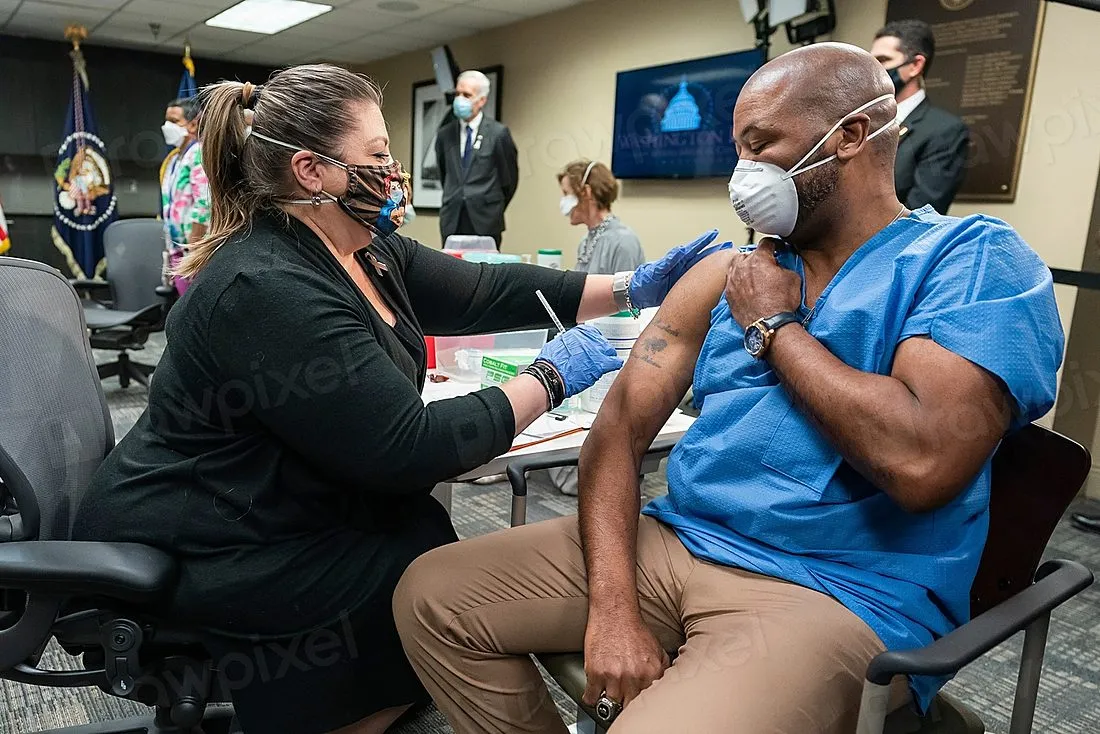
A team spanning Canada, Hong Kong, the UK, and the US spent years reviewing every stage of mRNA vaccine data: manufacturing, clinical trials, and real-world outcomes from billions of doses. Their review was published in The Lancet [69].

Read the full story
Life Sciences

The standard cholesterol test measures LDL: the amount of "bad" cholesterol by mass. The problem is that LDL doesn't count the number of particles, and it's the particles that do the damage.

Read the full story

The feel-good story of the day

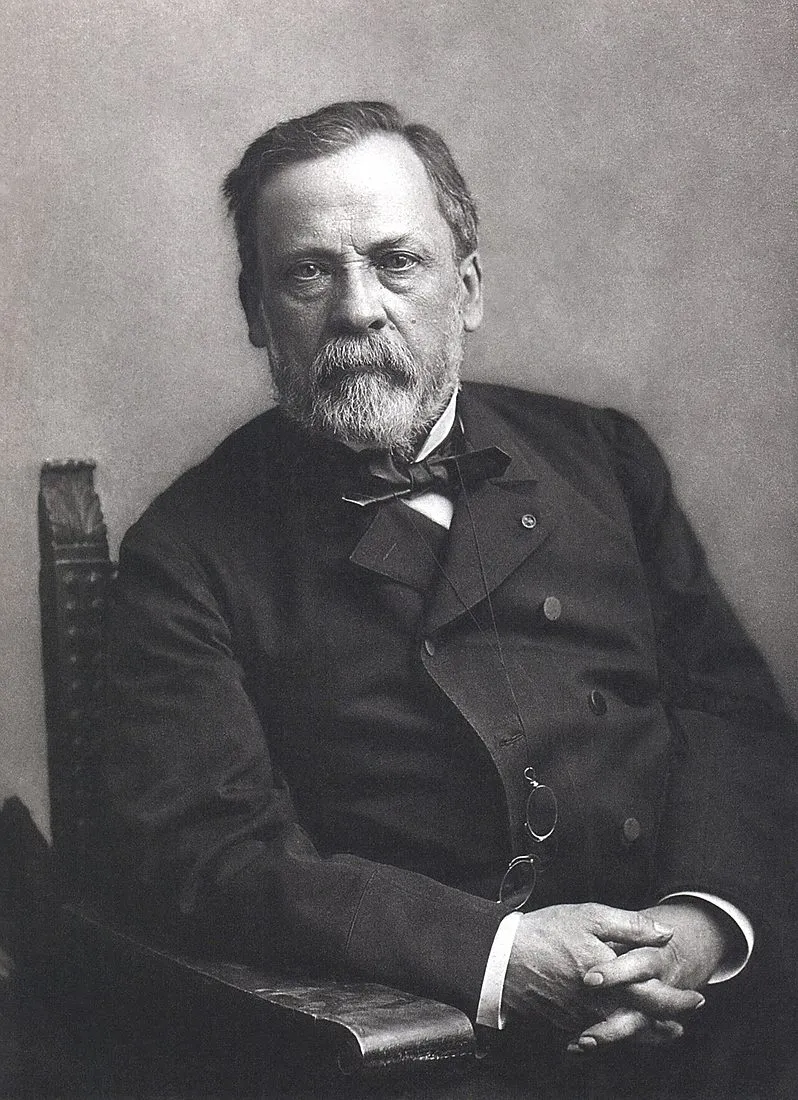
Louis Pasteur Wikimedia Commons / Louis Pasteur

On July 6, 1885, a chemist chose to act on something he had never tested in a human being

Louis Pasteur was 62 years old and not a medical doctor. He was a chemist, most famous at that point for fermentation and pasteurization. He had spent years developing a vaccine against rabies by drying the spinal tissue of infected rabbits, weakening the virus a little more with each passage. It worked in dogs. But he had never given it to a person, and rabies in humans was still essentially a death sentence: once symptoms appeared, nobody survived.

On July 6, 1885, a nine-year-old boy named Joseph Meister arrived at Pasteur's Paris laboratory. Two days earlier, a rabid dog in Alsace had bitten the child fourteen times. His family's doctor told them there was no hope. Pasteur consulted two physicians and decided to try. Over the next ten days, he gave Joseph thirteen inoculations, each slightly more potent than the last, beginning with the weakest preparation and building toward the strongest. It was the riskiest sequence he could have chosen: he was betting that the boy's immune system would be ready in time. Joseph Meister survived. He never developed rabies.

Pasteur went on to develop vaccines for cholera and anthrax, and his work on germ theory shaped every vaccine that came after. But the anniversary of that first day with Joseph Meister, when a frightened family arrived from Alsace with nothing left to lose and a scientist chose to act, is as good a date as any to feel grateful for the people who are willing to be the first to try.

The discoveries, in full

Natural Sci.

The first birth of a magnetar, caught live

In 2024, a distant supernova called SN 2024afav started doing something no one had seen before. Its light was chirping.

Not a steady blaze, but a rhythmic brightening and fading that sped up as the weeks passed, like a top slowly winding down [4]. Graduate student Joseph Farah at Las Cumbres Observatory brought the data to UC Berkeley astrophysicist Dan Kasen, who had published a theory about this exact signal sixteen years earlier and never had confirmation. His 2010 paper, cowritten with Lars Bildsten, proposed that the universe's most brilliant supernovae stay bright long after they should fade because the dying core collapses into a magnetar: a neutron star about ten miles across, spinning more than a thousand times per second, with a magnetic field a hundred to a thousand times stronger than a typical pulsar. Spinning at that rate, it pumps energy into the surrounding explosion like a battery, keeping it blazing. SN 2024afav's chirp matched the theory exactly, and the precise timing required Einstein's general relativity to decode, making this the first time general relativity has been used to explain how a supernova actually works. The results were published in Nature [4].

Life Sciences

The mechanism killing neurons in Alzheimer's, finally named

A decade ago, researchers at King's College London found an unusual cell death process in a rare disease, and spent the next ten years chasing it. The process is called karyoptosis.

It works like this: toxic proteins accumulate inside a neuron, the cell's nucleus begins to shrink, and eventually the genetic material inside collapses and disintegrates, killing the cell [3]. Scientists had long identified other ways neurons die, including apoptosis, but those mechanisms never fully explained the scale of neuron loss seen in Alzheimer's brains. Working with the UK Dementia Research Institute, the King's team analyzed 3,000 brain cells collected from 28 people who had died with either frontotemporal dementia or advanced Alzheimer's disease. They found signs of karyoptosis in 35 percent of cells from the frontal cortex of people with Alzheimer's, compared to 15 percent in healthy older adults. They also identified a group of molecular switches, proteins called kinases, that appear to control the process. Force those proteins to clump, as Alzheimer's pathology does, and karyoptosis begins. "This study is the culmination of a 10-year journey at King's," the researchers wrote, "from when we first identified karyoptosis in a relatively rare disease to discovering that it is a common feature of dementias which affect millions of people." Published in Nature Communications [3].

Life Sciences

Knee pain halved, no surgery required

At the start of the study, 194 patients at Charité, the large university hospital in Berlin, rated their osteoarthritis knee pain at an average of 7 out of 10. They had already tried physiotherapy, anti-inflammatory drugs, and intra-articular injections.

Nothing had worked. Their average age was 69, and for most of them, a knee replacement was what remained [25]. The procedure the Berlin team tried instead is called genicular artery embolization, or GAE. It targets the abnormal blood vessels that grow around an arthritic joint and fuel the pain-sensing nerves surrounding it. Close off those vessels, and the nerves quiet down. The key change here was the material used to do it: previous GAE trials used antibiotics, which raised concerns about resistance and inflammation. This team used resorbable microspheres, microscopic gelatin beads that dissolve within hours, breaking the cycle of inflammation and pathological nerve growth without permanently altering the knee. "By embolizing the pathological vessels, we're able to normalize the vessel structure, and in turn, the neuronal structure of the knee," said radiologist Florian Nima Fleckenstein. At 12 months, average pain was 3 out of 10. Scores for daily activity, sports, recreation, and quality of life all improved substantially [25].

Psychology

Texting a stranger actually works for loneliness. Chatting with AI does not.

296 students in their first semester at the University of British Columbia, a moment when loneliness typically spikes, were randomly assigned to one of three groups: text a randomly matched peer every day, chat daily with a highly supportive AI program, or neither [38].

After several weeks, the students texting real strangers reported feeling significantly less lonely. The students chatting with the AI did not. This wasn't because the AI was bad at its job. The chatbot was warm, attentive, and responsive, genuinely good at its role. The gap seemed to come from something else. The students texting strangers knew they had formed an actual connection with another person who had chosen to respond to them. That reciprocity, a human somewhere deciding to write back, was something the AI could not replicate, and the students seemed to sense its absence. "Building real social connections requires more than simply receiving simulated empathy," the researchers concluded. The study was published in the Journal of Experimental Social Psychology [38].

Technology

Solar panels over California irrigation canals are saving water too

Project Nexus, a $20 million California state-funded pilot, installed solar canopies over two irrigation canals south of Modesto and tracked everything for a full irrigation season.

The power numbers are real: the two test sections together generate 1.6 megawatts and cover an area about one and a half football fields [126]. But the water numbers surprised everyone. Shade from the panels reduced water evaporation by up to 70 percent. Aquatic weed and algae growth dropped by up to 85 percent. That second finding matters more than it sounds, because canal operators spend considerable money managing those weeds through herbicides and mechanical clearing every season. Lead researcher Brandi McKuin at UC Merced modeled what would happen if all 4,000 miles of California's major open canals were covered: 13 gigawatts of generating capacity, roughly half the new solar California needs to hit its 2030 renewable targets, and 63 billion gallons of water saved per year, enough to supply 2 million people or irrigate 50,000 acres of farmland [126].

Technology

The largest ever mRNA vaccine review just confirmed the basics

A team spanning Canada, Hong Kong, the UK, and the US spent years reviewing every stage of mRNA vaccine data: manufacturing, clinical trials, and real-world outcomes from billions of doses.

Their review was published in The Lancet [69]. The conclusions were unambiguous. mRNA vaccines are safe and highly effective at preventing the spread of infectious diseases like COVID-19. They do not alter human DNA. They deliver temporary instructions that allow cells to mount an immune response, then disappear. The review confirmed they are safe for children and pregnant women, that boosters extend protection, and that the same platform shows real promise for cancer treatment, training the immune system to recognize tumor cells. Lead author Anna Blakney at the University of British Columbia described it as "an extraordinary amount of scientific evidence" accumulated across billions of real people. The paper also named the side effects honestly. Some people experience allergic responses. A small subset of young men have developed myocarditis. The authors were direct: both are rare, and neither comes close to outweighing the benefits [69].

Life Sciences

Millions of Americans may be getting the wrong cholesterol test

The standard cholesterol test measures LDL: the amount of "bad" cholesterol by mass. The problem is that LDL doesn't count the number of particles, and it's the particles that do the damage.

Small, dense particles are the ones that get trapped in artery walls and build into plaque. Two people can have identical LDL numbers and very different particle counts [1]. ApoB, or apolipoprotein B, counts the particles directly. There is one apoB molecule on every harmful cholesterol particle in the blood, so the apoB test is a precise census of what's actually circulating. A study from Northwestern University's Feinberg School of Medicine, published in JAMA, found that using apoB to guide treatment decisions would prevent more heart attacks and strokes than using LDL, and that switching to apoB-guided care would be cost-effective for the U.S. healthcare system. "We found that apoB testing to intensify cholesterol-lowering medication would prevent more heart attacks and strokes than current practice, and that these health benefits were achieved at a cost that represents good value for U.S. healthcare payers," said lead author Ciaran Kohli-Lynch [1]. It's the first study to show apoB is also economically viable at scale.

Good news you might have missed

Rare 1776 Declaration of Independence Discovered by National Archives in UK A volunteer cataloguing old naval letters at Britain's National Archives in Kew found one of only 11 surviving copies of the 1776 Declaration of Independence, tucked among papers seized from an American privateer ship called the Dalton, it had been sitting in a British archive for 250 years without anyone knowing it was there [112]. Good News Network
It's Official: This Is The World's Fastest Spider, And It Can Outrun a Human After timing 258 spider species on a camera-and-grid-paper sprint course, researchers found the world's fastest is a huntsman spider from Queensland, Australia, clocking 3.6 meters per second, about 8 miles per hour, which is comfortably faster than the average human jog [23]. ScienceAlert
Nearby 'Super Earth' Could Host Life After All Revised analysis of GJ 3378b, a rocky planet 2.3 times Earth's mass orbiting a red dwarf star just 25 light-years away, now places it inside the star's habitable zone, making it one of the most compelling nearby candidates for liquid water anywhere in the galaxy [27]. Universe Today
When do humans reach their psychological peak? A new study points to late midlife A study integrating data on cognitive ability, emotional intelligence, moral reasoning, and personality finds that humans peak psychologically not in their twenties but somewhere in their late fifties, when accumulated wisdom, emotional stability, and financial literacy outweigh the decline in raw processing speed [40]. PsyPost
Psychedelic Trips Can Halt Political Hate A study of 21,990 U.S. adults found that people whose most intense psychedelic experience happened on July 4th, amid shared celebration, showed long-term decreases in support for partisan violence, while those who tripped during election season showed increases, suggesting the cultural context matters more than the drug itself [29]. Neuroscience News
Japanese Govt Sets Out $6.2B Investment in 'New Foods' in 2040 Roadmap Japan committed $6.2 billion to animal-free proteins and fermentation-based foods in its official 2040 public-private investment roadmap, targeting its strengths in fermentation, koji, mushroom mycelium, and marine ingredients to become a world leader in alternative nutrition [98]. Green Queen
Something Weird Is Going on With the 66 Billion Trees China Planted China's Great Green Wall of 66 billion planted trees is growing 66 percent faster than natural forests of similar age; forest cover in the regions it touches has risen from 5 percent in 1978 to 14 percent in 2023, and dust storms reaching Beijing have measurably declined [71]. Futurism
Crow Takes to Teaching a Starving Orphan Bird How to Eat At Brinsley Animal Rescue in Nottingham, a malnourished six-week-old jackdaw named Frank Sinatra, too weak to feed himself, was placed with a slightly older fledgling crow that began feeding him before it had even fully learned to feed itself [111]. Good News Network
Good News in History, July 6 Today is the 91st birthday of the 14th Dalai Lama, born on July 6, 1935 in Taktser, Tibet, spiritual guide to hundreds of millions, Nobel Peace Prize laureate, and still writing and teaching about the science of happiness at 91 [108]. Good News Network
Streetlights are trapping thousands of pill bugs in giant 'death spirals' Hebrew University researchers documented a behavior never seen before in the wild: more than 5,000 land isopods, commonly called pill bugs, gathering into giant synchronized circular formations under streetlights in Israel's Golan Heights, drawn to the circular boundary of white light on the ground and unable to escape it [2]. ScienceDaily
Deuterium in comets tells interesting tales The interstellar comet 3I/ATLAS, which passed through our solar system in 2025, contained more than 30 times as much deuterium as our own solar system's comets, suggesting it formed in conditions far colder and more ancient than our sun, possibly predating it entirely [12]. Phys.org
The national dance company opening doors for young performers England's National Youth Dance Company placed 32 dancers from 25 towns and villages on major stages this summer, recruiting from non-traditional training backgrounds; in 14 cohorts, the program has worked with over 12,000 young people and seen 9 in 10 go on to further work or training in dance [114]. Positive News
GEA Pumps $4.6M to Build Out New Alternative Protein Centre in Germany German engineering company GEA relocated its precision fermentation and cell cultivation hub to a larger Sarstedt facility, connecting pilot-scale bioreactors directly alongside industrial engineering teams so food-tech startups can test processes end-to-end before committing capital [97]. Green Queen
California canal solar project reduces evaporation and generates power Beyond the water and power numbers, Project Nexus cut aquatic weed and algae growth by 85 percent, which matters practically: canal operators currently spend considerable resources on chemical and mechanical weed management every season, and that cost alone may shift the economics of canal-top solar [126]. The Optimist Daily

Everything we read today

Natural Sciences 28 articles
Life Sciences & Medicine 6 articles
Psychology & Behavioral Science 24 articles
Social Sciences 6 articles
Technology & Innovation 32 articles
Plant-Based & Vegan 11 articles
Solutions & Good News 29 articles
Human Stories & Ideas 2 articles

Get this every morning.

Liked today's? Wake up to tomorrow's, in one short letter.

It's free for everyone, always. If it makes your mornings better, you can help keep it that way.

Monthly

One-time