

July 1, 2026

The gene edit that saved Alyssa, and Vera Rubin's telescope opens its eye

7 discoveries · 3 good-news notes · 263 articles read
Natural Sci.

Alyssa was 13 when her doctors ran out of options. Three rounds of chemotherapy had failed.

Read the full story
Natural Sci.Human Stories

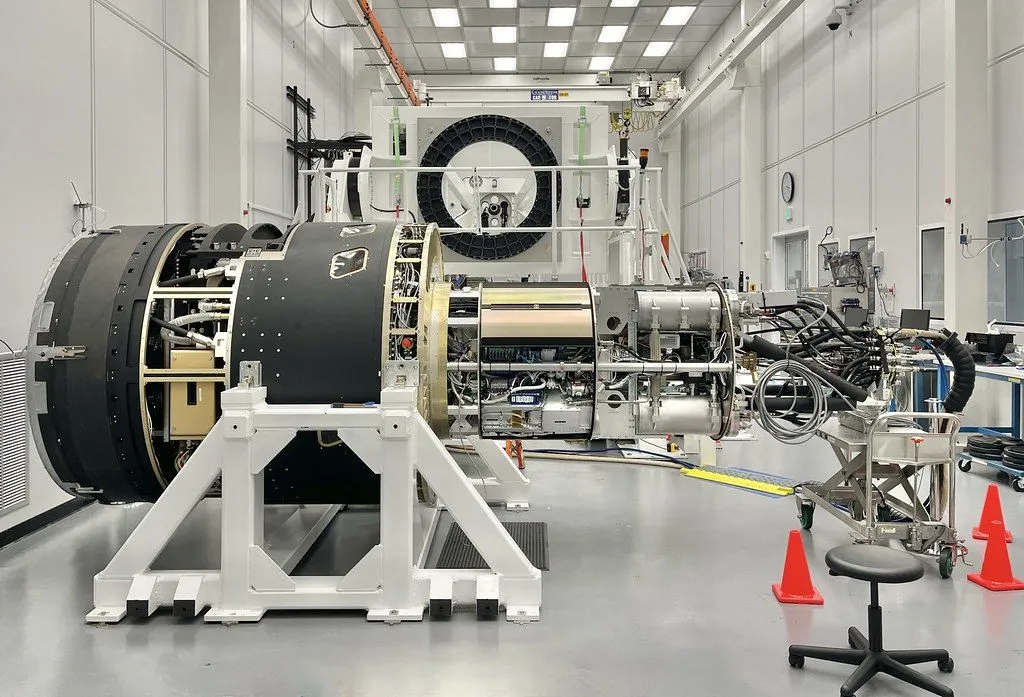
On July 1, 2026, the Vera Rubin Observatory in the Chilean Andes officially began its Legacy Survey of Space and Time. It will spend the next ten years photographing the entire southern sky, over and over, with a 3.2-gigapixel camera.

Read the full story
Natural Sci.PsychologyLife Sciences

Three separate studies published this week addressed the same underlying question from three different angles: what does the human brain arrive with, and what does it only acquire through experience? The findings were surprising in both directions.

Read the full story
Natural Sci.Psychology

Two independent mouse studies published this week pointed to the same underlying truth: the neural circuits for attention and social behavior are states, not permanent structures. Johns Hopkins neuroscientists found a cluster of evolutionarily ancient neurons in the brainstem that act as a biological toggle for...

Read the full story
Life Sciences

A meta-analysis from the University of Sydney pooled data from more than 2,000 adults across 23 randomized controlled trials and found that melatonin reduces chronic musculoskeletal pain by an average of 9 to 10 points on a 100-point scale. The most rigorous trials in the set showed reductions closer to 10 points.

Read the full story
Good News

A Stanford Medicine team identified a protein called 15-PGDH that roughly doubles in aging joints and blocks cartilage from repairing itself. They blocked it in older mice using a small molecule inhibitor, delivered either by abdominal injection or directly into the knee.

Read the full story
Life Sciences

The NIH All of Us Research Program released its largest-ever data update this week, making genetic and health information available from more than 747,000 participants. The dataset now includes 535,000 whole genome sequences linked to nearly 482,000 electronic health records, 1.3 billion genetic variants, and, for...

Read the full story

The feel-good story of the day

airplane refueler at airport tarmac Joe Gatling (via Openverse)

The Veteran Nobody Noticed, and the Passenger Who Looked

James Blair spent 20 years refueling planes at John Wayne Airport in Orange County, California. He was a Navy veteran, and he was in visible pain. His knees had given out after two decades of climbing, kneeling, and lifting on a loud tarmac in all weather, and by the time a passenger named Lacinda Thackeray spotted him from her window seat, every step looked difficult.

She filmed him. She uploaded the video to TikTok with a simple caption: "Does anyone know this man? Watching him work so hard, he can barely walk, truly broke my heart." The video got 7 million views. She launched a GoFundMe that raised nearly $175,000 in a month, from more than 5,000 people [239].

When Blair saw it, he laughed. "I've been doing this job for 20 years and I just didn't think anybody actually cared." He had been at a breaking point, working through chronic pain while also caring for his 90-year-old mother, who had recently fallen and was in hospice care. The money would pay for knee surgery, help with his mother's care, and let him retire. "I get more time with my daughters," he said, "and a second lease on life."

He was invisible on that tarmac for two decades, doing exactly the kind of work that holds an airport together, because he showed up. One person looked out a window long enough to see him, and thousands of strangers did the rest.

The discoveries, in full

Natural Sci.

The First Life Saved by CRISPR Base Editing

Alyssa was 13 when her doctors ran out of options. Three rounds of chemotherapy had failed.
A bone marrow transplant had failed. Her parents were looking at remortgaging their house to seek experimental treatment abroad. Then a team at Great Ormond Street Hospital in London offered her something nobody had ever tried: T-cells edited with CRISPR base editing to target leukemia without destroying themselves. The catch is that T-cell leukemia is usually untreatable with CAR-T therapy, because modified T-cells attack each other. CRISPR base editing changed that. The team altered specific DNA letters in donor T-cells so they could hunt leukemia without triggering self-destruction. The treatment worked. Alyssa is alive. She is the first person on earth whose life was saved by CRISPR base editing [16]. In the same week, a paper in Nature reported that a similar approach, using three different delivery platforms to train the immune system against HIV-1, achieved neutralization breadth against 90% of diverse viral strains in macaques within 12 weeks, with broadly neutralizing antibodies appearing as early as 4 weeks [7].

What each field noticed (2)
New Scientist

I'm the first person whose life was saved by CRISPR base editing

Alyssa's own words are what make this account impossible to skim. She was 13, in a hospital, thinking she would never grow up. "I was thinking: Oh my gosh, this is my last birthday." The trial at Great Ormond Street involved a kind of genetic engineering that was new: not cutting DNA but chemically rewriting single letters of it, with more precision and fewer off-target effects than earlier CRISPR methods. When the team described what would happen, it sounded like science fiction. "They were like: we're gonna put some CAR Ts in, and they're gonna multiply and multiply some more, and go around and fight and kill all your cancer cells." They did [16].

Read the story
Nature

Enhanced B cell priming induces broadly neutralizing HIV-1 apex antibodies

Nature's paper this week described a different disease and a different approach but the same underlying ambition: use what we now know about genetics to teach the immune system to recognize things it has historically failed to recognize. The HIV-1 vaccine work used protein nanoparticles and mRNA alongside viral delivery to prime macaques' immune systems to produce broadly neutralizing antibodies, the kind that can stop diverse strains of a highly variable virus. In 14 infected macaques, neutralization breadth reached as high as 90% on a 21-virus panel. The team described it as "a molecular blueprint" for inducing these antibodies in humans [7].

Read the story
Natural Sci. Human Stories

Vera Rubin's Telescope Begins Filming the Universe

On July 1, 2026, the Vera Rubin Observatory in the Chilean Andes officially began its Legacy Survey of Space and Time. It will spend the next ten years photographing the entire southern sky, over and over, with a 3.2-gigapixel camera.

Every night it generates 15 terabytes of data. Every time something in the sky changes, an automated alert goes out to researchers anywhere in the world who signed up to watch for it. Over the decade of the survey, astronomers expect to catalog 20 billion galaxies [51]. The telescope is named for Vera Rubin, who spent the 1970s proving that galaxies rotate too fast to hold themselves together with visible matter alone. She concluded that something invisible and unknown, dark matter, makes up the difference. She was largely ignored for years. The observatory that carries her name is now looking for it [52].

What each field noticed (4)
Universe Today

It's Finally Begun!

The scale is almost hard to take in. The very first public image the VRO released, the "Cosmic Treasure Chest," showed the Virgo Cluster in detail that no previous telescope had achieved; regions that appear empty in other telescope images turned out to be teeming with faint galaxies. The survey camera covers an area of sky 270 times larger than a single Hubble pointing. "Today, we begin filming the greatest cosmic movie ever made," said NSF Director Brian Stone at the launch [51].

Read the story
Universe Today

Echoing Light Shows That Dark Matter May Gather Around Supermassive Black Holes

Meanwhile, a separate research team found evidence that dark matter accumulates around supermassive black holes in ways detectable through echoing X-ray signals. The signal comes from light reflecting off the black hole's accretion disk, with timing and patterns that suggest a dark matter halo is influencing the dynamics. Vera Rubin established the evidence that dark matter has to exist. Fifty years later, researchers are still learning where it concentrates [52].

Read the story
Big Think

Is it finally time to take dark matter-free galaxies seriously?

Big Think offered a quietly strange counterpoint this week: four ultra-diffuse dwarf galaxies have now been identified that appear to have almost no dark matter inside them, in a universe where the expected dark-to-normal matter ratio is 5 to 1. The most recent, DF9, was spotted in 2026. If these galaxies are genuinely dark-matter-deficient, they represent a class of object that breaks rules considered universal. Nobody has a satisfying explanation for why some galaxies seem to have escaped the gravitational scaffolding that governs everything else [249].

Read the story
Colossal

Scan More than 60 Million Stars in the Most Detailed Photo of the Milky Way Ever Taken

The European Space Agency's Euclid mission, not to be outdone, released the highest-resolution image ever taken of the Milky Way's galactic center this year, capturing more than 60 million stars in a single mosaic. The image was taken with visible light, allowing scientists to search for exoplanets by monitoring tiny changes in starlight over time. To capture the same view, the Keck Observatory would need around 2,000 hours of observation time. Euclid did it in a few [255].

Read the story
Natural Sci. Psychology Life Sciences

Three Things the Brain Already Knows

Three separate studies published this week addressed the same underlying question from three different angles: what does the human brain arrive with, and what does it only acquire through experience?

The findings were surprising in both directions. Newborns aged zero to three days show measurable neural activity distinguishing between different quantities, suggesting a primitive number sense is present before a baby can focus its eyes [15]. Bilingual speakers store the meaning of words in the same geometric neural map in the hippocampus regardless of language, meaning the brain maintains a language-independent model for what things mean [86]. And handedness, one of the things most people assume is hardwired, turns out to be entirely the product of practice. The skill gap between your two hands exists only because one of them has spent a lifetime holding tools [57].

What each field noticed (3)
New Scientist

Babies are born with the neural foundations for maths

A team at the University of Trento fitted EEG caps on 21 newborns and played them sequences of four or twelve sounds while simultaneously showing images of four or twelve dots. When the number of sounds matched the number of dots, brain activity in the parietotemporal area fell, a pattern called repetition suppression that the adult brain uses to process familiar input efficiently. When the numbers did not match, activity rose. The babies were zero to three days old. "Extracting numerical information from the environment is just like seeing the world in colour, for most people," said Brian Butterworth at University College London [15].

Read the story
PsyPost

Bilingual brains use a shared neural map to translate meaning across languages

Using microelectrodes implanted directly into the hippocampi of four bilingual epilepsy patients during surgery, a team from Baylor College of Medicine recorded individual neurons firing as patients listened to matched podcasts in English and Spanish. The spatial relationships between words in the hippocampus were the same in both languages, just encoded by different cells. The brain apparently stores meaning in a format that sits below language, and any language taps into it. "Our findings suggest that the brain may store meaning in a language-independent format," said co-senior author Dr. Sameer Sheth [86].

Read the story
Neuroscience News

Hand Dominance Is Driven by Practice, Not Birth

The Santa Fe Institute and UCLA team separated hand preference, which is present before birth, from hand dominance, the actual skill gap between your hands. Under 3D motion capture, both hands performed reaching tasks with identical coordination. Adding heavy wrist weights changed nothing. The skill gap appeared only when participants held a tool. In a striking secondary test, strapping pens to participants' elbows made both elbows equally skilled, because neither had spent years writing that way. "Handedness is quite literally a fingerprint of human tool-use culture," the researchers wrote [57].

Read the story
Natural Sci. Psychology

A Focus Switch Deep in the Brain

Two independent mouse studies published this week pointed to the same underlying truth: the neural circuits for attention and social behavior are states, not permanent structures.

Johns Hopkins neuroscientists found a cluster of evolutionarily ancient neurons in the brainstem that act as a biological toggle for selective attention. Silence these neurons and mice become hyper-distractible; reactivate them the next day and the same mice ignore even powerful distractors. The neurons exist in birds, fish, and mammals alike, meaning the focus mechanism has been conserved for hundreds of millions of years [43]. Separately, Shimane University researchers found that axon initial segments, the firing thresholds of neurons in the prefrontal cortex, are shortened in the autism mouse model they studied. Activating a specific neural pathway restored their length. Social behavior and repetitive movements improved [89].

What each field noticed (2)
ScienceAlert

Scientists Find Hidden 'Focus Switch' in The Brain

The neurons are part of what the team calls the parabigeminal lateral tegmental inhibitory complex, which uses GABA, the brain's main inhibitory neurotransmitter, to modulate the superior colliculus, a structure that maps the body's spatial environment and directs attention toward it. "A hallmark of ADHD is that even faint distractors draw attention away, and that's exactly what we see here when these neurons are silenced," said neuroscientist Shreesh Mysore. "But the very next day, when the neurons are turned back on, the same animal can ignore distractors again, even very strong ones." [43]

Read the story
PsyPost

Scientists reverse autism-like symptoms in mice by repairing shortened nerve cell structures

The axon initial segment is where a neuron decides whether to fire. In the mouse model carrying a genetic duplication associated with autism, these segments were significantly shorter in a specific layer of the medial prefrontal cortex, the area governing social behavior and decision-making. By activating the pathway that restores their length, the team also restored the behavior. "Because the axon initial segment is known to change its length in an activity-dependent manner, we hypothesized that its properties might vary across different neural circuits," said lead author Masashi Fujitani. They did [89].

Read the story
Life Sciences

Melatonin Works on Chronic Pain

A meta-analysis from the University of Sydney pooled data from more than 2,000 adults across 23 randomized controlled trials and found that melatonin reduces chronic musculoskeletal pain by an average of 9 to 10 points on a 100-point scale.

The most rigorous trials in the set showed reductions closer to 10 points. That is the same order of magnitude as relief from NSAIDs and prescription opioids. The mechanism makes biological sense: chronic pain destroys sleep quality, and sleep deprivation raises pain sensitivity through a process called hyperalgesia. Melatonin interrupts that loop by improving sleep while also acting on peripheral pain pathways directly [58].

What each field noticed (1)
Neuroscience News

Does Melatonin Help Reduce Chronic Pain?

The researchers found the therapeutic window fairly wide, with daily doses between 3mg and 10mg showing similar effects and no clear dose-response relationship, meaning more does not automatically mean more relief. Unlike opioids, melatonin carries no risk of chemical dependence or respiratory depression. Mild side effects across three-month testing windows were virtually identical to placebo rates. The team described melatonin as an adjunct, not a replacement for existing pain management, especially for patients whose chronic pain is compounded by sleep disorders, and called for integration into comprehensive care plans under medical supervision. The signal was strongest in women with musculoskeletal conditions [58].

Read the story
Good News

The Protein Blocking Your Joints from Healing

A Stanford Medicine team identified a protein called 15-PGDH that roughly doubles in aging joints and blocks cartilage from repairing itself. They blocked it in older mice using a small molecule inhibitor, delivered either by abdominal injection or directly into the knee.

Cartilage grew back. Not the low-quality fibrocartilage that often appears as a scar substitute, but hyaline cartilage, the smooth, load-bearing kind needed for normal joint movement. The cells in the joint, chondrocytes, shifted their gene expression and returned to a more functional state without any stem cell involvement. Human tissue samples from knee replacement surgeries showed the same response after just one week of treatment. The paper was published in Science [233].

What each field noticed (1)
The Optimist Daily

How blocking one protein regenerates knee cartilage in aging mice and human tissue

The protein belongs to a class the team calls gerozymes, molecules that accumulate with age and suppress tissue regeneration across the body, including in muscle, bone, nerve, and blood. This was the first paper to show the mechanism in cartilage. Cells associated with fibrocartilage production dropped from 16% to 8% of the joint population after treatment. Cells that build hyaline cartilage rose from 22% to 42%. "Cartilage regeneration to such an extent in aged mice took us by surprise," said co-senior author Nidhi Bhutani. In an ACL-injury mouse model, where untreated animals developed osteoarthritis within four weeks, twice-weekly treatment with the inhibitor provided substantial protection [233].

Read the story
Life Sciences

The World's Largest Portrait of Human Genetics

The NIH All of Us Research Program released its largest-ever data update this week, making genetic and health information available from more than 747,000 participants.

The dataset now includes 535,000 whole genome sequences linked to nearly 482,000 electronic health records, 1.3 billion genetic variants, and, for the first time, proteomics data from nearly 10,000 participants and RNA sequencing from nearly 9,000, meaning researchers can study not just which genes someone carries but which ones are actively expressing. The update added more than 114,000 participants since the previous release. What makes this program different from every earlier genomic database: 86% of its participants come from communities historically underrepresented in biomedical research, including people of color, older adults, rural residents, women, and people with disabilities [56].

What each field noticed (1)
NIH News Releases

NIH's All of Us Research Program is now the largest integrated genomics and health database in the world

"There's a paradox at the heart of precision medicine," said NIH Director Jay Bhattacharya. "To tailor treatments to individuals, you actually need very large populations to uncover the patterns that connect genetics, lifestyle, and the environment to health outcomes." All of Us now covers more than 98% of U.S. three-digit ZIP codes. The entry into multiomics, the combination of genome sequences, RNA data, and proteomics in the same participant dataset, is new territory; it allows researchers to study not just genetic predisposition but how genes actually behave in different bodies under different conditions. Additional multiomics data releases are planned later this year [56].

Good news you might have missed

Herculean Effort to Restore Mozambique's Rhino Population Succeeds with 61 Animals Moved There Zinave National Park in Mozambique, emptied of wildlife during decades of civil war, now holds 39 white rhinos and 22 black rhinos imported from South Africa, and a black rhino calf has already been born in the park, the first in the country in a generation [213]. Good News Network
Great Smokey Mountains Will Soon Get Even Greater Foothills Land Conservancy permanently protected 600 acres bordering America's most visited national park near Cades Cove, Tennessee; the land will be transferred to the National Park Service after what the park superintendent called one of the largest conservation transactions in decades [215]. Good News Network
Motorcyclist Reunites with Strangers Who Lifted a 3,300-Lb. Car Off His Body Tyler Wiebe, a Brisbane father of two, was pinned under a car with a punctured lung and a collapsing chest when several bystanders made three attempts to lift it free. They succeeded on the third try. He met them on television and called them "certified legends" [216]. Good News Network

Everything we read today

Natural Sciences 55 articles
PLOS One
Life Sciences & Medicine 26 articles
Psychology & Behavioral Science 33 articles
Social Sciences 19 articles
Technology & Innovation 55 articles
Plant-Based & Vegan 23 articles
Solutions & Good News 32 articles
Human Stories & Ideas 20 articles

Get this every morning.

Liked today's? Wake up to tomorrow's, in one short letter.

It's free for everyone, always. If it makes your mornings better, you can help keep it that way.

Monthly

One-time